THE CLASSIC COLLECTION✦Building the pacific railwayCLASSIC FREE BOOKS
Building the pacific railway
Edwin L. (Edwin Legrand) Sabin
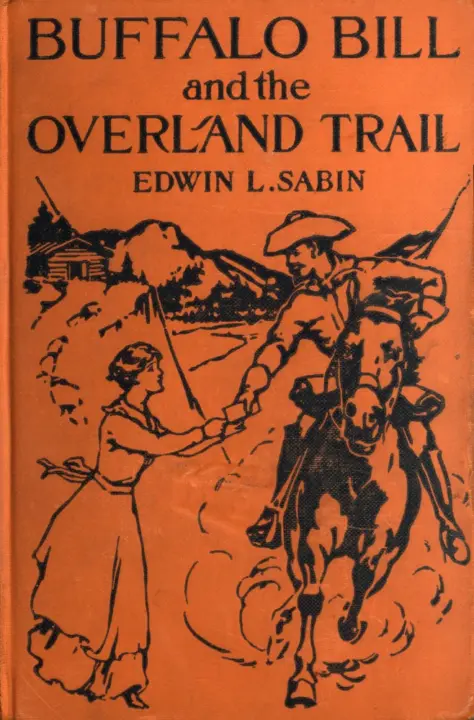
THE CLASSIC COLLECTION · 1914
"Buffalo Bill and the Overland Trail" by Edwin L. Sabin is a historical account written in the early 20th century. The narrative focuses on the adventurous life of Buffalo Bill, alongside the challenges and experiences of those who traversed the Overland Trail in the 19th century, illustrating the spirit of exploration and settlement in America. Central to the story is young David Scott, a boy who becomes involved in the conflict between white settlers and Native Americans, showcasing themes of bravery, heroism, and the harsh realities of frontier life. At the start of the tale, we are introduced to a tense situation where David Scott, a red-headed boy, is held by Cheyenne Indians as they ride through western Nebraska. The boy witnesses the thrill and danger of life on the plains, from plundering wagon trains to impending confrontations. As the narrative unfolds, the focus shifts to an intense battle between indomitable white settlers and the warring Cheyenne tribe, exemplified by buffalo hunters and courageous figures such as Buffalo Bill himself. The opening lays a vivid foundation for a story steeped in historical context, urgent action, and the resilience of its characters on the wild American frontier.
Introduction adapted from the source catalogue; source summaries may be automatically generated.
Free to read · English · 78,782 words · No account needed
MAKE TIME FOR A GOOD BOOK
On by default. Untick to stop anonymous reading totals. Each page counts after 10 seconds in view. How this works.
Anonymous counting is on unless you have switched it off.
“George, you’d better ride in a wagon for a day or so,” called Mr. Simpson, rising, to Mr. Woods. “Well, Red,” and he addressed Davy, “I reckon you’ll travel along with us. We’re bound back to the States. Got any folks there?”
“No, sir,” said Davy, with a lump in his throat. “But I’d like to go on
with you.”
“All right-o. Now, some of you fellows hustle us a mule apiece, while Billy and I plunder those Injuns out there. Then we’ll travel.”
Mr. Simpson spoke like one in authority. Billy Cody promptly sprang up, and he and Mr. Simpson strode out into the plain, where the dead Indians and the ponies were lying. Lame Buffalo was the farthest of all; but he was still, like the rest. Evidently he would ride and fight no more.
The wagon train men bustled about, reforming for the march. Three mules were saddled, as mounts for Davy and the two others. Having passed rapidly over the field, Mr. Simpson and Billy returned, laden with the weapons and ornaments of the warriors and the trappings of the ponies. They made two trips. Davy recognized the shield and head-dress of Lame Buffalo, who would need them not again. Billy proudly carried them and stowed them in a wagon.
“Those are yours, aren’t they?” asked Davy, following him, to watch.
“They’re mine if I want them,” said Billy. “Reckon I’ll take ’em home and give ’em to my sisters.”
“Where do you live?”
“In Salt Creek Valley, Eastern Kansas, near Leavenworth. Where do you?”
“Nowhere, I guess,” replied Davy, trying to smile.
“Pshaw!” sympathized Billy. “That’s sure hard luck. Ride along with me and I’ll tell you about things.”
“Here, boy――crawl into this,” called a teamster nearby; and he tossed at Davy a red flannel shirt. “It’ll match yore ha’r.” And he laughed good-naturedly.
“It’s my color all right,” responded Davy, without being teased, as he picked up the shirt. “Much obliged.” He slipped it over his head. It fitted more like a blouse than a shirt, but he needed something of the kind. After he had turned back the sleeves and tucked in the long tails, he was very comfortable.
“Climb on your mule, Red,” bade Billy Cody. “We’re going to start, and Lew Simpson won’t wait for anybody.”
Mr. Simpson was already on his mule. The other mounted men were in their saddles. Mr. Simpson cast a keen glance adown the line.
“All ready?” he shouted. “Go ahead.”
The long lash of the leading teamster shot out with a resounding crack.
Your reading position is saved on this browser. Take it to another device with a library code. Reading pages adapt to text, rather than matching a printed edition.
Edwin L. (Edwin Legrand) Sabin

Edwin L. (Edwin Legrand) Sabin

Edwin L. (Edwin Legrand) Sabin

Edwin L. (Edwin Legrand) Sabin
BEHIND THE BOOK
This eBook is for the use of anyone anywhere in the United States and most other parts of the world at no cost and with almost no restrictions whatsoever. You may copy it, give it away or re-use it under the terms of the Project Gutenberg License included with this eBook or online at www.gutenberg.org. If you are not located in the United States, you will have to check the laws of the country where you are located before using this eBook. Read the source licence.
The original source file, including credits and licence, is retained by this library. Request an original-format copy at no charge. Please include the book title and Project Gutenberg identifier #64231.
KEEP YOUR CURIOSITY GOING
Cécile Tormay

Moritz Busch
Coulson Kernahan
John L. Ransom

Maurice Baring
Frances Wright