THE CLASSIC COLLECTION✦Building the pacific railwayCLASSIC FREE BOOKS
Building the pacific railway
Edwin L. (Edwin Legrand) Sabin
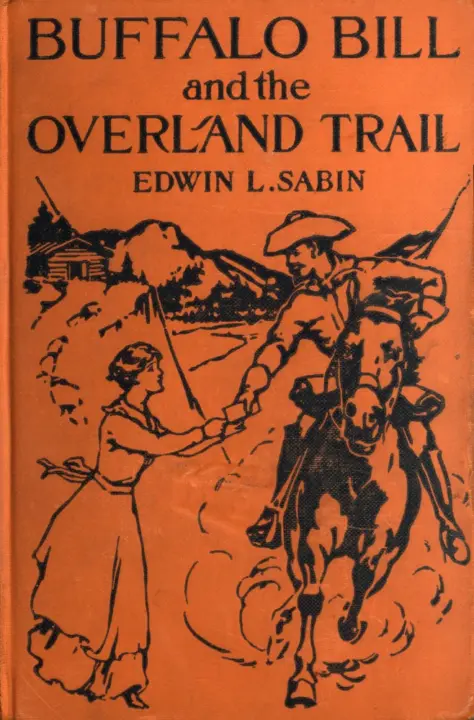
THE CLASSIC COLLECTION · 1914
"Buffalo Bill and the Overland Trail" by Edwin L. Sabin is a historical account written in the early 20th century. The narrative focuses on the adventurous life of Buffalo Bill, alongside the challenges and experiences of those who traversed the Overland Trail in the 19th century, illustrating the spirit of exploration and settlement in America. Central to the story is young David Scott, a boy who becomes involved in the conflict between white settlers and Native Americans, showcasing themes of bravery, heroism, and the harsh realities of frontier life. At the start of the tale, we are introduced to a tense situation where David Scott, a red-headed boy, is held by Cheyenne Indians as they ride through western Nebraska. The boy witnesses the thrill and danger of life on the plains, from plundering wagon trains to impending confrontations. As the narrative unfolds, the focus shifts to an intense battle between indomitable white settlers and the warring Cheyenne tribe, exemplified by buffalo hunters and courageous figures such as Buffalo Bill himself. The opening lays a vivid foundation for a story steeped in historical context, urgent action, and the resilience of its characters on the wild American frontier.
Introduction adapted from the source catalogue; source summaries may be automatically generated.
Free to read · English · 78,782 words · No account needed
MAKE TIME FOR A GOOD BOOK
On by default. Untick to stop anonymous reading totals. Each page counts after 10 seconds in view. How this works.
Anonymous counting is on unless you have switched it off.
The same summer of 1857, is “extra man” with another Russell, Majors & Waddell wagon train for Utah. Returning, has his second Indian fight.
Arrives home again, summer of 1858. Becomes assistant wagon master with a fourth train, for Fort Laramie.
Fall of 1858, aged 13, joins a company of trappers out of Fort Laramie.
Winter and spring of 1859, attends school again, to please his mother.
To the Pike’s Peak country for gold, 1859.
Returns home to see his mother; and then spends winter of 1859–1860 trapping beaver in central Kansas.
Rides Pony Express, 1860–1861. The youngest rider on the line.
Ranger, dispatch bearer, and scout in the Union service, in Kansas, Missouri and the Southwest, 1861–1863.
Enlisted in Seventh Kansas Volunteer Infantry, 1864, and serves with it
until close of the war.
Stage driver between Kearney, Nebraska, and Plum Creek, 35 miles west,
1865–1866.
Marries, March 6, 1866, Miss Louisa Frederici of St. Louis.
Proprietor of Golden Rule House hotel at his old home in Salt Creek
Valley, Kansas, 1866.
Government scout at Fort Ellsworth, Fort Fletcher, and Fort Hays,
Kansas, 1866–1867.
With William Rose, a construction contractor, promotes the town-site of Rome, near Fort Hays, 1867. Rome is eclipsed by Hayes City, its rival.
Earns title “Buffalo Bill” by supplying the work gang of the Kansas Pacific Railroad with buffalo, 1867–1868. In 18 months kills 4,280 buffalo.
Becomes Government scout with headquarters at Fort Larned, 1868. Performs some remarkable endurance rides between the posts on the Arkansas and those on the Kansas Pacific line. Once covers 355 miles, in 58 hours of riding by day and by night.
Appointed by General Sheridan guide and chief scout for the Fifth
Cavalry, 1868.
Serves with the Fifth Cavalry on various expeditions, 1868–1872. Also acts as guide for numerous sportsmen parties.
Temporary justice of the peace at Fort McPherson, Nebraska, 1871.
Guide for the Grand Duke Alexis of Russia, on a celebrated hunting tour
in the West, 1872.
Guide for the Third Cavalry, at Fort McPherson, 1872. Acts as guide for the Earl of Dunraven, and other distinguished sportsmen.
Elected on the Democratic ticket to the Nebraska Legislature, 1872.
Resigns from the Legislature and in the winter of 1872–1873 stars, with Texas Jack, as an actor in “The Scouts of the Plains,” a melodrama by Ned Buntline.
Organizes the “Buffalo Bill Combination,” with Texas Jack and Wild Bill, and plays melodrama in the Eastern cities, 1873–1874.
During 1874–1876 continues to be scout, guide and actor, according to
the season.
Takes the field again in earnest as scout for the Fifth Cavalry, against the Sioux, spring of 1876. Fights his noted duel with Chief Yellow Hand.
In partnership with Major Frank North, of the Pawnee Government Scouts, establishes a cattle ranch near North Platte, Nebraska, 1877.
Your reading position is saved on this browser. Take it to another device with a library code. Reading pages adapt to text, rather than matching a printed edition.
Edwin L. (Edwin Legrand) Sabin

Edwin L. (Edwin Legrand) Sabin

Edwin L. (Edwin Legrand) Sabin

Edwin L. (Edwin Legrand) Sabin
BEHIND THE BOOK
This eBook is for the use of anyone anywhere in the United States and most other parts of the world at no cost and with almost no restrictions whatsoever. You may copy it, give it away or re-use it under the terms of the Project Gutenberg License included with this eBook or online at www.gutenberg.org. If you are not located in the United States, you will have to check the laws of the country where you are located before using this eBook. Read the source licence.
The original source file, including credits and licence, is retained by this library. Request an original-format copy at no charge. Please include the book title and Project Gutenberg identifier #64231.
KEEP YOUR CURIOSITY GOING
Cécile Tormay

Moritz Busch
Coulson Kernahan
John L. Ransom

Maurice Baring
Frances Wright