THE CLASSIC COLLECTION✦Building the pacific railwayCLASSIC FREE BOOKS
Building the pacific railway
Edwin L. (Edwin Legrand) Sabin
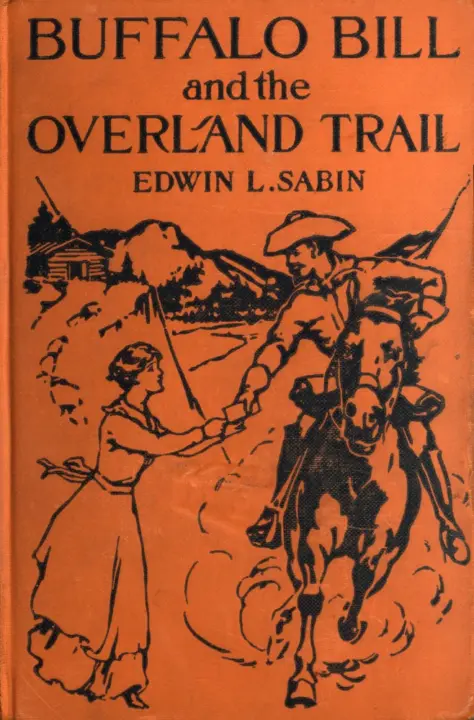
THE CLASSIC COLLECTION · 1914
"Buffalo Bill and the Overland Trail" by Edwin L. Sabin is a historical account written in the early 20th century. The narrative focuses on the adventurous life of Buffalo Bill, alongside the challenges and experiences of those who traversed the Overland Trail in the 19th century, illustrating the spirit of exploration and settlement in America. Central to the story is young David Scott, a boy who becomes involved in the conflict between white settlers and Native Americans, showcasing themes of bravery, heroism, and the harsh realities of frontier life. At the start of the tale, we are introduced to a tense situation where David Scott, a red-headed boy, is held by Cheyenne Indians as they ride through western Nebraska. The boy witnesses the thrill and danger of life on the plains, from plundering wagon trains to impending confrontations. As the narrative unfolds, the focus shifts to an intense battle between indomitable white settlers and the warring Cheyenne tribe, exemplified by buffalo hunters and courageous figures such as Buffalo Bill himself. The opening lays a vivid foundation for a story steeped in historical context, urgent action, and the resilience of its characters on the wild American frontier.
Introduction adapted from the source catalogue; source summaries may be automatically generated.
Free to read · English · 78,782 words · No account needed
MAKE TIME FOR A GOOD BOOK
On by default. Untick to stop anonymous reading totals. Each page counts after 10 seconds in view. How this works.
Anonymous counting is on unless you have switched it off.
Davy, too, could see a dismounted man――Irish Tom or somebody else――half raising himself from the ground, and crawling into the trail, where he sat waving his handkerchief.
With rattle and shuffle and grinding of brake the coach bore down, prepared to stop――and prepared for anything else that might befall.
Yes, it was Irish Tom, the Pony Express rider, and that was his horse, the saddle bags still on it, fidgeting in the brush. Tom was half lying, half sitting, supporting himself with one arm and waving with the other. His hat was gone, his uplifted hand bleeding, one leg seemed useless, and altogether he appeared in a sad state.
In a cloud of dust from the braced hoofs and locked wheels Gentleman Bob halted with the leaders’ fore hoofs almost touching Tom.
“What’s the matter here?”
Tom’s face, grimy and streaked and pinched with pain, gazed up agonizedly, but he did not mince words. The Pony Express rider was superior even to a stage driver.
“Catch that horse for me. I’ve broken my leg.”
Down from the box nimbly swung Mr. Mayfield; jamming his brakes tighter and tying the lines short, down swung Gentleman Bob. Down clambered Dave.
“How’d it happen?”
“Fell and threw me. Catch him and help me on; and hurry up.”
“Catch him, Jack; you and Dave,” bade Bob, crisply. “Where’s it broken,
Tom?”
“High up, but that doesn’t matter. I’ll ride if it kills me. I’m late
now.”
Luckily the horse was easily caught; his dragging lines, entangled in a sage clump, held him until Mr. Mayfield laid hand upon them. When Dave, with Mr. Mayfield leading the horse, returned into the road and hustled back to Bob and Tom, Bob was arguing tensely.
“But you can’t, Tom! You can’t do it, man! You can’t fork a saddle with your hip broken.”
Tom struggled to sit up――and the great beads of sweat stood out on his
red brow.
“You help me on, and tie me there; that’s all I ask. I’ll make it. I’ve
got to.”
“We’ll take you on to the next station, and the saddle bags, too,” retorted Bob. “That’s the quickest way. Strip that horse, Red. Give me a lift with Tom, here, Jack. Open the coach door.”
“But there’s nobody except the agent at the next station, Bob!” appealed Tom, wildly. “Who’ll take the express?”
“Then we’ll go through to the next station. They can send somebody from
there, I reckon.”
Suddenly a great thought struck Davy――and he wondered why the same hadn’t occurred to the others.
Your reading position is saved on this browser. Take it to another device with a library code. Reading pages adapt to text, rather than matching a printed edition.
Edwin L. (Edwin Legrand) Sabin

Edwin L. (Edwin Legrand) Sabin

Edwin L. (Edwin Legrand) Sabin

Edwin L. (Edwin Legrand) Sabin
BEHIND THE BOOK
This eBook is for the use of anyone anywhere in the United States and most other parts of the world at no cost and with almost no restrictions whatsoever. You may copy it, give it away or re-use it under the terms of the Project Gutenberg License included with this eBook or online at www.gutenberg.org. If you are not located in the United States, you will have to check the laws of the country where you are located before using this eBook. Read the source licence.
The original source file, including credits and licence, is retained by this library. Request an original-format copy at no charge. Please include the book title and Project Gutenberg identifier #64231.
KEEP YOUR CURIOSITY GOING
Cécile Tormay

Moritz Busch
Coulson Kernahan
John L. Ransom

Maurice Baring
Frances Wright