THE CLASSIC COLLECTION✦Building the pacific railwayCLASSIC FREE BOOKS
Building the pacific railway
Edwin L. (Edwin Legrand) Sabin
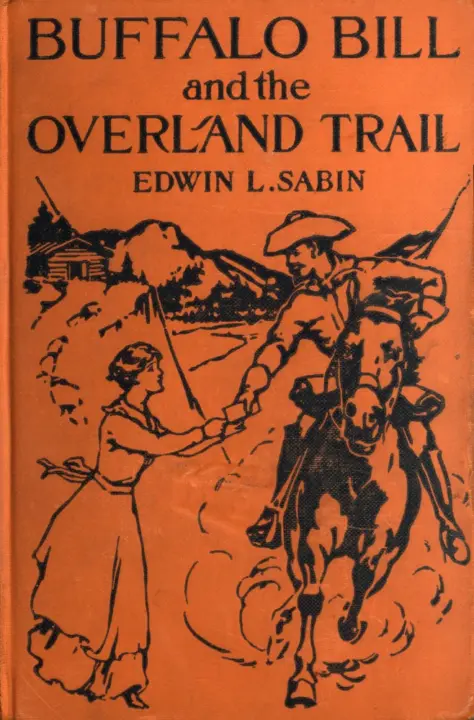
THE CLASSIC COLLECTION · 1914
"Buffalo Bill and the Overland Trail" by Edwin L. Sabin is a historical account written in the early 20th century. The narrative focuses on the adventurous life of Buffalo Bill, alongside the challenges and experiences of those who traversed the Overland Trail in the 19th century, illustrating the spirit of exploration and settlement in America. Central to the story is young David Scott, a boy who becomes involved in the conflict between white settlers and Native Americans, showcasing themes of bravery, heroism, and the harsh realities of frontier life. At the start of the tale, we are introduced to a tense situation where David Scott, a red-headed boy, is held by Cheyenne Indians as they ride through western Nebraska. The boy witnesses the thrill and danger of life on the plains, from plundering wagon trains to impending confrontations. As the narrative unfolds, the focus shifts to an intense battle between indomitable white settlers and the warring Cheyenne tribe, exemplified by buffalo hunters and courageous figures such as Buffalo Bill himself. The opening lays a vivid foundation for a story steeped in historical context, urgent action, and the resilience of its characters on the wild American frontier.
Introduction adapted from the source catalogue; source summaries may be automatically generated.
Free to read · English · 78,782 words · No account needed
MAKE TIME FOR A GOOD BOOK
On by default. Untick to stop anonymous reading totals. Each page counts after 10 seconds in view. How this works.
Anonymous counting is on unless you have switched it off.
“Let ’er go!” yelped Bob, kicking the brake free; and to mighty lunge and smart crack of lash the coach jumped forward, whirling away from the station for another westward spurt.
“This, oh this is the life for me,
Driving the C. O. C. & P. P.”
warbled Gentleman Bob, flicking the off lead mule with the whip cracker. No bull whacker in any Russell, Majors & Waddell outfit could sling a whip more deftly than “Gentleman Bob,” a “king of the road.” “Do you know what that means, nowadays, Red――‘C. O. C. & P. P.’?”
“What, Bob?”
“Clean Out of Cash & Poor Pay!”
“Aw!” scoffed Davy. “Is it as bad as that?”
“Pretty near,” asserted Bob. But that wasn’t his news. His news followed. “Do you know something else; what’s going to happen next on this blooming road?”
“Pony express!” hazarded Dave.
Bob turned his head and coolly stared.
“How’d you find out?”
“I guessed. Mr. Ficklin spoke about it a long time ago.”
“Well, she’s due, and Ben Ficklin and Billy Russell and Alex Majors and that crowd are back of it. You saw Billy Russell go through Laramie last month. He’s been buying hosses――the best in the country, two hundred of ’em, at from one hundred to two hundred dollars apiece. Read this advertisement in the paper; that’ll tell you the scheme.” And reaching in behind the leather apron which covered the front of the pocket or “boot” under his seat, Bob extracted a newspaper. He indicated with his thumb. “Read that,” he bade.
It was a “Missouri Republican,” date of March 26. The article said:
TO SAN FRANCISCO IN EIGHT DAYS
BY
THE CENTRAL OVERLAND CALIFORNIA
AND
PIKE’S PEAK EXPRESS CO.
The first courier of the Pony Express will leave the Missouri River on Tuesday, April 3, at 5 o’clock p. m., and will run regularly weekly thereafter, carrying a letter mail only. The point of departure on the Missouri River will be in telegraphic connection with the East and will be announced later.
The letter mail will be delivered in San Francisco in ten days from the departure of the Express. The Express passes through Forts Kearney, Laramie, Bridger, Great Salt Lake City, Camp Floyd, Carson City, The Washoe Silver Mines, Placerville, and Sacramento.
W. H. RUSSELL, President.
LEAVENWORTH CITY, KANSAS,
March, 1860.
There was more than this to the advertisement, but these were the paragraphs that appealed to Davy.
“Pretty slick they’ve all been about it, too,” resumed Bob, tucking the
paper away again.
Your reading position is saved on this browser. Take it to another device with a library code. Reading pages adapt to text, rather than matching a printed edition.
Edwin L. (Edwin Legrand) Sabin

Edwin L. (Edwin Legrand) Sabin

Edwin L. (Edwin Legrand) Sabin

Edwin L. (Edwin Legrand) Sabin
BEHIND THE BOOK
This eBook is for the use of anyone anywhere in the United States and most other parts of the world at no cost and with almost no restrictions whatsoever. You may copy it, give it away or re-use it under the terms of the Project Gutenberg License included with this eBook or online at www.gutenberg.org. If you are not located in the United States, you will have to check the laws of the country where you are located before using this eBook. Read the source licence.
The original source file, including credits and licence, is retained by this library. Request an original-format copy at no charge. Please include the book title and Project Gutenberg identifier #64231.
KEEP YOUR CURIOSITY GOING
Cécile Tormay

Moritz Busch
Coulson Kernahan
John L. Ransom

Maurice Baring
Frances Wright