THE CLASSIC COLLECTION✦Building the pacific railwayCLASSIC FREE BOOKS
Building the pacific railway
Edwin L. (Edwin Legrand) Sabin
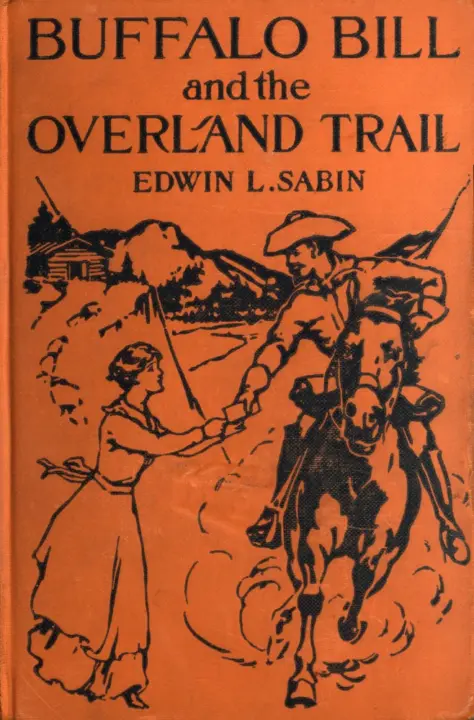
THE CLASSIC COLLECTION · 1914
"Buffalo Bill and the Overland Trail" by Edwin L. Sabin is a historical account written in the early 20th century. The narrative focuses on the adventurous life of Buffalo Bill, alongside the challenges and experiences of those who traversed the Overland Trail in the 19th century, illustrating the spirit of exploration and settlement in America. Central to the story is young David Scott, a boy who becomes involved in the conflict between white settlers and Native Americans, showcasing themes of bravery, heroism, and the harsh realities of frontier life. At the start of the tale, we are introduced to a tense situation where David Scott, a red-headed boy, is held by Cheyenne Indians as they ride through western Nebraska. The boy witnesses the thrill and danger of life on the plains, from plundering wagon trains to impending confrontations. As the narrative unfolds, the focus shifts to an intense battle between indomitable white settlers and the warring Cheyenne tribe, exemplified by buffalo hunters and courageous figures such as Buffalo Bill himself. The opening lays a vivid foundation for a story steeped in historical context, urgent action, and the resilience of its characters on the wild American frontier.
Introduction adapted from the source catalogue; source summaries may be automatically generated.
Free to read · English · 78,782 words · No account needed
MAKE TIME FOR A GOOD BOOK
On by default. Untick to stop anonymous reading totals. Each page counts after 10 seconds in view. How this works.
Anonymous counting is on unless you have switched it off.
Charley was small and compact, tanned and gray-eyed, and so quick and cheery that anybody felt like calling him by his first name at once. “Yank,” the assistant wagon boss, was high-shouldered, long-legged, slouchy, and very different from Charley. His sullen face was bristly with carroty stubble, his eyes were small and close together, and his lips were thin and hard-set, leaking tobacco-juice. Him, Davy did not fancy at all; and by his glance and contemptuous grunt he evidently did not fancy Davy.
Further exchange of conversation was interrupted by the incisive voice of Mr. Russell reproving a teamster who had a perverse ox in hand.
“My man, don’t you understand there’s to be no cursing while you’re working for this company?”
“I’m not cursing,” retorted the man, with a dreadful oath.
“But you’re cursing right this minute!” asserted Mr. Russell, sharply.
“I’m not, either,” answered the man, with another oath.
“Why, you curse every time you open your mouth,” asserted Mr. Russell,
red with anger.
“I don’t,” insisted the man, as before.
That was too much for Mr. Russell. As if not knowing quite what to do with such an ignoramus as this he walked off, scratching his head, and left the puzzled teamster scratching his.
“Well, Red, get busy if you’re to travel with this outfit,” bade Charley to Davy; and proceeded to give orders right and left.
The train was made up and almost ready to start. The last covers were being drawn taut, and the last wagon, which had been delayed to load in town, was approaching.
“All set?” shouted Charley to the teamster who, standing beside the rear pair of his team, seemed to have been appointed as the leader.
The teamster nodded.
“All set.”
“String out,” ordered Charley, and the word was carried along: “String out, boys! Fall in!”
The lead teamster flung his lash; it flipped forward and cracked like a pistol-shot over the backs of his twelve oxen.
“Spot! Dandy! Yip! Yip with you!”
The twelve oxen lunged all together as a well-trained team; and creaking, the huge wagon rolled ahead.
“Haw! Whoa――haw! Hep! Hep!”
To the shouts, and the volley of whip-snappers, the grunts of the oxen, creakings of the wagons and yokes, and rattle of the ox-chains, the train uncoiled from the mass that it had formed and lengthened out into a long line. Led by that first teamster whose “bulls,” sleek-coated, evidently were his pride, the white-topped bull train stretched out for the farther West.
Your reading position is saved on this browser. Take it to another device with a library code. Reading pages adapt to text, rather than matching a printed edition.
Edwin L. (Edwin Legrand) Sabin

Edwin L. (Edwin Legrand) Sabin

Edwin L. (Edwin Legrand) Sabin

Edwin L. (Edwin Legrand) Sabin
BEHIND THE BOOK
This eBook is for the use of anyone anywhere in the United States and most other parts of the world at no cost and with almost no restrictions whatsoever. You may copy it, give it away or re-use it under the terms of the Project Gutenberg License included with this eBook or online at www.gutenberg.org. If you are not located in the United States, you will have to check the laws of the country where you are located before using this eBook. Read the source licence.
The original source file, including credits and licence, is retained by this library. Request an original-format copy at no charge. Please include the book title and Project Gutenberg identifier #64231.
KEEP YOUR CURIOSITY GOING
Cécile Tormay

Moritz Busch
Coulson Kernahan
John L. Ransom

Maurice Baring
Frances Wright