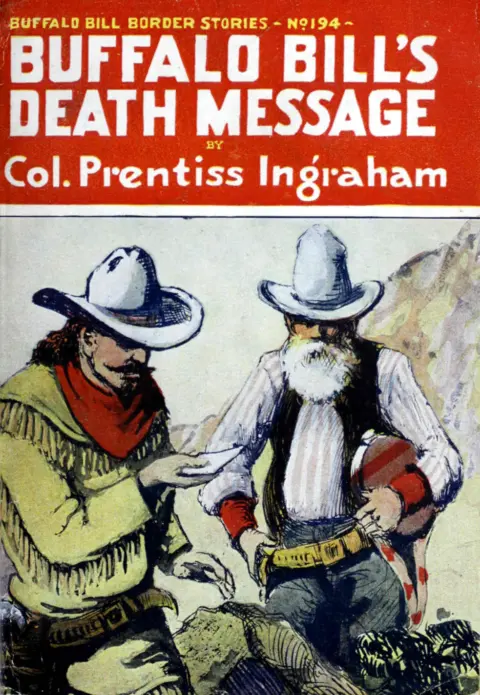
Buffalo Bill’s death message
Prentiss Ingraham
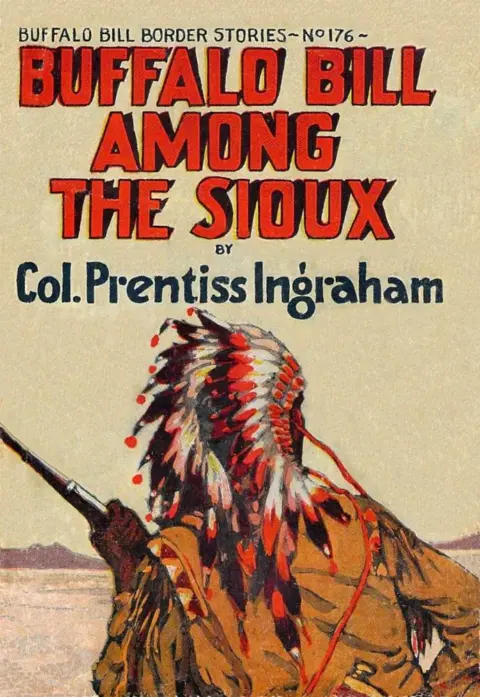
THE CLASSIC COLLECTION · 1906
"Buffalo Bill Among the Sioux; Or, The Fight in the Rapids" by Prentiss Ingraham is a historical adventure novel likely written in the early 20th century. The narrative revolves around the legendary figure Buffalo Bill, whose real name is Colonel William F. Cody, and Wild Bill Hickok, as they navigate the tumultuous conflicts between American settlers and Native American tribes during the mid-19th century westward expansion. The book promises thrilling episodes of scouting, combat, and the interplay of cultures in a frontier setting. At the start of the story, we learn about a dangerous mission undertaken by Wild Bill Hickok, who is delivering crucial military dispatches amid rising tensions with hostile Native American tribes. As he rides from Fort Larned, he encounters a band of pursuing Indians that forces him into a harrowing chase. Wild Bill's resolve to warn the fort of impending danger showcases his bravery and the overarching theme of duty amid the chaos of conflict. After his thrilling escape, he reunites with Buffalo Bill at the fort, where they strategize together to prepare for an anticipated attack from the Sioux and their allies, setting the stage for an epic confrontation.
Introduction adapted from the source catalogue; source summaries may be automatically generated.
Free to read · English · 88,837 words · No account needed
MAKE TIME FOR A GOOD BOOK
On by default. Untick to stop anonymous reading totals. Each page counts after 10 seconds in view. How this works.
Anonymous counting is on unless you have switched it off.
It was near sunset when the little company of half-famished men and women, after long and anxious waiting, saw the welcome procession approaching, and their joy and relief were so great that they no longer thought of the necessity of any precaution, nor doubted the pacific disposition of the red men who had sent them so bounteous a supply of food.
This conviction was confirmed when Congo came and returned the money to its owners, and briefly told the story, but it was not fully shared by the negro himself.
“Day may be all right,” he said, “but dey t’ink you’ve got rifles and cannons, and dat makes a difference. Dese boys are using dere eyes, you see, and will tell ’em what a whopper I told ’em about de guns. So I t’ink we’d better be off.”
Captain Meinhold considered this to be prudent counsel, on the whole, and, although disposed to judge the Indians leniently, he advised an immediate return to the boats, which were in full view, and which the three red men seemed to be eying very narrowly.
They expressed no surprise, however, at the absence of the “thunder guns,” nor at the unarmed condition of the white men, which could not have escaped their observation. Having accepted some presents of pocket-knives and jewelry, they departed, and the white men started for their boats.
They were much enfeebled, however, by fasting and toil; the way was rough, and they had the venison to carry, so they made but slow progress, and some alarm was excited by seeing that the Indians, who had started moderately enough, were all soon on a rapid run.
It does not take an Indian long to run a mile, but there was plenty of time to embark and obtain a safe offing, unless they were to be followed by the savages in boats, and if such a pursuit should be made with hostile intent, fight or resistance would be equally vain.
Thus Buffalo Bill argued, and, keeping very calm himself, advised the
others to do so.
“I believe they are all right,” he said. “Pray let’s have a little faith in human nature, my friends, and not believe men to be fiends when they have shown us nothing but kindness.”
“Gosh! Dey tried pretty hard to cut me to pieces at fust!” said the
negro.
“Because they thought you were an enemy, and had come to harm them.
That’s all, Joe.”
“Yes--de squaws was at de bottom of it. Dey fust got frightened for nothin’, an’ den told awful lies about me, an’ sot de men on.”
Your reading position is saved on this browser. Take it to another device with a library code. Reading pages adapt to text, rather than matching a printed edition.
Prentiss Ingraham
Prentiss Ingraham
Prentiss Ingraham
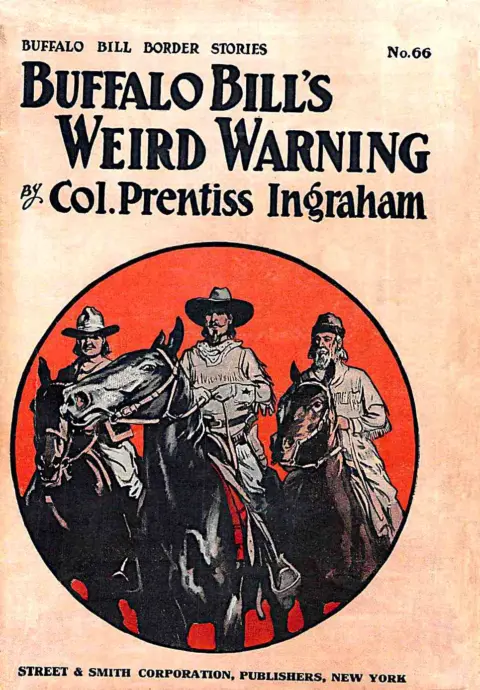
Prentiss Ingraham
BEHIND THE BOOK
This eBook is for the use of anyone anywhere in the United States and most other parts of the world at no cost and with almost no restrictions whatsoever. You may copy it, give it away or re-use it under the terms of the Project Gutenberg License included with this eBook or online at www.gutenberg.org. If you are not located in the United States, you will have to check the laws of the country where you are located before using this eBook. Read the source licence.
The original source file, including credits and licence, is retained by this library. Request an original-format copy at no charge. Please include the book title and Project Gutenberg identifier #63360.
KEEP YOUR CURIOSITY GOING
Cécile Tormay

Moritz Busch
Coulson Kernahan
John L. Ransom

Maurice Baring
Frances Wright