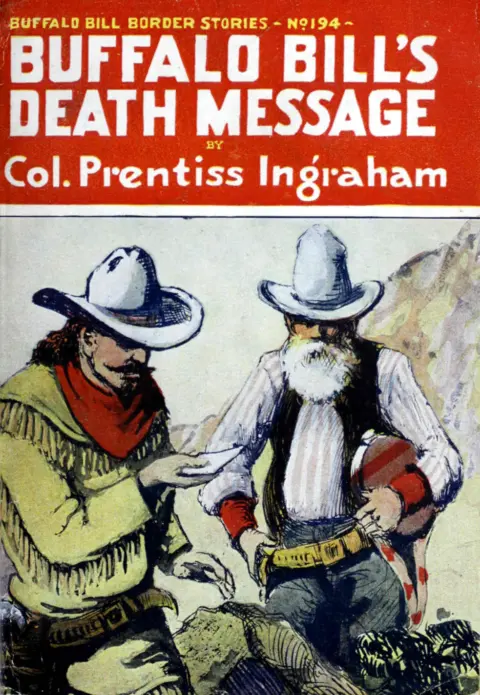
Buffalo Bill’s death message
Prentiss Ingraham
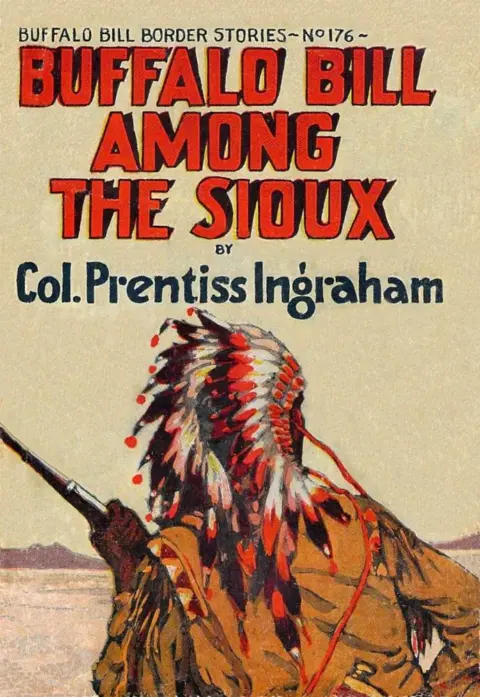
THE CLASSIC COLLECTION · 1906
"Buffalo Bill Among the Sioux; Or, The Fight in the Rapids" by Prentiss Ingraham is a historical adventure novel likely written in the early 20th century. The narrative revolves around the legendary figure Buffalo Bill, whose real name is Colonel William F. Cody, and Wild Bill Hickok, as they navigate the tumultuous conflicts between American settlers and Native American tribes during the mid-19th century westward expansion. The book promises thrilling episodes of scouting, combat, and the interplay of cultures in a frontier setting. At the start of the story, we learn about a dangerous mission undertaken by Wild Bill Hickok, who is delivering crucial military dispatches amid rising tensions with hostile Native American tribes. As he rides from Fort Larned, he encounters a band of pursuing Indians that forces him into a harrowing chase. Wild Bill's resolve to warn the fort of impending danger showcases his bravery and the overarching theme of duty amid the chaos of conflict. After his thrilling escape, he reunites with Buffalo Bill at the fort, where they strategize together to prepare for an anticipated attack from the Sioux and their allies, setting the stage for an epic confrontation.
Introduction adapted from the source catalogue; source summaries may be automatically generated.
Free to read · English · 88,837 words · No account needed
MAKE TIME FOR A GOOD BOOK
On by default. Untick to stop anonymous reading totals. Each page counts after 10 seconds in view. How this works.
Anonymous counting is on unless you have switched it off.
“Do you talky Englishy?” continued Joe, who seemed to think he would make himself more easily understood by this mode of speech.
The chief, for such he was, or had been in his better days, nodded emphatically, as if he would have said: “Yes, you have come to the right shop for English, my boy.”
What he did say was:
“Ess, me spokes him. Me Sioux, uh! Wise chief!”
“Glad you mentioned it, sah! Happy to make your acquaintance. Whare is
your folks?”
The Indian shook his head.
“Don’t you understandy?” asked Joe.
Again the chief made a negative gesture.
“Whare’s all de Injins, and de squaws, and de papooses?” continued the negro, looking around the room.
“My braves hunt. Squaws and papooses much scare and run.”
“In de woods?” asked Joe, pointing that way.
The chief seemed disposed to be noncommital on this point, and his visitor repeated his question.
“Um, sink in the ground,” replied the Sioux, gravely pointing downward.
“Debbil dey did!” said Joe, with a wondering stare; and then, after a
pause, he continued:
“Tell you wot, old chap, I’se very hungry.”
He opened his huge mouth and pointed into it by way of explaining this
remark.
“Dare’s ten men back here, all berry hungry; good men, understandy?”
“Good!” said the chief, echoing the word used by his guest.
“Yes--goody men--all armed wid rifles and ’volvers and knives,
understandy?”
“Rifles, knives, ugh!” repeated the Indian.
“Sackly! You understand. Now hab you got any victuals to sell?”
The chief looked steadily at him a while, and then said:
“Spoke him again.”
“Hab you any victuals to sell?”
The sachem shook his head in evident bewilderment, and Joe, taking a handful of silver coin--half and quarter dollars--laid it down beside him and asked him if he knew what it was.
“Ess,” was the reply. “Me Sioux--wise chief. Know ’em.”
And without more ado he took up the money and slipped it, piece by
piece, inside his belt.
“All righty,” said Joe. “Now, whare’s de victuals?”
“Ah! No understan’ English.”
“De victuals!” screamed the negro again, pointing down his widely
opened mouth.
“No understan’.”
“Corn--venison--bear’s meat--anything to eat,” continued the pertinacious Joe, pantomiming mastication by snapping his great white teeth together like a hungry mastiff.
“Ah! ah! phuff! ess! Buckle, tuckle, gon so ripta, honorable much tosh-a-long! Uh! uh!” said the chief, smiling with a sudden gleam of intelligence and trying to rise.
“Dat’s it!” replied Joe. “You’ve got it now, I guess, dough I can’t say I quite understand you.”
Your reading position is saved on this browser. Take it to another device with a library code. Reading pages adapt to text, rather than matching a printed edition.
Prentiss Ingraham
Prentiss Ingraham
Prentiss Ingraham
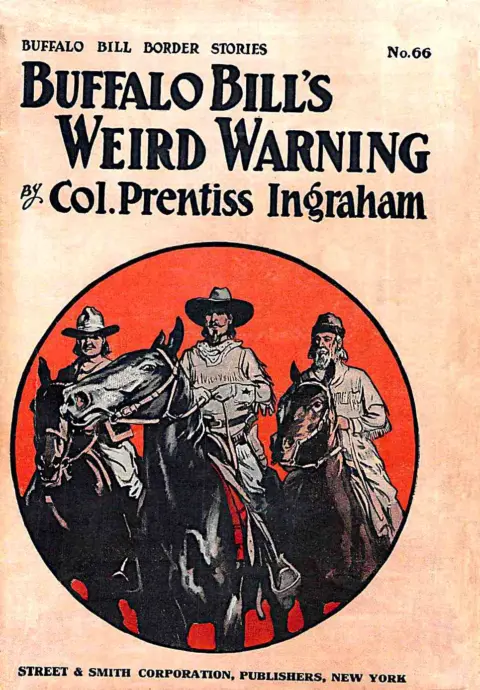
Prentiss Ingraham
BEHIND THE BOOK
This eBook is for the use of anyone anywhere in the United States and most other parts of the world at no cost and with almost no restrictions whatsoever. You may copy it, give it away or re-use it under the terms of the Project Gutenberg License included with this eBook or online at www.gutenberg.org. If you are not located in the United States, you will have to check the laws of the country where you are located before using this eBook. Read the source licence.
The original source file, including credits and licence, is retained by this library. Request an original-format copy at no charge. Please include the book title and Project Gutenberg identifier #63360.
KEEP YOUR CURIOSITY GOING
Cécile Tormay

Moritz Busch
Coulson Kernahan
John L. Ransom

Maurice Baring
Frances Wright