The Treasure of Hidden Valley
Willis George Emerson
THE CLASSIC COLLECTION · 1902
"Buell Hampton" by Willis George Emerson is a novel written in the early 20th century. The story is set against the backdrop of the American Southwest and revolves around themes of ambition, social status, and romantic entanglements, primarily through the experiences of young Ethel Horton and the significant figures surrounding her, including her mother, Mrs. J. Bruce-Horton, and the cattle king John Horton. The opening portion introduces Ethel Horton, an American girl returning from an English education, and her mother, who longs for her daughter to marry into titled society. The narrative begins with a lively tennis match that reveals Ethel's spirited nature, while her mother engages in conversation with a friend, setting the stage for the societal aspirations that drive their lives. Mere moments later, Ethel’s interactions, as well as her delight in returning home, quickly set up the implications of family expectations and societal pressures. As the story unfolds, it hints at the growing tensions between the well-to-do and the farmers in their community, particularly with the cattle baron Horton at the center of the local landscape. This context establishes a rich setting filled with potential conflicts based on class, ambition, and the characters' personal journeys.
Introduction adapted from the source catalogue; source summaries may be automatically generated.
Free to read · English · 87,915 words · No account needed
MAKE TIME FOR A GOOD BOOK
On by default. Untick to stop anonymous reading totals. Each page counts after 10 seconds in view. How this works.
Anonymous counting is on unless you have switched it off.
As he neared the house, he heard Marie singing. There was a wild, pleading pathos in her voice, and a passionate earnestness, often sinking into a dreamy melody, so low and plaintive that Hugh almost held his breath for fear he might lose a single syllable of her words. She was singing a love song, with music even sweeter than the sentiment:
“By waters deep, in my lonely dreaming,
Come visions fair of a fancied seeming,
While other nights are wafted back to me;
Nights so fleeting, when our hearts were beating
With tender love and sweetest rhapsody.
On ebbing waters of languid river,
Where the moonbeams play and lances quiver,
Reflecting stars, from bending arch of blue,
I watch them glisten, and wait and listen
To the night bird’s song, while I dream of you.
The mist clouds rise, then fall apart,
Yet still I dream of you, sweetheart.”
When the music of the song had died away, Hugh walked meditatively along the graveled walk toward the house, and up the broad steps to the veranda. Marie answered the bell.
“Why, how do you do, Mr. Stanton?” said she, extending her hand in greeting. She led him into the major’s library, and invited him to be seated. “I am glad you’ve called,” she said, “for I am so lonely. I fear you will be disappointed, however, for papa is not at home.”
“The major not at home?” repeated Hugh, with surprise in his voice.
“No,” replied the girl, the light in her face fading. Hugh saw her sudden change of expression, and he felt that he had been rather uncomplimentary.
“In that event,” said he, by way of atonement, “I shall have the still greater pleasure of a visit with you.”
“Me?” she exclaimed, while the light rekindled in her face. “I am not nearly so clever as Ethel.”
“You underestimate yourself,” replied Hugh, gallantly.
“Ethel says you do not come to see them any more. Are you afraid of the Englishman?” There was a suppressed merriment in the girl’s voice as she asked this question.
“No,” replied Hugh, “I am not afraid of him, but I dislike him very much.”
“You are very frank,” said Marie, laughingly. “As Ethel is my dearest friend, I will tell you something—she does n’t like him either. There, is n’t that good news?”
“I have not seen as much of you as I have of Miss Ethel, but it is my misfortune.”
“Yes,” said Hugh, reflectively, “but tell me, do not girls sometimes marry men whom they very much dislike?”
Your reading position is saved on this browser. Take it to another device with a library code. Reading pages adapt to text, rather than matching a printed edition.
Willis George Emerson
Willis George Emerson
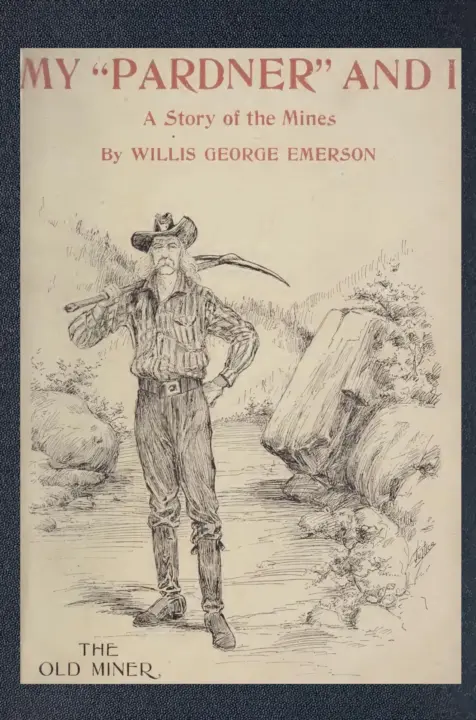
Willis George Emerson
Willis George Emerson
BEHIND THE BOOK
This eBook is for the use of anyone anywhere in the United States and most other parts of the world at no cost and with almost no restrictions whatsoever. You may copy it, give it away or re-use it under the terms of the Project Gutenberg License included with this eBook or online at www.gutenberg.org. If you are not located in the United States, you will have to check the laws of the country where you are located before using this eBook. Read the source licence.
The original source file, including credits and licence, is retained by this library. Request an original-format copy at no charge. Please include the book title and Project Gutenberg identifier #52449.
KEEP YOUR CURIOSITY GOING
Coulson Kernahan

Maurice Baring
Frances Wright
Cécile Tormay

Frederic Jesup Stimson

W. H. P. (William Henry Pope) Jarvis