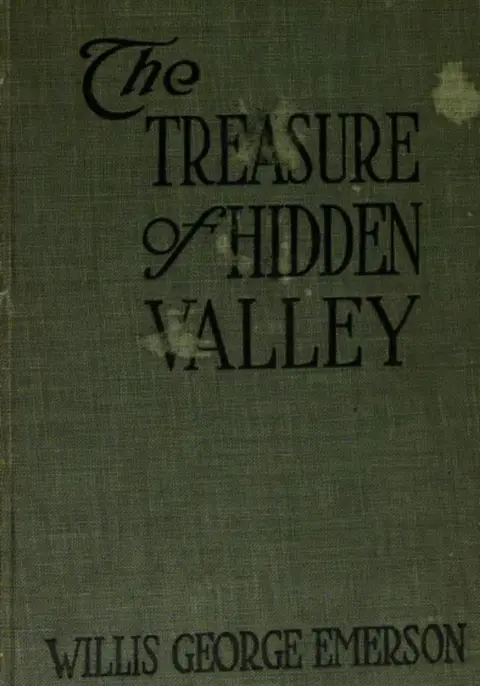
The Treasure of Hidden Valley
Willis George Emerson
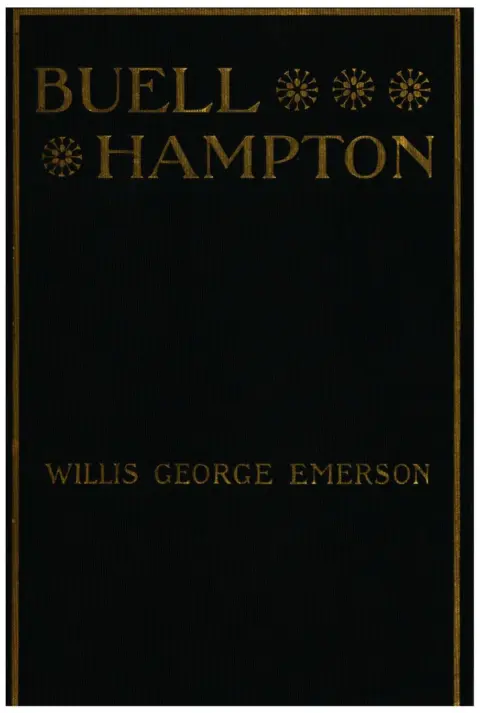
THE CLASSIC COLLECTION · 1902
"Buell Hampton" by Willis George Emerson is a novel written in the early 20th century. The story is set against the backdrop of the American Southwest and revolves around themes of ambition, social status, and romantic entanglements, primarily through the experiences of young Ethel Horton and the significant figures surrounding her, including her mother, Mrs. J. Bruce-Horton, and the cattle king John Horton. The opening portion introduces Ethel Horton, an American girl returning from an English education, and her mother, who longs for her daughter to marry into titled society. The narrative begins with a lively tennis match that reveals Ethel's spirited nature, while her mother engages in conversation with a friend, setting the stage for the societal aspirations that drive their lives. Mere moments later, Ethel’s interactions, as well as her delight in returning home, quickly set up the implications of family expectations and societal pressures. As the story unfolds, it hints at the growing tensions between the well-to-do and the farmers in their community, particularly with the cattle baron Horton at the center of the local landscape. This context establishes a rich setting filled with potential conflicts based on class, ambition, and the characters' personal journeys.
Introduction adapted from the source catalogue; source summaries may be automatically generated.
Free to read · English · 87,915 words · No account needed
MAKE TIME FOR A GOOD BOOK
On by default. Untick to stop anonymous reading totals. Each page counts after 10 seconds in view. How this works.
Anonymous counting is on unless you have switched it off.
“Oh, thank you, doctor, I have been so worried about her.”
“With the assurance that I have given, you may cease worrying entirely,” said Jack as he turned to leave her.
“Why are you in such haste to go?” asked Ethel, coquettishly.
“I am not particularly in haste,” replied Jack, “but perhaps I interrupt your reverie.”
“Yes, but I want to be interrupted,” returned Ethel, laughingly.
“Very well,” said Jack, seating himself near her.
Jack Redfield was anything but a Beau Brummel. The idea of yielding himself to maiden sovereignty had never occurred to him. Indeed, his lack of homage to woman might almost have been interpreted as a poverty of gallantry. Nevertheless, in the few days that he had been making professional calls on her mother, he had awakened to a knowledge of the feet that Miss Ethel interested him, to say the least. There was a wild dash of independence and of frankness about her that possessed a charm for him which he was unable to analyze.
As Jack looked out over the lake he was conscious that Ethel was studying him closely. Presently she said, “I cannot make myself believe that you are a physician.”
“Indeed, why not?” interrogated Jack, much amused by her frankness. “You evidently expected me to perform a miracle in your mother’s case, and, as I have failed to do so, you judge me harshly.”
“Oh, no! not that,” protested Ethel, “but then, I always fancied that doctors, who give bitter medicine, cut up people and saw bones, should be old and grim. Now, you don’t look like a doctor at all to me.”
“Well, as I have to make my living in the uncanny way that you have described, I must say that I am glad every one does not share your hasty judgment of me.”
“Oh, thank you,” said Ethel, “that’s very well put. I know you think I am not very kind.”
“No, I would hardly go as far as that,” said Jack, “but I doubt my ability to hold my own in a conversation with you, much more than I would my skill in a surgical operation or a bad case of measles. I have faith that my treatment would be successful, but I have no faith that you would not vanquish me very quickly with your repartee and your direct way of putting things.”
“Oh, what a refreshing compliment,” laughed Ethel. “I thought because you were a doctor that you were stoical and grim, but you really seem quite the reverse.”
Your reading position is saved on this browser. Take it to another device with a library code. Reading pages adapt to text, rather than matching a printed edition.
Willis George Emerson
Willis George Emerson
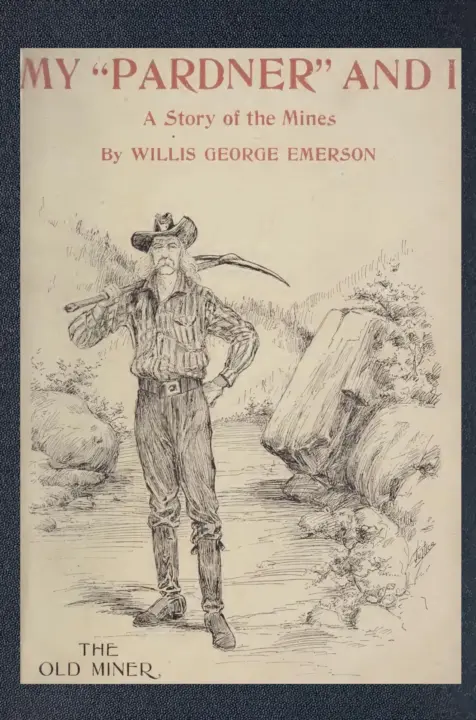
Willis George Emerson
Willis George Emerson
BEHIND THE BOOK
This eBook is for the use of anyone anywhere in the United States and most other parts of the world at no cost and with almost no restrictions whatsoever. You may copy it, give it away or re-use it under the terms of the Project Gutenberg License included with this eBook or online at www.gutenberg.org. If you are not located in the United States, you will have to check the laws of the country where you are located before using this eBook. Read the source licence.
The original source file, including credits and licence, is retained by this library. Request an original-format copy at no charge. Please include the book title and Project Gutenberg identifier #52449.
KEEP YOUR CURIOSITY GOING
Coulson Kernahan

Maurice Baring
Frances Wright
Cécile Tormay

Frederic Jesup Stimson

W. H. P. (William Henry Pope) Jarvis