The Treasure of Hidden Valley
Willis George Emerson
THE CLASSIC COLLECTION · 1902
"Buell Hampton" by Willis George Emerson is a novel written in the early 20th century. The story is set against the backdrop of the American Southwest and revolves around themes of ambition, social status, and romantic entanglements, primarily through the experiences of young Ethel Horton and the significant figures surrounding her, including her mother, Mrs. J. Bruce-Horton, and the cattle king John Horton. The opening portion introduces Ethel Horton, an American girl returning from an English education, and her mother, who longs for her daughter to marry into titled society. The narrative begins with a lively tennis match that reveals Ethel's spirited nature, while her mother engages in conversation with a friend, setting the stage for the societal aspirations that drive their lives. Mere moments later, Ethel’s interactions, as well as her delight in returning home, quickly set up the implications of family expectations and societal pressures. As the story unfolds, it hints at the growing tensions between the well-to-do and the farmers in their community, particularly with the cattle baron Horton at the center of the local landscape. This context establishes a rich setting filled with potential conflicts based on class, ambition, and the characters' personal journeys.
Introduction adapted from the source catalogue; source summaries may be automatically generated.
Free to read · English · 87,915 words · No account needed
MAKE TIME FOR A GOOD BOOK
On by default. Untick to stop anonymous reading totals. Each page counts after 10 seconds in view. How this works.
Anonymous counting is on unless you have switched it off.
“No, sir, ‘cause we’re not ‘kainted yet—when we is ‘kainted I will.”
“This gentleman is my friend, Harry,” said the father, “and therefore he is your friend, too.”
“All ‘ite, then,” said the boy, “I’s your fwend, too,” and he held out his hand, which Hugh clasped as a bond of good-fellowship between them.
Hugh Stanton very early discovered that Captain Osborn’s life was centred in his young son. That evening, by invitation of the captain, Hugh dined at the Osborn home. He was very much surprised at the youthful appearance of the captain’s lovely wife. She made no efforts to conceal her feelings of superiority and indifference toward the captain, but she was very gracious toward Hugh, and chatted away incessantly about her travels and her English friends. It seemed that the iron will of the captain, which he was noted for exercising in the business world, was changed to all forbearance and courtly respect toward his wife; although one could readily discover a sad lack of sympathy between them. Indeed, there was but little in common between Captain Osborn and his wife. During dinner the captain made some remark relative to the superiority of American institutions, when his wife quickly interposed:
“Captain, you know nothing about it. You will do far better to discuss matters of business, bank stocks, and that sort of thing. They seem to suit your particular style of intellect; but of society and what constitutes the best taste, why, really, you are not an authority.”
The captain reddened a little, and replied, quietly, “Very well, Lucy, I freely acknowledge your superior judgment in such matters—perhaps I ought not to have spoken; but I know one thing,” said he, chucking little Harry under the chin, “this boy and I are in love with each other, is n’t that so, Harry?”
“Yes, we’s made a barg’in, mamma,” cried the little fellow, “papa and I is lovers, and when I dets big I’s doin’ to be his par’ner.”
“Indeed!” said his mother, as she elevated her eyebrows. “You and your papa have delightful times together. Well, I am glad of the attachment,” said she, turning toward Hugh with a wearied expression, as much as to say, “Let them go their way, and I will go mine.”
“I hope to see much of you, Mr. Stanton,” she said, with her most bewitching smile. “Are you fond of society?”
Hugh confessed that he knew but little of the social world, having led a rather busy and secluded life.
“Well, you will not see much society in southwestern Kansas,” observed Mrs. Osborn.
Your reading position is saved on this browser. Take it to another device with a library code. Reading pages adapt to text, rather than matching a printed edition.
Willis George Emerson
Willis George Emerson
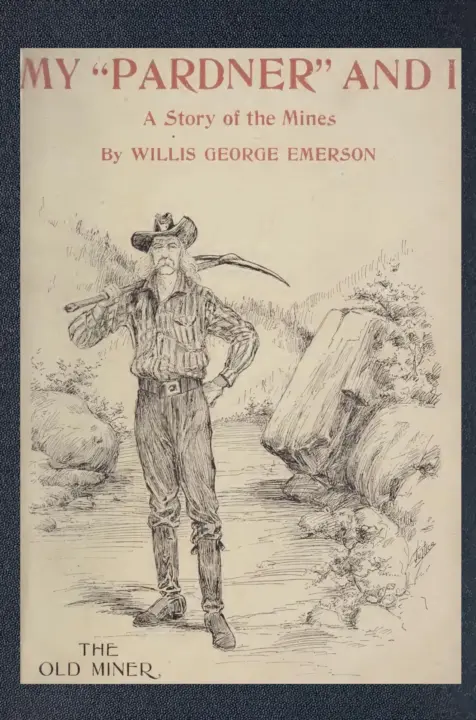
Willis George Emerson
Willis George Emerson
BEHIND THE BOOK
This eBook is for the use of anyone anywhere in the United States and most other parts of the world at no cost and with almost no restrictions whatsoever. You may copy it, give it away or re-use it under the terms of the Project Gutenberg License included with this eBook or online at www.gutenberg.org. If you are not located in the United States, you will have to check the laws of the country where you are located before using this eBook. Read the source licence.
The original source file, including credits and licence, is retained by this library. Request an original-format copy at no charge. Please include the book title and Project Gutenberg identifier #52449.
KEEP YOUR CURIOSITY GOING
Coulson Kernahan

Maurice Baring
Frances Wright
Cécile Tormay

Frederic Jesup Stimson

W. H. P. (William Henry Pope) Jarvis