The Treasure of Hidden Valley
Willis George Emerson
THE CLASSIC COLLECTION · 1902
"Buell Hampton" by Willis George Emerson is a novel written in the early 20th century. The story is set against the backdrop of the American Southwest and revolves around themes of ambition, social status, and romantic entanglements, primarily through the experiences of young Ethel Horton and the significant figures surrounding her, including her mother, Mrs. J. Bruce-Horton, and the cattle king John Horton. The opening portion introduces Ethel Horton, an American girl returning from an English education, and her mother, who longs for her daughter to marry into titled society. The narrative begins with a lively tennis match that reveals Ethel's spirited nature, while her mother engages in conversation with a friend, setting the stage for the societal aspirations that drive their lives. Mere moments later, Ethel’s interactions, as well as her delight in returning home, quickly set up the implications of family expectations and societal pressures. As the story unfolds, it hints at the growing tensions between the well-to-do and the farmers in their community, particularly with the cattle baron Horton at the center of the local landscape. This context establishes a rich setting filled with potential conflicts based on class, ambition, and the characters' personal journeys.
Introduction adapted from the source catalogue; source summaries may be automatically generated.
Free to read · English · 87,915 words · No account needed
MAKE TIME FOR A GOOD BOOK
On by default. Untick to stop anonymous reading totals. Each page counts after 10 seconds in view. How this works.
Anonymous counting is on unless you have switched it off.
“Another reason, Major,” interposed Lynn, “speakin’ on the spur of the minute like, why you should favorably consider my idee. You need a deputy—bet yer life you do, in this ‘ere lecturin’ business; then you could give yer time to runnin’ down and locoin’ the cattle thieves. I wear magnifyin’ glasses, I do, when such swell opportunities as this ‘ere comes slidin’ ‘round under my nose, bet yer life I do.”
The major seemed lost in thought, and walked slowly back and forth, with his hands clasped behind him, paying no attention whatever to Judge Lynn’s observations. Presently he said: “Very well, Spencer, I will see you and Kinne-man this evening, after the Barley Hullers’ meeting. Call at my house about eleven o’clock.”
“All right,” replied Spencer, “jist as you say; you kin always count on Bill Kinneman and yours truly bein’ punctu’l when you give the word,” and with this Dan shuffled out of the room.
After he had gone, the major said: “This is a bad business, very bad. The Patriot comes out to-morrow, and I must write up this last outrage of the cattle thieves. It is simply incomprehensible how they can carry on this lawless work without being detected.”
“My private opinion, Major, speakin’ once-served-like,” said Judge Lynn, “is that you’re needed dangnation bad to sort o’ look after these ‘ere fellers, person’ly, an’ you can’t do it spendin’ yer time away from home lecturin’, bet yer life you can’t.”
The major scowled, and, seating himself at the table, commenced writing, and soon after Judge Lynn quietly took his departure, without again venturing to broach the subject of being made deputy lecturer.
About eight o’clock that evening Hugh called at the Patriot office.
“Well, well!” exclaimed Major Hampton. “This is, indeed, a pleasing surprise,—a refreshing whiff of the unexpected.”
“The pleasure is all mine, Major,” replied Hugh, seating himself at the earnest solicitation of his old friend. “I have been trying,” continued Hugh, “for several days to find time to call on you, but you know so much has happened.”
“True,” said the major, “much has occurred,—much that is marvelous, and yet in it all can be traced the hand of an all-wise Providence. Let me take this occasion, my dear Stanton, to tender my congratulations on your good fortune in discovering your long-lost father.”
“Thank you,” said Hugh. “It is all so new and strange that I can’t realize the new relations.”
Your reading position is saved on this browser. Take it to another device with a library code. Reading pages adapt to text, rather than matching a printed edition.
Willis George Emerson
Willis George Emerson
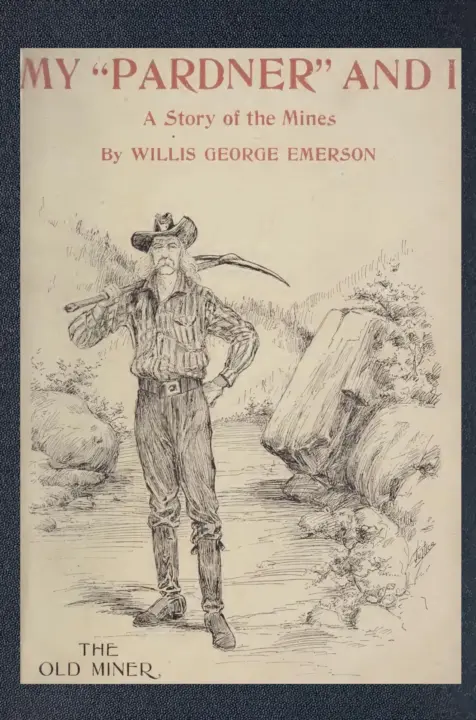
Willis George Emerson
Willis George Emerson
BEHIND THE BOOK
This eBook is for the use of anyone anywhere in the United States and most other parts of the world at no cost and with almost no restrictions whatsoever. You may copy it, give it away or re-use it under the terms of the Project Gutenberg License included with this eBook or online at www.gutenberg.org. If you are not located in the United States, you will have to check the laws of the country where you are located before using this eBook. Read the source licence.
The original source file, including credits and licence, is retained by this library. Request an original-format copy at no charge. Please include the book title and Project Gutenberg identifier #52449.
KEEP YOUR CURIOSITY GOING
Coulson Kernahan

Maurice Baring
Frances Wright
Cécile Tormay

Frederic Jesup Stimson

W. H. P. (William Henry Pope) Jarvis