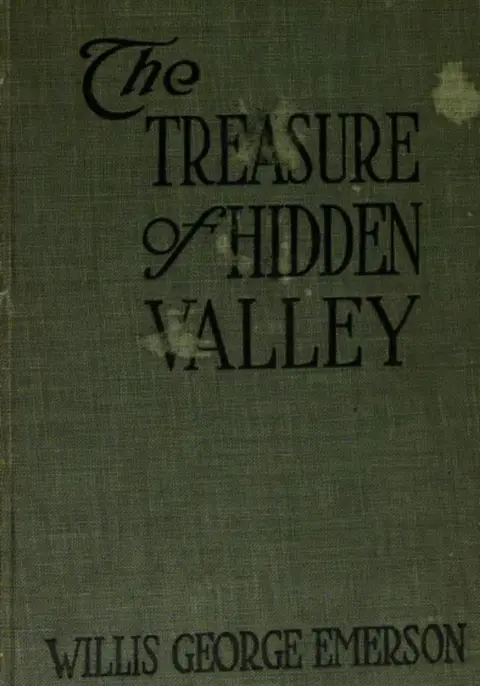
The Treasure of Hidden Valley
Willis George Emerson
THE CLASSIC COLLECTION · 1902
"Buell Hampton" by Willis George Emerson is a novel written in the early 20th century. The story is set against the backdrop of the American Southwest and revolves around themes of ambition, social status, and romantic entanglements, primarily through the experiences of young Ethel Horton and the significant figures surrounding her, including her mother, Mrs. J. Bruce-Horton, and the cattle king John Horton. The opening portion introduces Ethel Horton, an American girl returning from an English education, and her mother, who longs for her daughter to marry into titled society. The narrative begins with a lively tennis match that reveals Ethel's spirited nature, while her mother engages in conversation with a friend, setting the stage for the societal aspirations that drive their lives. Mere moments later, Ethel’s interactions, as well as her delight in returning home, quickly set up the implications of family expectations and societal pressures. As the story unfolds, it hints at the growing tensions between the well-to-do and the farmers in their community, particularly with the cattle baron Horton at the center of the local landscape. This context establishes a rich setting filled with potential conflicts based on class, ambition, and the characters' personal journeys.
Introduction adapted from the source catalogue; source summaries may be automatically generated.
Free to read · English · 87,915 words · No account needed
MAKE TIME FOR A GOOD BOOK
On by default. Untick to stop anonymous reading totals. Each page counts after 10 seconds in view. How this works.
Anonymous counting is on unless you have switched it off.
As Hugh turned and walked briskly along the veranda, he saw Doctor Redfield disembarking from a boat-ride. Through the screen door he saw Ethel, whose tender brown eyes and marvelous beauty were daily growing more radiant under the expanding influence of an ennobling and reciprocal love. She was humming a love ditty to herself as Hugh pushed aside the screen and approached her.
“Welcome, my good friend,” said she, looking up and extending her hand, “Jack and I were talking of you while taking our boat-ride, and had made up our minds to go and fetch you, had you not come of your own accord. Now then,” said she, roguishly, “where are your excuses and explanations?”
“Ah, Ethel,” said Hugh, as he still held her hand in his with tenderest loyalty and respect, “I have much to say.” And then, controlling his excitement as much as possible, he hurriedly related all that had happened.
“Poor daddy,” murmured Ethel, while tears trembled in her eyes as she followed the detail with closest attention.
“And have you told mamma?”
“All,” replied Hugh.
“Then we must order the carriage and go at once for my darling father. Ah, Hugh, he is your father as well; and you—you are my brother!” A flood of recollections seemed suddenly to envelop both brother and sister, and for a moment they were stunned.
“Yes,” said Hugh, “you are my sister,” and, taking her in his strong arms, he embraced her fervently.
A moment later they were both startled at a footstep on the veranda, and, turning, they found themselves face to face with Doctor Redfield, who had observed their affectionate embrace.
“Pardon me,” he said, stiffly, and with marked politeness, “I was not aware that our friend had arrived.”
“Yes,” stammered Ethel, while a smile played around her lips, “Hugh has given us quite a surprise, and you don’t know how glad I am that he is here.”
“Yes, I imagine that you are decidedly pleased,” said Jack, in his most frigid tones, while he shot a glance at Hugh as much as to say, “An explanation is in order, sir; otherwise, coffee and pistols for two.” In the meantime, Ethel had quite recovered herself.
“Why, Jack,” said she, “you are usually so jolly; what makes you act so petulantly? I believe you are angry at something?”
“Me angry? Oh, no,” said Jack, coldly; “possibly a little displeased with myself for having interrupted such a pleasant conversation.” He tried to give an expression of indifference and half amusement to his face, but instead it was one of absolute vexation.
Your reading position is saved on this browser. Take it to another device with a library code. Reading pages adapt to text, rather than matching a printed edition.
Willis George Emerson
Willis George Emerson
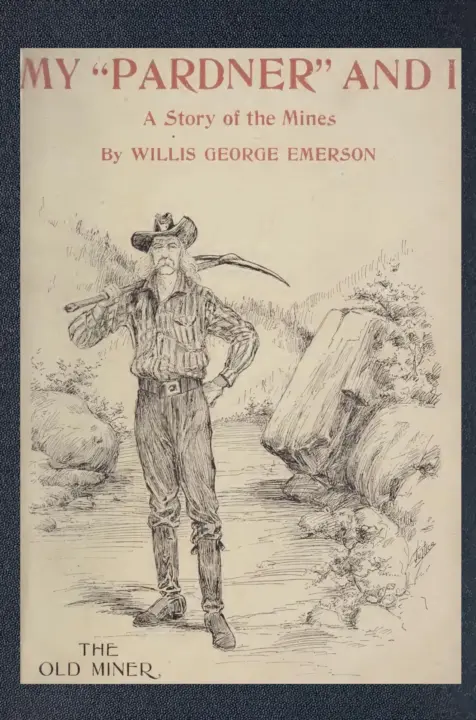
Willis George Emerson
Willis George Emerson
BEHIND THE BOOK
This eBook is for the use of anyone anywhere in the United States and most other parts of the world at no cost and with almost no restrictions whatsoever. You may copy it, give it away or re-use it under the terms of the Project Gutenberg License included with this eBook or online at www.gutenberg.org. If you are not located in the United States, you will have to check the laws of the country where you are located before using this eBook. Read the source licence.
The original source file, including credits and licence, is retained by this library. Request an original-format copy at no charge. Please include the book title and Project Gutenberg identifier #52449.
KEEP YOUR CURIOSITY GOING
Coulson Kernahan

Maurice Baring
Frances Wright
Cécile Tormay

Frederic Jesup Stimson

W. H. P. (William Henry Pope) Jarvis