The Treasure of Hidden Valley
Willis George Emerson
THE CLASSIC COLLECTION · 1902
"Buell Hampton" by Willis George Emerson is a novel written in the early 20th century. The story is set against the backdrop of the American Southwest and revolves around themes of ambition, social status, and romantic entanglements, primarily through the experiences of young Ethel Horton and the significant figures surrounding her, including her mother, Mrs. J. Bruce-Horton, and the cattle king John Horton. The opening portion introduces Ethel Horton, an American girl returning from an English education, and her mother, who longs for her daughter to marry into titled society. The narrative begins with a lively tennis match that reveals Ethel's spirited nature, while her mother engages in conversation with a friend, setting the stage for the societal aspirations that drive their lives. Mere moments later, Ethel’s interactions, as well as her delight in returning home, quickly set up the implications of family expectations and societal pressures. As the story unfolds, it hints at the growing tensions between the well-to-do and the farmers in their community, particularly with the cattle baron Horton at the center of the local landscape. This context establishes a rich setting filled with potential conflicts based on class, ambition, and the characters' personal journeys.
Introduction adapted from the source catalogue; source summaries may be automatically generated.
Free to read · English · 87,915 words · No account needed
MAKE TIME FOR A GOOD BOOK
On by default. Untick to stop anonymous reading totals. Each page counts after 10 seconds in view. How this works.
Anonymous counting is on unless you have switched it off.
“Why, Mr. Stanton!” exclaimed Ethel, advancing and bidding him welcome, “you are such a stranger at the Grove that I hardly knew you in this uncertain light.”
Mr. Horton grasped Hugh’s hand warmly. “At some other time,” said he, “I shall insist on your giving an account of yourself, and explaining your long absence from our home.”
The girl stood face to face with Hugh’s friend.
“Ethel,” said he, with trembling voice, “can you not bid me welcome?”
“Oh, Jack!” cried she, advancing and placing both her hands in his, “a thousand welcomes. How surprised and glad I am to see you.”
The touch of her hands and the responsive message of love from her eyes were more than Dr. Jack Redfield could stand. He caught her quickly in his arms and tenderly kissed her willing lips. Mrs. Horton was engaged for the moment in a conversation with Hugh, and had not noticed Ethel’s greeting of Doctor Redfield. Not so, however, with her father.
“Oh, daddy,” said she, turning to him, “come and welcome Jack—I mean Doctor Redfield. He is my—my brain-worker; don’t you remember?”
“Welcome, thrice welcome, Doctor Redfield,” said Mr. Horton, cordially, as he extended his hand with all the warmth of greeting of a frontiersman.
That night when Hugh and Doctor Redfield were gone, Ethel excused herself and went to her room. She was humming an old love-song as she left the veranda, and seemed as lighthearted as some bird that had suddenly gained its freedom from a caged bondage.
“Ethel seems to be very contented and happy over her ride,” observed Mrs. Horton.
“I fancy, my dear, that there are other reasons,” replied her husband.
“Indeed, how is that?” asked his wife. John Horton replied by inquiring about Doctor Redfield.
“Oh,” said Mrs. Horton, “Doctor Redfield is a Chicagoan. He was my physician at Lake Geneva, and for awhile I feared that Ethel really cared for him.”
“And if she had?” observed Mr. Horton, interrogatively.
“Oh, Doctor Redfield was recommended very highly, professionally and otherwise,” replied his wife, “but you know,—well, Lucy and I had planned it differently.” She spoke in a slow and hesitating manner. Mr. Horton made no reply. Presently she said, “The death of Mrs. Osborn has been a great shock to me. I cannot bring myself to believe those shameful rumors about her and Lord Avondale; I really can’t.”
Your reading position is saved on this browser. Take it to another device with a library code. Reading pages adapt to text, rather than matching a printed edition.
Willis George Emerson
Willis George Emerson
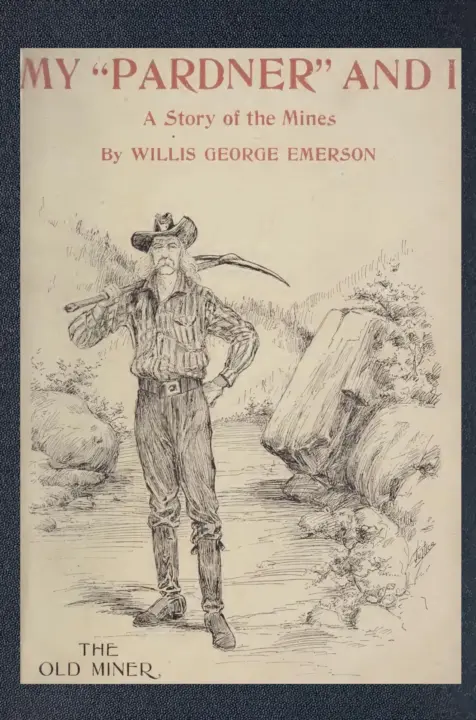
Willis George Emerson
Willis George Emerson
BEHIND THE BOOK
This eBook is for the use of anyone anywhere in the United States and most other parts of the world at no cost and with almost no restrictions whatsoever. You may copy it, give it away or re-use it under the terms of the Project Gutenberg License included with this eBook or online at www.gutenberg.org. If you are not located in the United States, you will have to check the laws of the country where you are located before using this eBook. Read the source licence.
The original source file, including credits and licence, is retained by this library. Request an original-format copy at no charge. Please include the book title and Project Gutenberg identifier #52449.
KEEP YOUR CURIOSITY GOING
Coulson Kernahan

Maurice Baring
Frances Wright
Cécile Tormay

Frederic Jesup Stimson

W. H. P. (William Henry Pope) Jarvis