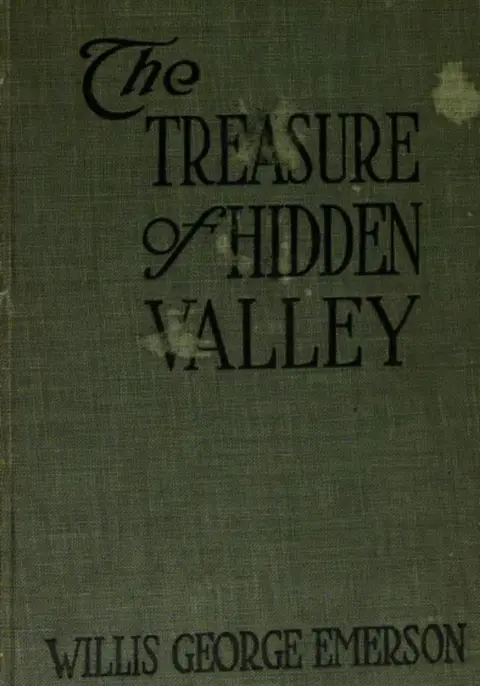
The Treasure of Hidden Valley
Willis George Emerson
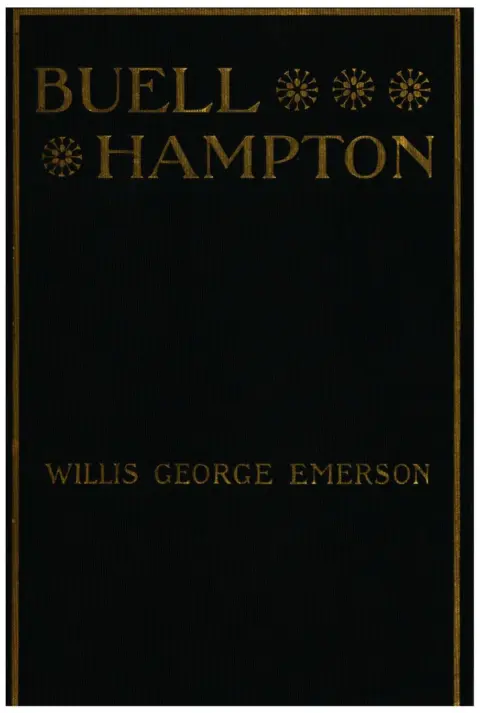
THE CLASSIC COLLECTION · 1902
"Buell Hampton" by Willis George Emerson is a novel written in the early 20th century. The story is set against the backdrop of the American Southwest and revolves around themes of ambition, social status, and romantic entanglements, primarily through the experiences of young Ethel Horton and the significant figures surrounding her, including her mother, Mrs. J. Bruce-Horton, and the cattle king John Horton. The opening portion introduces Ethel Horton, an American girl returning from an English education, and her mother, who longs for her daughter to marry into titled society. The narrative begins with a lively tennis match that reveals Ethel's spirited nature, while her mother engages in conversation with a friend, setting the stage for the societal aspirations that drive their lives. Mere moments later, Ethel’s interactions, as well as her delight in returning home, quickly set up the implications of family expectations and societal pressures. As the story unfolds, it hints at the growing tensions between the well-to-do and the farmers in their community, particularly with the cattle baron Horton at the center of the local landscape. This context establishes a rich setting filled with potential conflicts based on class, ambition, and the characters' personal journeys.
Introduction adapted from the source catalogue; source summaries may be automatically generated.
Free to read · English · 87,915 words · No account needed
MAKE TIME FOR A GOOD BOOK
On by default. Untick to stop anonymous reading totals. Each page counts after 10 seconds in view. How this works.
Anonymous counting is on unless you have switched it off.
“I intended to surprise you,” said Mrs. Osborn, coquettishly, “by having Major Hampton and Marie with us, but have succeeded only partially. The major is away from home, but I carried Marie away with me this afternoon, and have persuaded her to remain with us for dinner.”
“I am truly delighted with your thoughtfulness,” replied Hugh, bowing deferentially to Marie, “but, really, Mrs. Osborn, you have no need of adding to the attractions of your lovely home to induce me to come.”
“I am not so sure of that,” replied Mrs. Osborn, as her musical laugh rang out merrily, “the captain and I are beginning to believe that you are incorrigible in your habit of neglecting your friends.”
“Hugh is a most excellent man of business,” replied the captain, “but he throws social obligations to the winds, unless his frequent visits to the Hortons prove an exception.”
“Don’t jest about impossibilities, Captain,” said Mrs. Osborn. “Lord Avondale will soon return, and—well, we all know what that means.”
Hugh’s face reddened at Mrs. Osborn’s words. He was not at all sure about the correctness of her inference.
“My calls at Major Hampton’s are quite as frequent as at Mr. Horton’s,” replied Hugh.
“You could come oftener and still be welcome,” observed Marie, while her heart beat fast with admiration for Hugh, an admiration she could not entirely conceal.
“Oh, thank you,” said Hugh, “that is a compliment I shall not soon forget,” and, as he spoke, caution beat a hasty tattoo on the drumhead of conscience.
Hugh could not help noticing that Marie was growing more and more beautiful. She was attired in an evening dress of black lace, which was admirably becoming to her graceful figure. Her heavy tresses shone like burnished gold and the softer shades of copper, while the rose hue of perfect health tinted her cheeks. The animated way in which she conversed with Hugh confirmed Mrs. Osborn’s suspicions that she was in love with him, while he was too stupid, she told herself, even to suspect it.
The dinner-hour passed pleasantly, Mrs. Osborn giving the captain but few of her tiger-claw scratches. The veteran invariably took refuge in the snug harbor of little Harry, whenever a serious break seemed imminent, and thus warded off all collisions with the war-cruiser of his domestic life. As they arose from the table, Hugh turned to Mrs. Osborn and asked her rather abruptly when Lord Avondale was expected.
“Why, what is that to you?” replied the wily
Mrs. Osborn, as she looked rather exultingly at him.
“I am interested in knowing,” replied Hugh.
“Well, but your interest is only platonic, you know.”
Your reading position is saved on this browser. Take it to another device with a library code. Reading pages adapt to text, rather than matching a printed edition.
Willis George Emerson
Willis George Emerson
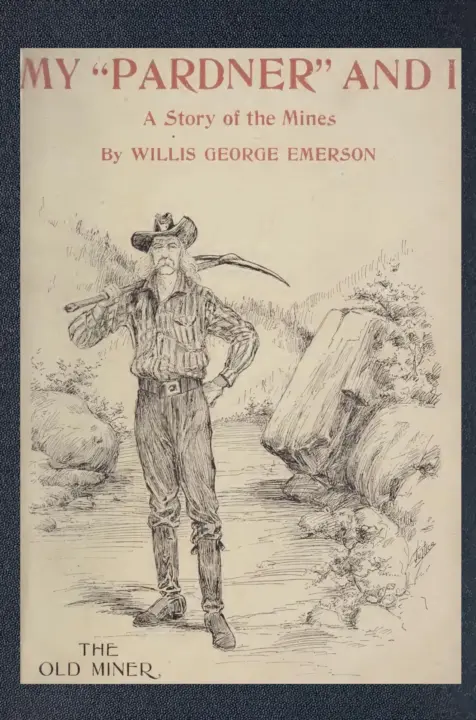
Willis George Emerson
Willis George Emerson
BEHIND THE BOOK
This eBook is for the use of anyone anywhere in the United States and most other parts of the world at no cost and with almost no restrictions whatsoever. You may copy it, give it away or re-use it under the terms of the Project Gutenberg License included with this eBook or online at www.gutenberg.org. If you are not located in the United States, you will have to check the laws of the country where you are located before using this eBook. Read the source licence.
The original source file, including credits and licence, is retained by this library. Request an original-format copy at no charge. Please include the book title and Project Gutenberg identifier #52449.
KEEP YOUR CURIOSITY GOING
Coulson Kernahan

Maurice Baring
Frances Wright
Cécile Tormay

Frederic Jesup Stimson

W. H. P. (William Henry Pope) Jarvis