THE CLASSIC COLLECTION✦Inkle and Yarico: An opera, in three actsCLASSIC FREE BOOKS
Inkle and Yarico: An opera, in three acts
George Colman
THE CLASSIC COLLECTION · 1803
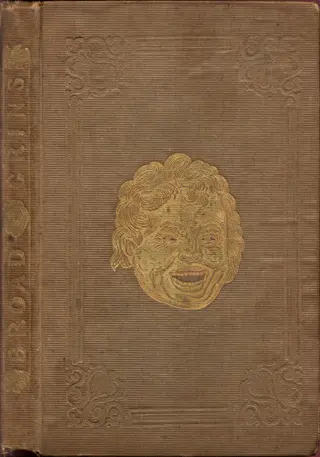
"Broad Grins" by George Colman, the Younger is a collection of humorous poetry and tales written in the early 19th century. Initially published under the title "My Night-Gown and Slippers," this edition includes new additional tales in verse. The book likely reflects societal themes of its time, focusing on the quirks and follies of human nature, particularly in a comedic context. The collection features a variety of characters and settings, drawing on both contemporary society and historical figures. The poem "The Knight and the Friar" tells the story of Sir Thomas Erpingham, a knight who struggles with ennui after returning from battle and resorts to marrying for company, only to find his wife embroiled in a comic scandal involving a friar. Other tales, such as "The Newcastle Apothecary," humorously explore the medical profession and the absurdities associated with it. Through witty dialogue, playful rhymes, and satirical critiques of societal norms, Colman's work encapsulates the joys and absurdities of life, showcasing his keen observation of human behavior and the comedic potential hidden within everyday situations.
Introduction adapted from the source catalogue; source summaries may be automatically generated.
Free to read · English · 12,734 words · No account needed
MAKE TIME FOR A GOOD BOOK
On by default. Untick to stop anonymous reading totals. Each page counts after 10 seconds in view. How this works.
Anonymous counting is on unless you have switched it off.
He went to bed;--and, there, began to burn;
Nine times he turn'd, in wondrous perturbation;--
He woke her Ladyship, at every turn,
And gave her, full nine times, complete vexation.
To seek the Duke of Limbs, at length, he rose,
And prowl'd with him, lamenting Fortune's stripes;
Now in the rookery among the crows,
Now squashing in the marsh, among the snipes:
Wishing strange wishes;--among many,
He wish'd--ere he had clapp'd his eyes on any.
All Priests, and Crabsticks, thrown into the fire;-- Or, seeing Providence ordain'd it so, That Priest, and Crabstick, (to his grief) must grow, He wish'd stout Crabstick couldn't kill fat Friar.
Men's wishes will be partial, now and then;--
As, in this case, 'tis plainly seen;
Wherein, Sir Thomas, full of spleen,
Wish'd to burn all the Crabs, and Clergymen.
Think ye that he,--at wishing tho' a dab,-- To wish such harm to any Knight would urge ye? Yet he, a Knight, had taken up a Crab, And thump'd to death, with it, one of the Clergy.
As he went wishing on,
With the great Duke of Limbs behind him,--
Horror on horror!--he saw John
Where least of all he ever thought to find him:
Stuck up, on end, in placid grace,
Like a stuff'd Kangaroo,--tho' vastly fatter,--
With the full moon upon his chubby face,
Like a brass pot-lid shining on a platter.
"'Sdeath!" quoth the Knight, of half his powers bereft, "Didst thou not tell me where this Friar was left? Men rise again, to push us from our stools!"[14] To which the Duke replied, with steady phiz,-- "Them as took pains to push that Friar from his, At such a time o'night, was cursed fools."
[14] Shakspeare certainly borrow'd this expression from Sir
Thomas.--See Macbeth.
"Ah!" sigh'd Sir Thomas, "while I wander here,
By fortune stamp'd a Homicide, alas!"
(And, as he spoke, a penitential tear
Mingled with Heaven's dew-drops, on the grass;)--
"Will no one from my eyes yon Spectre pull?"
"Sir Thomas," said the Duke of Limbs, "I wool."
He would have thrown the garbage in the moat,
But the Knight told him fat was prone to float.
The Lout, at length, having bethought him,
Heave'd up the Friar on his back once more;
And (Castles having armories of yore)
Into the Knight's old Armory he brought him.
Among the gorgeous, shining Coats of Mail,
That grace'd the walls, on high, in gallant shew,--
As pewter pots, in houses fame'd for ale,
Glitter, above the Bar-maid, in a row,--
Your reading position is saved on this browser. Take it to another device with a library code. Reading pages adapt to text, rather than matching a printed edition.
George Colman
George Colman
George Colman
George Colman
BEHIND THE BOOK
This eBook is for the use of anyone anywhere in the United States and most other parts of the world at no cost and with almost no restrictions whatsoever. You may copy it, give it away or re-use it under the terms of the Project Gutenberg License included with this eBook or online at www.gutenberg.org. If you are not located in the United States, you will have to check the laws of the country where you are located before using this eBook. Read the source licence.
The original source file, including credits and licence, is retained by this library. Request an original-format copy at no charge. Please include the book title and Project Gutenberg identifier #25426.
KEEP YOUR CURIOSITY GOING

Eric Mackay
Edmund Gosse
Sophia Margaretta Hensley
Gilbert Parker
George MacDonald

Elizabeth Bibesco