THE CLASSIC COLLECTION✦Inkle and Yarico: An opera, in three actsCLASSIC FREE BOOKS
Inkle and Yarico: An opera, in three acts
George Colman
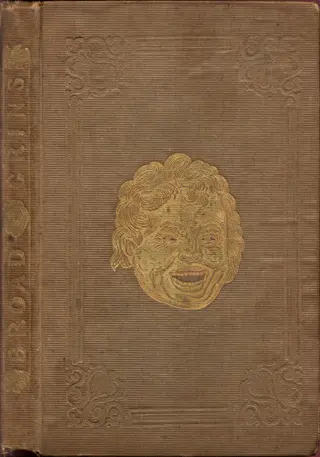
THE CLASSIC COLLECTION · 1803
"Broad Grins" by George Colman, the Younger is a collection of humorous poetry and tales written in the early 19th century. Initially published under the title "My Night-Gown and Slippers," this edition includes new additional tales in verse. The book likely reflects societal themes of its time, focusing on the quirks and follies of human nature, particularly in a comedic context. The collection features a variety of characters and settings, drawing on both contemporary society and historical figures. The poem "The Knight and the Friar" tells the story of Sir Thomas Erpingham, a knight who struggles with ennui after returning from battle and resorts to marrying for company, only to find his wife embroiled in a comic scandal involving a friar. Other tales, such as "The Newcastle Apothecary," humorously explore the medical profession and the absurdities associated with it. Through witty dialogue, playful rhymes, and satirical critiques of societal norms, Colman's work encapsulates the joys and absurdities of life, showcasing his keen observation of human behavior and the comedic potential hidden within everyday situations.
Introduction adapted from the source catalogue; source summaries may be automatically generated.
Free to read · English · 12,734 words · No account needed
MAKE TIME FOR A GOOD BOOK
On by default. Untick to stop anonymous reading totals. Each page counts after 10 seconds in view. How this works.
Anonymous counting is on unless you have switched it off.
"Behold me," Roger cried, "behold me, John!
Entreating as a favour you'll be gone;
Me! your sworn foe, tho' fellow-lodger;
Me!--who, in agony, tho' suing now to you,
Would, once, have seen you damn'd ere make a bow to you.
Me,--Roger!"[12]
[12] This is a palpable plagiarism. Rolla thus addresses Pizarro: "Behold me, at thy feet--Me,--Rolla!--Me, that never yet have bent or bow'd--in humble agony I sue to you."--The theft is more glaring, as the Apostrophe, both here, and in the original, occurs in the midst of a strong incident, and is address'd to an Enemy by a proud spirit, in very moving circumstances.
To this address, so fraught with the pathetick,
John remain'd dumb, as a Pythagorean;
Seeming to hint, "Roger, you're a plebeian
Peripatetick."
When such choice oratory has not hit,
When it is, e'en, unanswer'd by a grunt,
'Twould justify tame Job to curse a bit,
And set an Angler swearing, in his punt.
Cholerick Roger could not brook it;--
So seeing a huge brick-bat, up he took it;
And aiming, like a marksman at a crow,
Plump on the breast he hit his deadly foe;
Who fell, like Pedants' periods, to the ground,--
Very inanimate, and very round.
Here is another Picture, reader mine!
I gave you one in the first Canto;[13]--
This is more solemn, mystical, and fine,--
Like something in the Castle of Otranto.
[13] Vide Part 1st, page 61, lines 4-7.
Bring, bring me, now, a Painter, for the work,
Who on the subject will, with furor, rush!
Some Artist who can sup upon raw pork,
To make him dream of horrors, for his brush!
Come, Limners, come! who choke your house's entry With dear, unmeaning lumber, from your easels; Dull heads of the Nobility and Gentry; Full length of fubsey Belles, or Beaux like weasels!
Come, Limners, hither come! and draw
A finer incident than e'er ye saw!
Here is a John, by moon-light, (a fat monk)
Lying stone dead; and, here, a Roger, quick!
And over John stands Roger, in a funk,
Supposing he has kill'd him with a brick!
There, Painters! there!
Now, by Apelles's gamboge, I swear!
Such a dead subject never comes,
Among those lifeless living ye display;
Then, thro' your palettes thrust your graphick thumbs,--
And work away!
Seeing John dead as a door nail,
Roger began to wring his hands, and wail;
Calling himself, Beast, Butcher, cruel Turk!
Thrice "Benedicite!" he mutter'd;
Thrice, in the eloquence of grief he utter'd;
"I've done a pretty job of journey-work!"
Your reading position is saved on this browser. Take it to another device with a library code. Reading pages adapt to text, rather than matching a printed edition.
George Colman
George Colman
George Colman
George Colman
BEHIND THE BOOK
This eBook is for the use of anyone anywhere in the United States and most other parts of the world at no cost and with almost no restrictions whatsoever. You may copy it, give it away or re-use it under the terms of the Project Gutenberg License included with this eBook or online at www.gutenberg.org. If you are not located in the United States, you will have to check the laws of the country where you are located before using this eBook. Read the source licence.
The original source file, including credits and licence, is retained by this library. Request an original-format copy at no charge. Please include the book title and Project Gutenberg identifier #25426.
KEEP YOUR CURIOSITY GOING

Eric Mackay
Edmund Gosse
Sophia Margaretta Hensley
Gilbert Parker
George MacDonald

Elizabeth Bibesco