THE CLASSIC COLLECTION✦Inkle and Yarico: An opera, in three actsCLASSIC FREE BOOKS
Inkle and Yarico: An opera, in three acts
George Colman
THE CLASSIC COLLECTION · 1803
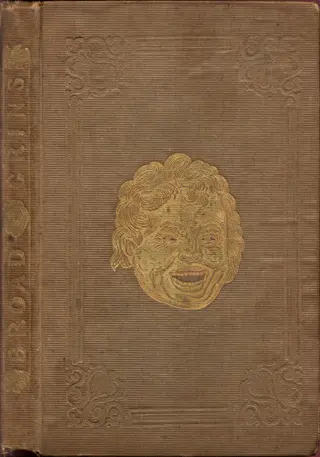
"Broad Grins" by George Colman, the Younger is a collection of humorous poetry and tales written in the early 19th century. Initially published under the title "My Night-Gown and Slippers," this edition includes new additional tales in verse. The book likely reflects societal themes of its time, focusing on the quirks and follies of human nature, particularly in a comedic context. The collection features a variety of characters and settings, drawing on both contemporary society and historical figures. The poem "The Knight and the Friar" tells the story of Sir Thomas Erpingham, a knight who struggles with ennui after returning from battle and resorts to marrying for company, only to find his wife embroiled in a comic scandal involving a friar. Other tales, such as "The Newcastle Apothecary," humorously explore the medical profession and the absurdities associated with it. Through witty dialogue, playful rhymes, and satirical critiques of societal norms, Colman's work encapsulates the joys and absurdities of life, showcasing his keen observation of human behavior and the comedic potential hidden within everyday situations.
Introduction adapted from the source catalogue; source summaries may be automatically generated.
Free to read · English · 12,734 words · No account needed
MAKE TIME FOR A GOOD BOOK
On by default. Untick to stop anonymous reading totals. Each page counts after 10 seconds in view. How this works.
Anonymous counting is on unless you have switched it off.
The Knight cried, "Follow me!"--with strange grimaces;
The Man arose,--
And began "sacrificing to the Graces,"[9]
By putting on his clothes;
But he reverse'd, in making himself smart,
A Scotchman's toilet, altogether:
And merely clapp'd a cover on that part
The Highlanders expose to wind and weather.
They reach'd the bower where the Friar lay;
When, to his Man,
The Knight began,
In doleful accents, thus to say:
"Here a fat Friar lies, kill'd with a mauling,
For coming, in the dark, a-caterwauling;
Whom I (O cursed spite!) did lay so!"
Thus, solemnly, Sir Thomas spake, and sigh'd;--
To whom the Duke of Limbs replied--
"Odrabbit it! Sir Thomas! you don't say so!"
Then, taking the huge Friar per the hocks, He whirl'd the ton of blubber three times round, And swung it on his shoulders, from the ground, With strength that yields, in any age, to no man's,-- Tho' Milo's ghost should rise, bearing the Ox He carried at the games of the old Romans.
Nay, I opine--let Fame say what it can--
Of ancient vigour, (Fame is, oft, a Liar)
That Milo was a pigmy to this Man,
And his fat Ox quite skinny to the Friar.
Besides,--I hold it in much doubt
If Roman graziers (should the truth come out)
Were, like the English, knowing in the matter;--
--I wouldn't breed my beast more Romano;--
For, I suspect, in fatt'ning they were dull,
And when they made an ox out of a bull,
They fed him ill,--and, then, he got no fatter
Than a fat opera Soprano.[10]
[10] I am aware that much has been said, of old, relative to the "cura boum," and the "optuma torvae forma bovis;"--but, for a show of cattle, I would back Smithfield, or most of our English market Towns, against any forum boarium of the Romans.
Over the moat, (the draw-bridge being down)
Gallantly stalk'd the brawny Duke of Limbs,
Bearing Johannes, of the shaven crown,
Fame'd, when alive, for spoiling maids, and hymns;
For mangling Pater-Nosters, and goose-pies,
And telling sundry beads,--and sundry lies.
Across a marsh he strode, with steadier gait
Than Satan trod the Syrtis, at his fall,
And perch'd himself, with his monastick weight,
Upon the Convent-garden's wall;--
Whence, on the grounds within it, as he gaze'd,
To find a spot where he might leave his load,
He 'spied a House so little, it seem'd raise'd
More for Man's visits, than his fix'd abode;--
And Cynthia aided him to gaze his fill,
For, now, she sought Endymion on the hill.
Arise, Tarquinius![11] shew thy lofty face!
While I describe, with dignity, the place.
Your reading position is saved on this browser. Take it to another device with a library code. Reading pages adapt to text, rather than matching a printed edition.
George Colman
George Colman
George Colman
George Colman
BEHIND THE BOOK
This eBook is for the use of anyone anywhere in the United States and most other parts of the world at no cost and with almost no restrictions whatsoever. You may copy it, give it away or re-use it under the terms of the Project Gutenberg License included with this eBook or online at www.gutenberg.org. If you are not located in the United States, you will have to check the laws of the country where you are located before using this eBook. Read the source licence.
The original source file, including credits and licence, is retained by this library. Request an original-format copy at no charge. Please include the book title and Project Gutenberg identifier #25426.
KEEP YOUR CURIOSITY GOING

Eric Mackay
Edmund Gosse
Sophia Margaretta Hensley
Gilbert Parker
George MacDonald

Elizabeth Bibesco