THE CLASSIC COLLECTION✦Brenda’s Bargain: A Story for GirlsCLASSIC FREE BOOKS
Brenda’s Bargain: A Story for Girls
Helen Leah Reed
THE CLASSIC COLLECTION · 1907
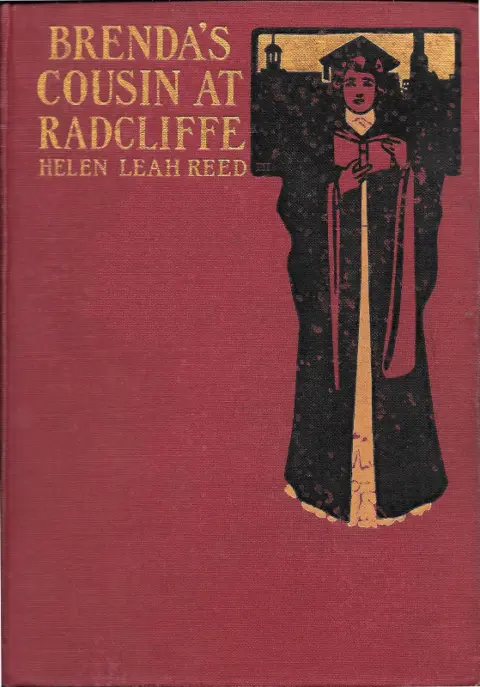
"Brenda's Cousin at Radcliffe: A Story for Girls" by Helen Leah Reed is a fictional novel written in the early 20th century. The story centers on Julia Bourne, a new student at Radcliffe College, as she navigates the challenges and opportunities of college life alongside her fellow Freshmen, including the lively Clarissa Herter and the shy Pamela Northcote. Through their experiences and interactions, the novel explores themes of friendship, academic ambition, and the evolving role of women in education during this time period. At the start of the narrative, readers are introduced to Julia during her examination period before the college officially opens. Her interactions with fellow students reveal their diverse backgrounds and personalities, including Clarissa from Kansas, who expresses a positive attitude toward her college aspirations, and the more reserved Pamela, who feels out of place among the many girls at Radcliffe. As the college term begins, Julia and her friends prepare for the Freshman reception, experiencing the excitement and anxiety that comes with being new students. Their hopes and fears, along with their evolving friendships, set the stage for an engaging exploration of collegiate life.
Introduction adapted from the source catalogue; source summaries may be automatically generated.
Free to read · English · 82,537 words · No account needed
MAKE TIME FOR A GOOD BOOK
On by default. Untick to stop anonymous reading totals. Each page counts after 10 seconds in view. How this works.
Anonymous counting is on unless you have switched it off.
“Now, really,” responded Julia, “the blot did no harm.”
“But if it had gone through the cover?”
“Oh, that would have been nothing.”
“But I fear that I did more mischief than you think. There’s a little ink spot on the side breadth of your skirt, and I’m sure that it came from my pen.”
“Oh,” cried Julia, looking where Pamela pointed, “that spot may have come from my own pen; and besides, the gown has seen its best days.”
“Well, I’m very sorry,” continued Miss Northcote.
In the meantime Clarissa had risen from the low, red couch, on which they had been sitting. “You must be a New Englander.”
“I’m from Vermont.”
“I thought so,” cried Clarissa. “You have a well-developed conscience. You seem to be apologizing for something that perhaps you didn’t do.”
“Let us go upstairs to the library,” interposed Julia, noticing that Miss Northcote was made uncomfortable by Clarissa’s badinage.
“Isn’t it pleasant! I had no idea it was so homelike!” exclaimed Julia on the threshold of the library.
“Do you mean you haven’t been here before? Why, I explored the whole building from top to bottom last June. I didn’t wait for a special invitation,” cried Clarissa.
“It was so warm then!” Julia felt almost bound to apologize.
The room that they had entered justified the term “homelike” to the fullest extent. It had none of the stiffness of a college hall, although shelves of books were everywhere, always invitingly within reach. The deep-mullioned windows, the high mantle-piece and broad fireplace all had a decided charm. From the window that Julia approached, through the elms that shaded Fay House, there was a glimpse of the Soldiers’ Monument on the Common, and nearer at hand the time-scarred Washington Elm. After looking into one or two smaller rooms filled with books, Clarissa suggested that they go into the open air.
“There must be something of the gypsy in my blood, for I begrudge every minute spent indoors at this season. Clarissa! Clarissa!” she cried dramatically, “you must out and walk.”
“Is your name Clarissa?” asked the Vermont girl.
“Why not? Doesn’t it suit me?”
“Well, it’s strange,” responded the other, “for I am called Pamela.”
“How odd! Why, people may begin to call us ‘the heroines,’ unless we show them that we’re made of stronger stuff than Richardson admired.”
“Poor Richardson! How he would be horrified to see us modern girls going to college! You must belong to sentimental families to have those names.”
“I was named for my aunt,” explained Pamela with dignity.
Your reading position is saved on this browser. Take it to another device with a library code. Reading pages adapt to text, rather than matching a printed edition.
Helen Leah Reed
Helen Leah Reed
Helen Leah Reed
Helen Leah Reed
BEHIND THE BOOK
This eBook is for the use of anyone anywhere in the United States and most other parts of the world at no cost and with almost no restrictions whatsoever. You may copy it, give it away or re-use it under the terms of the Project Gutenberg License included with this eBook or online at www.gutenberg.org. If you are not located in the United States, you will have to check the laws of the country where you are located before using this eBook. Read the source licence.
The original source file, including credits and licence, is retained by this library. Request an original-format copy at no charge. Please include the book title and Project Gutenberg identifier #48720.
KEEP YOUR CURIOSITY GOING
Coulson Kernahan

Maurice Baring
Frances Wright
Cécile Tormay

Frederic Jesup Stimson

W. H. P. (William Henry Pope) Jarvis