THE CLASSIC COLLECTION✦Brenda’s Bargain: A Story for GirlsCLASSIC FREE BOOKS
Brenda’s Bargain: A Story for Girls
Helen Leah Reed
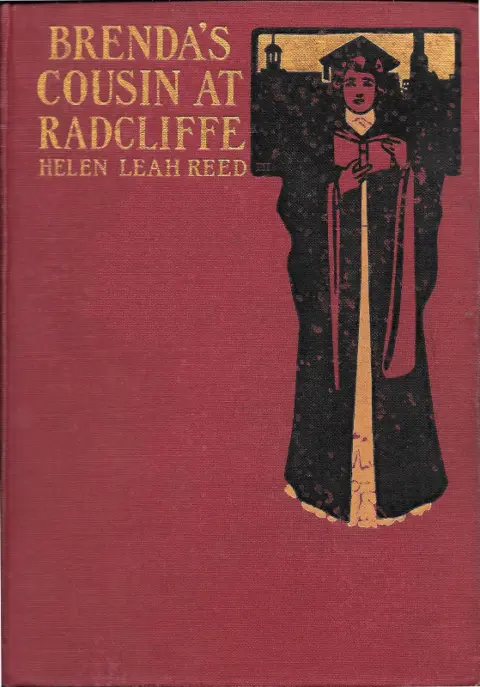
THE CLASSIC COLLECTION · 1907
"Brenda's Cousin at Radcliffe: A Story for Girls" by Helen Leah Reed is a fictional novel written in the early 20th century. The story centers on Julia Bourne, a new student at Radcliffe College, as she navigates the challenges and opportunities of college life alongside her fellow Freshmen, including the lively Clarissa Herter and the shy Pamela Northcote. Through their experiences and interactions, the novel explores themes of friendship, academic ambition, and the evolving role of women in education during this time period. At the start of the narrative, readers are introduced to Julia during her examination period before the college officially opens. Her interactions with fellow students reveal their diverse backgrounds and personalities, including Clarissa from Kansas, who expresses a positive attitude toward her college aspirations, and the more reserved Pamela, who feels out of place among the many girls at Radcliffe. As the college term begins, Julia and her friends prepare for the Freshman reception, experiencing the excitement and anxiety that comes with being new students. Their hopes and fears, along with their evolving friendships, set the stage for an engaging exploration of collegiate life.
Introduction adapted from the source catalogue; source summaries may be automatically generated.
Free to read · English · 82,537 words · No account needed
MAKE TIME FOR A GOOD BOOK
On by default. Untick to stop anonymous reading totals. Each page counts after 10 seconds in view. How this works.
Anonymous counting is on unless you have switched it off.
“Oh, I beg your pardon, I wasn’t thinking,” murmured an apologetic voice, as Julia glanced up in surprise. A small, pale girl standing beside her desk had evidently held her fountain pen point down with disastrous result.
“Oh, it did no great harm,” responded Julia, dexterously applying her blotter. Like the other girl, she spoke in an undertone, for silence was still the rule of the room.
“I’m thankful, however, that my book was closed,” she said to herself, as the other passed on. “A blot on an inner page might prejudice the examiner, and I shall need all his good-will.”
It was the Tuesday before the opening of college, and examinations were going on to enable some students to take off conditions imposed by the June finals, or to permit others—like Julia—to anticipate some study of the Freshman year.
Before handing in her book Julia corrected some errors, for there still lacked ten minutes of the close of the examination hour. As she sat there reading the printed questions, one by one, she was thankful for the cool day. How insufferably hot had been those two Junes when she had taken her preliminaries and her finals! Old Fay House then had swarmed with girls, lively, solemn, silent, chattering, short, tall, thin, stout, dowdy, attractive,—but why enumerate? They were as varied in aspect, and probably in disposition, as those other girls who never think of college. In comparison with the spring crowds, the girls to-day were but a handful.
Julia, glancing toward the window, caught a glimpse of the yellowing elms of Garden Street, and a soft September breeze blew across her cheek. Then her eye wandered to the photograph over the old-fashioned mantle-piece, and she thought that the class-room, except for its chairs and desks, was like the sitting-room of a private house.
Julia handed in her book promptly, but some of the others gave theirs up reluctantly, as if to say, “Oh, for ten minutes more, or even five minutes. It would make all the difference in the world to me.” One of these girls, who was tall and strong-looking, with short, curling hair, expressed her feelings emphatically.
“I don’t see,” she said, as Julia and she left the room together, “how you got through so soon. You haven’t been writing for ten minutes. Why, if we had five hours instead of two, I should still need an hour more. Weren’t you frightened to death at the preliminaries?”
“I barely survived,” replied Julia, entering into the other’s mood. “There’s an art in taking examinations that I’m only beginning to learn.”
Your reading position is saved on this browser. Take it to another device with a library code. Reading pages adapt to text, rather than matching a printed edition.
Helen Leah Reed
Helen Leah Reed
Helen Leah Reed
Helen Leah Reed
BEHIND THE BOOK
This eBook is for the use of anyone anywhere in the United States and most other parts of the world at no cost and with almost no restrictions whatsoever. You may copy it, give it away or re-use it under the terms of the Project Gutenberg License included with this eBook or online at www.gutenberg.org. If you are not located in the United States, you will have to check the laws of the country where you are located before using this eBook. Read the source licence.
The original source file, including credits and licence, is retained by this library. Request an original-format copy at no charge. Please include the book title and Project Gutenberg identifier #48720.
KEEP YOUR CURIOSITY GOING
Coulson Kernahan

Maurice Baring
Frances Wright
Cécile Tormay

Frederic Jesup Stimson

W. H. P. (William Henry Pope) Jarvis