THE CLASSIC COLLECTION✦Brenda’s Bargain: A Story for GirlsCLASSIC FREE BOOKS
Brenda’s Bargain: A Story for Girls
Helen Leah Reed
THE CLASSIC COLLECTION · 1907
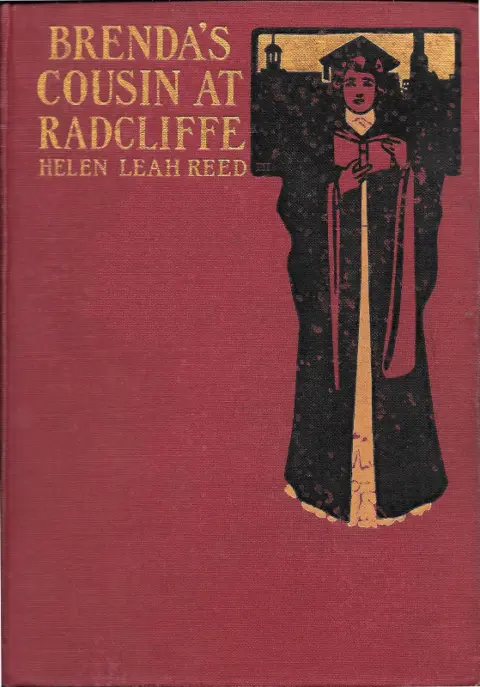
"Brenda's Cousin at Radcliffe: A Story for Girls" by Helen Leah Reed is a fictional novel written in the early 20th century. The story centers on Julia Bourne, a new student at Radcliffe College, as she navigates the challenges and opportunities of college life alongside her fellow Freshmen, including the lively Clarissa Herter and the shy Pamela Northcote. Through their experiences and interactions, the novel explores themes of friendship, academic ambition, and the evolving role of women in education during this time period. At the start of the narrative, readers are introduced to Julia during her examination period before the college officially opens. Her interactions with fellow students reveal their diverse backgrounds and personalities, including Clarissa from Kansas, who expresses a positive attitude toward her college aspirations, and the more reserved Pamela, who feels out of place among the many girls at Radcliffe. As the college term begins, Julia and her friends prepare for the Freshman reception, experiencing the excitement and anxiety that comes with being new students. Their hopes and fears, along with their evolving friendships, set the stage for an engaging exploration of collegiate life.
Introduction adapted from the source catalogue; source summaries may be automatically generated.
Free to read · English · 82,537 words · No account needed
MAKE TIME FOR A GOOD BOOK
On by default. Untick to stop anonymous reading totals. Each page counts after 10 seconds in view. How this works.
Anonymous counting is on unless you have switched it off.
“Oh, Angelina!” she sighed, “you always have had a fashion of making trouble, but luckily in this case, it’s not too late to straighten things out.”
To decide, with Julia, was to act. Overhead she could hear Ruth moving about in her room. Running up the stairs, two at a time, in a moment she was with her.
“Oh, Ruth, can you ever forgive me? How mean you must have thought me! But really, I’ve suffered more than you; even if this letter hadn’t come, I should have told you so.”
“What letter?” asked Ruth, thoroughly bewildered.
“Oh, from Angelina; it was she who kept the telegram.”
“Of course; I always knew it.”
“But I didn’t know it. There, I won’t throw blame on any one else. It has all been my fault, and not Angelina’s.”
“‘All’s well that ends well,’” said Ruth, pinning a crimson rosette at her belt. There was a slight stiffness in her manner, but she looked at Julia with her old-time pleasant smile; and as they clasped hands, the two girls knew that they were friends again. “Naturally,” she added, “it was hard, Julia, to find you unjust—”
“But if you had only said the least little word, I should have understood, Ruth, but when you said nothing—”
“But how could I say anything? When you so evidently had your mind made up, what could I say?”
“Ah, but I must tell Polly. Won’t you come with me, Ruth?”
“Not this afternoon. I’m going to a ball game with Will; it’s only with Amherst to-day. But there’s a party of a dozen going, and not a chaperon.”
“Of course not. That’s the one delightful thing about Cambridge; we can go to ball games without any of the trammels of an ‘artificial etiquette,’ as Clarissa might say.”
Then Ruth departed for the ball game, with Will holding her parasol, and Julia standing in the doorway, waving her a good-bye after a fashion that had not been possible during the past year.
From Ruth, Julia went to Polly, and it was harder to bring up the subject of the telegram to her, for the very mention of it recalled so many sad memories.
“So, after all, Clarissa has been the most charitable of us all. Seems like we have all been carried away by suspicion, while she has always been inclined to stand up for Ruth,” said the Southern girl.
Your reading position is saved on this browser. Take it to another device with a library code. Reading pages adapt to text, rather than matching a printed edition.
Helen Leah Reed
Helen Leah Reed
Helen Leah Reed
Helen Leah Reed
BEHIND THE BOOK
This eBook is for the use of anyone anywhere in the United States and most other parts of the world at no cost and with almost no restrictions whatsoever. You may copy it, give it away or re-use it under the terms of the Project Gutenberg License included with this eBook or online at www.gutenberg.org. If you are not located in the United States, you will have to check the laws of the country where you are located before using this eBook. Read the source licence.
The original source file, including credits and licence, is retained by this library. Request an original-format copy at no charge. Please include the book title and Project Gutenberg identifier #48720.
KEEP YOUR CURIOSITY GOING
Coulson Kernahan

Maurice Baring
Frances Wright
Cécile Tormay

Frederic Jesup Stimson

W. H. P. (William Henry Pope) Jarvis