THE CLASSIC COLLECTION✦Brenda’s Bargain: A Story for GirlsCLASSIC FREE BOOKS
Brenda’s Bargain: A Story for Girls
Helen Leah Reed
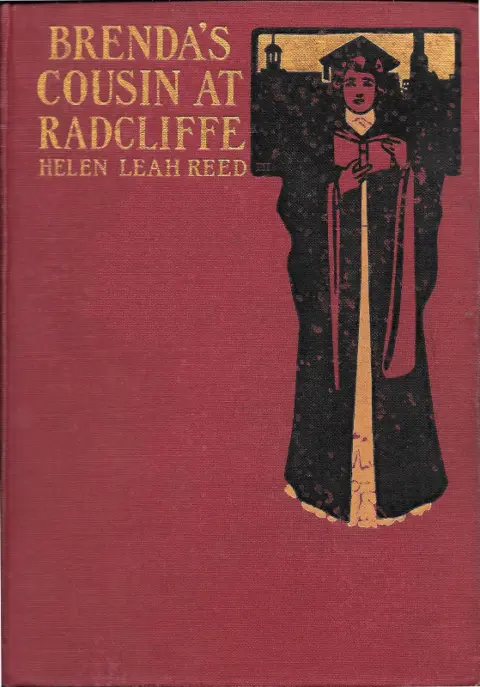
THE CLASSIC COLLECTION · 1907
"Brenda's Cousin at Radcliffe: A Story for Girls" by Helen Leah Reed is a fictional novel written in the early 20th century. The story centers on Julia Bourne, a new student at Radcliffe College, as she navigates the challenges and opportunities of college life alongside her fellow Freshmen, including the lively Clarissa Herter and the shy Pamela Northcote. Through their experiences and interactions, the novel explores themes of friendship, academic ambition, and the evolving role of women in education during this time period. At the start of the narrative, readers are introduced to Julia during her examination period before the college officially opens. Her interactions with fellow students reveal their diverse backgrounds and personalities, including Clarissa from Kansas, who expresses a positive attitude toward her college aspirations, and the more reserved Pamela, who feels out of place among the many girls at Radcliffe. As the college term begins, Julia and her friends prepare for the Freshman reception, experiencing the excitement and anxiety that comes with being new students. Their hopes and fears, along with their evolving friendships, set the stage for an engaging exploration of collegiate life.
Introduction adapted from the source catalogue; source summaries may be automatically generated.
Free to read · English · 82,537 words · No account needed
MAKE TIME FOR A GOOD BOOK
On by default. Untick to stop anonymous reading totals. Each page counts after 10 seconds in view. How this works.
Anonymous counting is on unless you have switched it off.
There were many girls, unluckily, who looked on Clarissa with decided disfavor, believing her the author of the objectionable article; or at the best, they thought that she had unwisely let others use her note-book improperly. Two or three little coteries, therefore, some of them made up of very agreeable girls, were inclined to avoid Clarissa. So Polly, realizing this state of affairs, was all the more anxious to prove that her friend had been wronged. But how prove it?
One morning half a dozen girls clustered before the bulletin board. The assortment of notices touched every side of college life. One in which Polly Porson had had a large part read:
Freshmen and New Specials
are
Cordially invited by the Juniors to a reception, Wednesday, October 31,
in the Auditorium, at 4.30 P.M.
Polly’s part had consisted of the dainty pen-and-ink drawing showing at the top a vivacious girl with arms extended, while at the side was a troop of smaller girls, presumably the Freshmen and Specials, with accompanying verses:
“School is over, oh, what fun!
Lessons finished, work begun.
Who’ll laugh gayest? Let us try.
Who’ll talk loudest, you or I?”
Near by was a card giving information about the College Settlement Association, and others announcing a trial of voices for the Glee and Choral Clubs. But most conspicuous of all were the notices of the various athletic clubs, and these notices seemed to awaken a lively discussion among the girls standing before the board.
“R. A. A.—Will all who wish to join please pay,”
read one of them, adding, “Oh, I’ve joined and paid, too. I’m more interested in the basket ball.”
“Well, the managers mean business,” added another, pointing to a notice:
“Basket Ball, 189—
“Great need of candidates. All that can, come out and try for the teams, whether they played last year or not.”
“That isn’t for me,” said one of the girls, who happened to be a
Sophomore.
“We’re going to have a strong team this year.”
“Oh, yes,” continued a classmate, “the Juniors can’t do a thing to us unless Miss Hert—”
“Hush!” exclaimed the first speaker, and turning her head slightly, the second girl saw Clarissa and Pamela approaching, arm in arm.
But as the two friends disappeared in the distance, a third girl, a Junior, said, “Yes, Clarissa’s the girl we want but Alma Stacey is determined—”
“I know that she’s been pretty severe toward Clarissa.”
“Well, Annabel says—”
“Oh, Annabel—”
“Well, Annabel says that she believes that Clarissa would do almost anything after playing that trick on her.”
“What, about Mr. Radcliffe, the so-called Mr. Radcliffe?”
Your reading position is saved on this browser. Take it to another device with a library code. Reading pages adapt to text, rather than matching a printed edition.
Helen Leah Reed
Helen Leah Reed
Helen Leah Reed
Helen Leah Reed
BEHIND THE BOOK
This eBook is for the use of anyone anywhere in the United States and most other parts of the world at no cost and with almost no restrictions whatsoever. You may copy it, give it away or re-use it under the terms of the Project Gutenberg License included with this eBook or online at www.gutenberg.org. If you are not located in the United States, you will have to check the laws of the country where you are located before using this eBook. Read the source licence.
The original source file, including credits and licence, is retained by this library. Request an original-format copy at no charge. Please include the book title and Project Gutenberg identifier #48720.
KEEP YOUR CURIOSITY GOING
Coulson Kernahan

Maurice Baring
Frances Wright
Cécile Tormay

Frederic Jesup Stimson

W. H. P. (William Henry Pope) Jarvis