THE CLASSIC COLLECTION✦Brenda’s Bargain: A Story for GirlsCLASSIC FREE BOOKS
Brenda’s Bargain: A Story for Girls
Helen Leah Reed
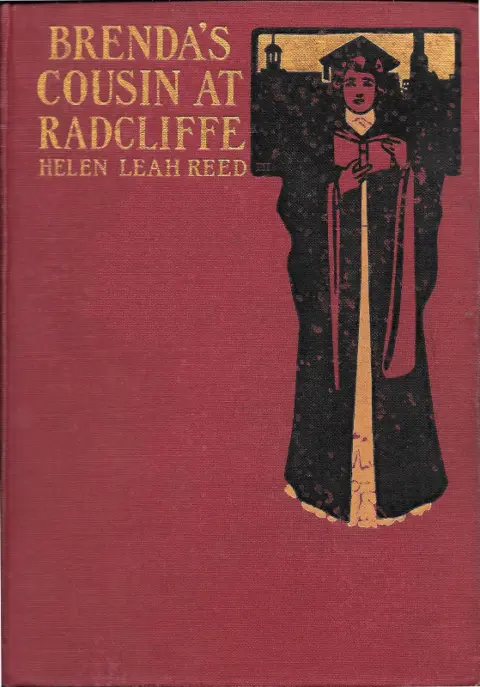
THE CLASSIC COLLECTION · 1907
"Brenda's Cousin at Radcliffe: A Story for Girls" by Helen Leah Reed is a fictional novel written in the early 20th century. The story centers on Julia Bourne, a new student at Radcliffe College, as she navigates the challenges and opportunities of college life alongside her fellow Freshmen, including the lively Clarissa Herter and the shy Pamela Northcote. Through their experiences and interactions, the novel explores themes of friendship, academic ambition, and the evolving role of women in education during this time period. At the start of the narrative, readers are introduced to Julia during her examination period before the college officially opens. Her interactions with fellow students reveal their diverse backgrounds and personalities, including Clarissa from Kansas, who expresses a positive attitude toward her college aspirations, and the more reserved Pamela, who feels out of place among the many girls at Radcliffe. As the college term begins, Julia and her friends prepare for the Freshman reception, experiencing the excitement and anxiety that comes with being new students. Their hopes and fears, along with their evolving friendships, set the stage for an engaging exploration of collegiate life.
Introduction adapted from the source catalogue; source summaries may be automatically generated.
Free to read · English · 82,537 words · No account needed
MAKE TIME FOR A GOOD BOOK
On by default. Untick to stop anonymous reading totals. Each page counts after 10 seconds in view. How this works.
Anonymous counting is on unless you have switched it off.
Hardly had Julia and Ruth stepped into the Auditorium that Saturday afternoon when a girl with a ribbon badge greeted them warmly. From a table near the door she took two slips of paper, and, pinning one on Julia’s dress, said pleasantly, “You must excuse my being so unceremonious, but we find that this is the best way of making girls acquainted with one another, by giving them slips of paper with their names written on them. I honestly think that you feel more like talking to a girl if you know her name. Your slips are white, but we old girls wear blue.”
“But how did you know which slips of paper to give us?” asked Ruth, as she received a decoration like Julia’s.
“Oh, I was interested, that is, I asked particularly who you were the other day,” replied the older girl in a flattering tone. “But now I must find your Senior for you,” she concluded; “perhaps you haven’t met her.”
“My Senior?” asked Julia. “Why, how in the world do I happen to have
one?”
“Excuse me, then, until I find her. She will tell you all about it.”
Soon Julia found herself standing before a tall, plain girl with glasses, who wore her Senior’s gown ungracefully.
“This is your Senior adviser, Miss Townall, Miss Bourne. I am sure that you will like each other;” and the vivacious usher, asking Ruth to accompany her, turned away to find Ruth’s Senior.
“Miss Darcy is always bright and cheerful,” said Miss Townall, making an effort to talk to Julia.
“Yes, indeed, I like her immensely. She’s a Sophomore, I suppose?”
“Yes, and very popular.” Jane looked at Julia, as if at an utter loss for a subject of conversation, until Julia asked her to explain the system of assigning Senior adviser. In giving information Jane waxed eloquent, and explained that the Emmanuel Society made the arrangements, bringing it about that each Senior should take charge of one Freshman, holding herself ready to give her any needed advice.
“Some of them have two,” added Ruth, who had rejoined them.
“Oh, naturally, for there are always more Freshmen than Seniors; but dear me, it’s bad enough to have one on your mind,” said Jane tactlessly.
“There, I didn’t mean that,” she apologized, at once conscious of her own awkwardness. “Of course I’m delighted to be of help to any Freshman, but there is so much danger of giving the wrong advice, and—” so Jane went on explaining and explaining, as people are apt to when once they have made a mistake, without greatly improving the state of affairs.
Your reading position is saved on this browser. Take it to another device with a library code. Reading pages adapt to text, rather than matching a printed edition.
Helen Leah Reed
Helen Leah Reed
Helen Leah Reed
Helen Leah Reed
BEHIND THE BOOK
This eBook is for the use of anyone anywhere in the United States and most other parts of the world at no cost and with almost no restrictions whatsoever. You may copy it, give it away or re-use it under the terms of the Project Gutenberg License included with this eBook or online at www.gutenberg.org. If you are not located in the United States, you will have to check the laws of the country where you are located before using this eBook. Read the source licence.
The original source file, including credits and licence, is retained by this library. Request an original-format copy at no charge. Please include the book title and Project Gutenberg identifier #48720.
KEEP YOUR CURIOSITY GOING
Coulson Kernahan

Maurice Baring
Frances Wright
Cécile Tormay

Frederic Jesup Stimson

W. H. P. (William Henry Pope) Jarvis