THE CLASSIC COLLECTION✦A dead man’s diaryCLASSIC FREE BOOKS
A dead man’s diary
Coulson Kernahan
THE CLASSIC COLLECTION · 1923
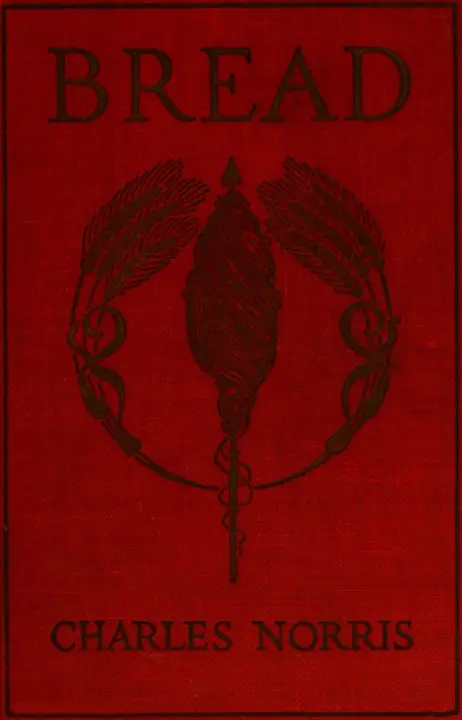
"Bread" by Charles G. Norris is a novel written in the early 20th century. The story follows the Sturgis family, particularly the eldest daughter Jeannette, as they navigate the challenges of poverty and aspirations in New York City. The family's struggles revolve around their financial hardships and the impact these challenges have on their daily lives and future prospects. The opening of the book introduces Jeannette Sturgis, who is frustrated by her family's dire financial situation and her mother's dependence on the meager income from music lessons. When Jeannette realizes they can't even afford a loaf of bread, tensions arise, leading her to take charge of their financial future by considering dropping out of school and getting a job. As she embarks on this new path, her strong resolve contrasts sharply with her mother's desires for her daughters to lead more genteel lives. The reader sees the dynamics in their family and the social pressures that shape their identities, setting the stage for Jeannette's journey toward independence amidst the looming challenges she faces as a working girl.
Introduction adapted from the source catalogue; source summaries may be automatically generated.
Free to read · English · 139,372 words · No account needed
MAKE TIME FOR A GOOD BOOK
On by default. Untick to stop anonymous reading totals. Each page counts after 10 seconds in view. How this works.
Anonymous counting is on unless you have switched it off.
“Well,--we’ll see what you can do,” she declared. “Miss Rosen,” she called, and as a young Jewess came toward them, she directed: “Take Miss--Miss”--she glanced at her notes,--“Sturgis to the cloak room, and bring her back here.”
Jeannette’s mind was a confused jumble. “They won’t kill me,--they won’t eat me,” she found herself thinking.
Presently she stood before Miss Gibson once more. The woman glanced at
her, and rose.
“Come this way.” They walked toward the young man she had previously
indicated.
“Mr. Beardsley, try this girl out. She comes from the Gerard School, but she’s had no practical experience.”
Jeannette looked into a pleasant boy’s face. He had an even row of glittering white teeth, a small, quaint mouth that stretched tightly across them when he smiled, blue eyes, and rather unruly stuck-up hair.
She wanted to please him--she could please him--he seemed nice.
“Miss--Miss--I beg pardon,--Miss Gibson did not mention the name.”
“Sturgis.”
“There’s a vacant table over there. You can have a Remington or an Underwood--anything you are accustomed to; we have all styles.... Miss Flannigan, take charge of Miss Sturgis, will you?”
A big-boned Irish girl came toward him. She was a slovenly type but apparently disposed to be friendly.
“I’ll lend you a note-book and pencils till you can draw your own from the stock clerk. You have to make out a requisition for everything you want, here. You’ll find paper in that drawer, and that’s a Remington if you use one.”
Jeannette slipped into the straight-back chair and settled with a sense of relief before the flimsy little table on which the typewriter stood. She was eager for a moment’s inconspicuousness.
“This is the kind of stuff he gives you.”
Miss Flannigan leaned over from behind and offered her several yellow
sheets of typewriting.
Jeannette took them with a murmured thanks, and began to read.
“... deferred payment plan. Five dollars will immediately secure this handsome twenty-five volume set.... On the first of May, the price of these books, as advertised, must advance, but by subscribing now....”
She wet her dry lips and glanced at another page.
“The authenticity of these sources of historical information cannot be doubted.... Eliminating the traditions which can hardly be accepted as dependable chronicles, we turn to the Egyptian records which are still extant in graven symbols.”
She couldn’t do it! It was harder than anything she had ever had in practice! She saw failure confronting her. The sting of tears pricked her eyes, and she pressed her lips tightly together.
Your reading position is saved on this browser. Take it to another device with a library code. Reading pages adapt to text, rather than matching a printed edition.
BEHIND THE BOOK
This eBook is for the use of anyone anywhere in the United States and most other parts of the world at no cost and with almost no restrictions whatsoever. You may copy it, give it away or re-use it under the terms of the Project Gutenberg License included with this eBook or online at www.gutenberg.org. If you are not located in the United States, you will have to check the laws of the country where you are located before using this eBook. Read the source licence.
The original source file, including credits and licence, is retained by this library. Request an original-format copy at no charge. Please include the book title and Project Gutenberg identifier #65944.
KEEP YOUR CURIOSITY GOING
Coulson Kernahan

Maurice Baring
Frances Wright
Cécile Tormay

Frederic Jesup Stimson

W. H. P. (William Henry Pope) Jarvis