THE CLASSIC COLLECTION✦A dead man’s diaryCLASSIC FREE BOOKS
A dead man’s diary
Coulson Kernahan
THE CLASSIC COLLECTION · 1923
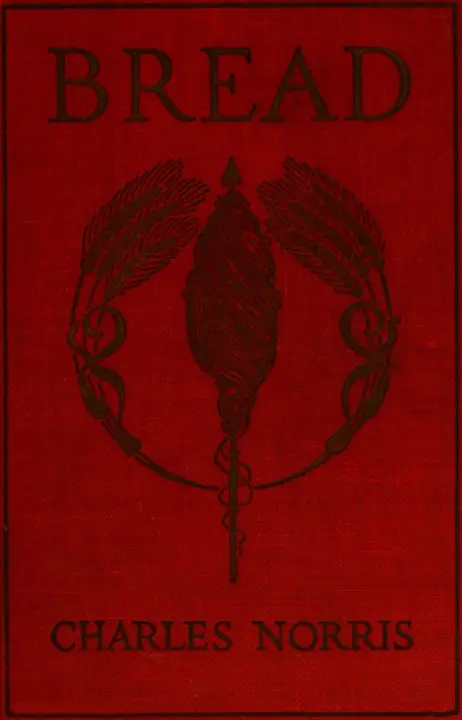
"Bread" by Charles G. Norris is a novel written in the early 20th century. The story follows the Sturgis family, particularly the eldest daughter Jeannette, as they navigate the challenges of poverty and aspirations in New York City. The family's struggles revolve around their financial hardships and the impact these challenges have on their daily lives and future prospects. The opening of the book introduces Jeannette Sturgis, who is frustrated by her family's dire financial situation and her mother's dependence on the meager income from music lessons. When Jeannette realizes they can't even afford a loaf of bread, tensions arise, leading her to take charge of their financial future by considering dropping out of school and getting a job. As she embarks on this new path, her strong resolve contrasts sharply with her mother's desires for her daughters to lead more genteel lives. The reader sees the dynamics in their family and the social pressures that shape their identities, setting the stage for Jeannette's journey toward independence amidst the looming challenges she faces as a working girl.
Introduction adapted from the source catalogue; source summaries may be automatically generated.
Free to read · English · 139,372 words · No account needed
MAKE TIME FOR A GOOD BOOK
On by default. Untick to stop anonymous reading totals. Each page counts after 10 seconds in view. How this works.
Anonymous counting is on unless you have switched it off.
Jeannette frowned in distaste, and looked up at the boy, annoyed. She was extremely busy, typing a speech for Mr. Corey which he was to read that night at a Publishers’ Banquet at the Waldorf. It was twenty minutes past four; she expected him to return at any minute.
“Tell the gentleman to come again, will you, Jimmy? I’m really too busy to see him to-day.”
The boy went out and she returned to her work, her fingers flying.
“The responsibility of molding public opinion,” went her notes, “rests perhaps with our press, but to whom do the discriminating readers of the nation in confidence turn for the formation of their taste in literature, their acquaintance with the Arts, the dissemination of those inspiring idealistic thoughts and precepts of the fathers of our great----”
She estimated there were another three pages of it.
The door of her office opened and a young man of square build, with broad shoulders, and a grin on his face, filled the aperture.
“Beg pardon, Miss Sturgis,” he began. “I hope you won’t think I’m
butting-in.”
He had a strong handsome face, big flashing teeth, black hair and black
eyebrows.
Jeannette looked at him, bewildered. She had never seen this man
before; she did not know what he was doing in her office, nor what he
wanted.
“I’m Martin Devlin,” he announced, advancing into the room.
At once she froze; her breast rose on a quick angry intake, and her eyes assumed a cold level stare.
“I hope you’re not going to be sore at me.” He smiled down at her in
easy good humor.
“Mr. Corey’s not in,” said the girl. She was staggered by this
individual’s effrontery.
“Well, that’s too bad, but I really called to have a few minutes’ chat with you,” he returned nonchalantly. “We have a friend of yours down at our office: Miss Alexander, Beatrice Alexander. ’Member her? She says a lot of nice things about you.”
“Oh!” Jeannette elevated her eyebrows and surveyed the speaker’s head
and feet.
“I’m afraid you’re sore at me,” he said. He laughed straight into her cold eyes, showing his big teeth.
Jeannette straightened herself and frowned. She felt her anger rising.
“Er--you--a----” she began, deliberately clearing her throat with a little annoyed cough. “I think you’ve made a mistake. Mr. Corey is not in. As you see, I am busy. Good-day.”
She looked down at her notes and swung her chair around to her machine.
Your reading position is saved on this browser. Take it to another device with a library code. Reading pages adapt to text, rather than matching a printed edition.
BEHIND THE BOOK
This eBook is for the use of anyone anywhere in the United States and most other parts of the world at no cost and with almost no restrictions whatsoever. You may copy it, give it away or re-use it under the terms of the Project Gutenberg License included with this eBook or online at www.gutenberg.org. If you are not located in the United States, you will have to check the laws of the country where you are located before using this eBook. Read the source licence.
The original source file, including credits and licence, is retained by this library. Request an original-format copy at no charge. Please include the book title and Project Gutenberg identifier #65944.
KEEP YOUR CURIOSITY GOING
Coulson Kernahan

Maurice Baring
Frances Wright
Cécile Tormay

Frederic Jesup Stimson

W. H. P. (William Henry Pope) Jarvis