THE CLASSIC COLLECTION✦A dead man’s diaryCLASSIC FREE BOOKS
A dead man’s diary
Coulson Kernahan
THE CLASSIC COLLECTION · 1923
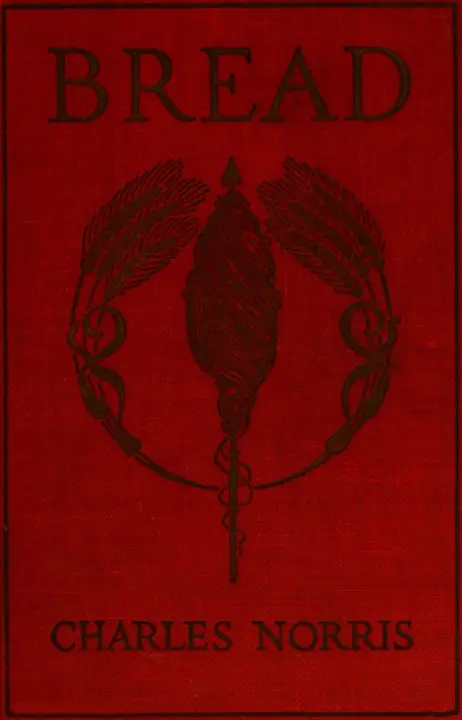
"Bread" by Charles G. Norris is a novel written in the early 20th century. The story follows the Sturgis family, particularly the eldest daughter Jeannette, as they navigate the challenges of poverty and aspirations in New York City. The family's struggles revolve around their financial hardships and the impact these challenges have on their daily lives and future prospects. The opening of the book introduces Jeannette Sturgis, who is frustrated by her family's dire financial situation and her mother's dependence on the meager income from music lessons. When Jeannette realizes they can't even afford a loaf of bread, tensions arise, leading her to take charge of their financial future by considering dropping out of school and getting a job. As she embarks on this new path, her strong resolve contrasts sharply with her mother's desires for her daughters to lead more genteel lives. The reader sees the dynamics in their family and the social pressures that shape their identities, setting the stage for Jeannette's journey toward independence amidst the looming challenges she faces as a working girl.
Introduction adapted from the source catalogue; source summaries may be automatically generated.
Free to read · English · 139,372 words · No account needed
MAKE TIME FOR A GOOD BOOK
On by default. Untick to stop anonymous reading totals. Each page counts after 10 seconds in view. How this works.
Anonymous counting is on unless you have switched it off.
The brilliantly lit ball-room, the music drew them back. Jeannette had no sense of guilt; the mood of the hour still wrapped her; for the moment she loved this man whole-heartedly; he was divine, a super-man, a god. No thought of Martin came to distress her. She was supremely content, supremely happy; it was rapture, bliss, enchantment. In her ear he kept whispering:
“You are wonderful, you are beautiful, you are adorable.”
Doc French was beckoning to her, but she only smiled amiably at him as she passed and floated on in Michael’s arms, bending and undulating with him in perfect symmetry of motion. There was no such thing as time or space; she shut her eyes, and seemed to be floating--floating--floating---- Doc French stopped them with a hand on the actor’s arm.
“Sorry to interrupt,” he said, “but I fear I must. Your husband, Mrs. Devlin.... May I speak to you a moment?”
Carr said, “Oh, I beg pardon,” and stepped aside, but Jeannette’s
thoughts followed him.
“What is it, Doc?”
“Martin had better go home, Mrs. Devlin. He’s been downstairs at the bar, and I guess he’s had a bit too much. I was going to take him home myself but I didn’t know how to get into your house.”
“Martin?”
“He’s been downstairs at the bar, and I’m afraid the fellows there wouldn’t let him get away.”
“Martin?”
Reality came blindingly upon her with a glare of hideous white light. Her dream shattered. Ugliness obtruded,--things naked and angular, harshness and cold cruelty! She felt as if she were being jerked from enchanted slumber by a rude and horrid hand.
She clutched at her heart as if to tear out the pain that had already
stabbed her there.
“Martin!” she breathed again, gasping a little, the blood draining from
her face.
“He’s all right, Mrs. Devlin,--quite all right, I assure you. Nothing’s happened to him--nothing wrong. There’s been no accident.”
“Accident?” Her eyes widened with sudden fear.
“No--no; it’s all right. He’s just drunk a little too much, and I thought he’d better go home.”
“Oh, surely--right away. Where is he?”
“Well, we’ve got him out in my car.”
“Let’s go--let’s go then; let’s go quickly. I’ll get my wraps.” She started for the dressing-room.
“Good-night,” Michael’s voice called after her but she did not turn her
head.
Doc French led her to the motor car. Martin lay huddled in the back, insensate, a long string of saliva trailing from his under lip. A strange man supported him.
Your reading position is saved on this browser. Take it to another device with a library code. Reading pages adapt to text, rather than matching a printed edition.
BEHIND THE BOOK
This eBook is for the use of anyone anywhere in the United States and most other parts of the world at no cost and with almost no restrictions whatsoever. You may copy it, give it away or re-use it under the terms of the Project Gutenberg License included with this eBook or online at www.gutenberg.org. If you are not located in the United States, you will have to check the laws of the country where you are located before using this eBook. Read the source licence.
The original source file, including credits and licence, is retained by this library. Request an original-format copy at no charge. Please include the book title and Project Gutenberg identifier #65944.
KEEP YOUR CURIOSITY GOING
Coulson Kernahan

Maurice Baring
Frances Wright
Cécile Tormay

Frederic Jesup Stimson

W. H. P. (William Henry Pope) Jarvis