THE CLASSIC COLLECTION✦A dead man’s diaryCLASSIC FREE BOOKS
A dead man’s diary
Coulson Kernahan
THE CLASSIC COLLECTION · 1923
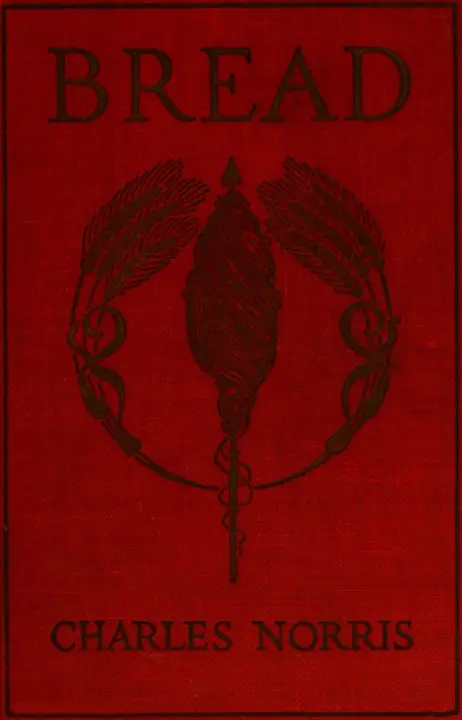
"Bread" by Charles G. Norris is a novel written in the early 20th century. The story follows the Sturgis family, particularly the eldest daughter Jeannette, as they navigate the challenges of poverty and aspirations in New York City. The family's struggles revolve around their financial hardships and the impact these challenges have on their daily lives and future prospects. The opening of the book introduces Jeannette Sturgis, who is frustrated by her family's dire financial situation and her mother's dependence on the meager income from music lessons. When Jeannette realizes they can't even afford a loaf of bread, tensions arise, leading her to take charge of their financial future by considering dropping out of school and getting a job. As she embarks on this new path, her strong resolve contrasts sharply with her mother's desires for her daughters to lead more genteel lives. The reader sees the dynamics in their family and the social pressures that shape their identities, setting the stage for Jeannette's journey toward independence amidst the looming challenges she faces as a working girl.
Introduction adapted from the source catalogue; source summaries may be automatically generated.
Free to read · English · 139,372 words · No account needed
MAKE TIME FOR A GOOD BOOK
On by default. Untick to stop anonymous reading totals. Each page counts after 10 seconds in view. How this works.
Anonymous counting is on unless you have switched it off.
“No--no,--be sensible, Martin. I want to thresh this out. If I should consent to marry you, what would you think would be a fair proportion of what you earn that I could count on as my own?”
“What would you be wanting money for?” Martin asked, amused by her
earnestness.
“What would I be wanting money for?” she repeated. “Why, what do you think? ... For clothes, for pleasures, to throw away if I liked!”
“Aw, hear her!” he laughed. “Why, my darling, I’ll buy you your clothes and everything your little heart desires if only you’ll say ‘yes’ to me.”
“Martin, I’ll never say ‘yes’ until this is settled,” she said spiritedly, her eyes with a queer light in them.
Martin was serious for a moment.
“Sweet woman,” he said earnestly, “you can have it all. Divide it any way you like. I don’t care in the least. There’s plenty for the two of us.”
But Jeannette would consider nothing so indefinite. She did not want a great deal, but she wanted to feel sure of something that would be regarded as entirely her own. With difficulty she persuaded him to talk about the matter in earnest. They agreed that if his salary were equally divided, and Jeannette paid all the table expenses out of her half while he paid the rent and everything else out of his, that would be an equitable arrangement. That satisfied Jeannette; it gave her something to think about when she considered marrying him.
But even with this much settled, she was no nearer making up her mind than she had ever been. Marriage meant giving up the office, the close affiliations she had formed there. Propinquity had made her fellow-workers her friends; she knew them all intimately, knew something of their private lives, rejoiced or sorrowed with them at the inevitable changes of fortune. When an eminent surgeon from Germany performed a miraculous operation on Mr. Featherstone’s little son and gave him the use of his legs on which he had never walked, she shared his father’s joy; when Mr. Cavendish married a charming Vassar girl who was the daughter of a wealthy Wall Street banker, she congratulated him with a real pleasure; when Miss Holland’s seventeen-year-old nephew secured an appointment at Annapolis and successfully passed the entrance examination, she took keen satisfaction in her friend’s delight. She was shocked and saddened when Sandy MacGregor’s wife died, and when Mr. Allister was taken ill with pneumonia no one inquired more frequently about him while he struggled desperately to live, or felt more pleasure when it was announced he had turned the corner and would before long be back again at his desk. She was glad when Francis Holme, Walt Chase and Sandy MacGregor each received a substantial gift of the company’s common stock at Christmas-time, and was correspondingly sorry that Horatio Stephens and Willis Corey shared equally in the honorarium. When Miss Peckenbaugh asked for a raise in salary, and her request was endorsed by Mr. Allister, she took it upon herself to tell Mr. Corey certain facts about the young lady that had become known to her, and when as a result, the request was refused and Miss Peckenbaugh in anger resigned, she was amused and delighted. At the same time she urged and secured a five-dollar raise per week for old Major Ticknor who had a little blind grandchild he was helping to maintain in a private sanitarium. Young Tommy Livingston in the bindery had impressed her upon a certain occasion with his brightness and ability, and she recommended him warmly to Mr. Corey, and had the satisfaction of seeing him promoted to a desk in Mr. Kipps’ department. At her suggestion, window-boxes filled with flowers were put along the windows of the press-room that faced the street; she persuaded the firm to install a lunch-room for the women employees on the eighth floor, and it was her idea that a regular trained nurse be engaged and established in a small but complete infirmary within the building. She induced Mr. Corey to offer a certain rising young author, whose work had been her discovery and who was showing steady improvement, an increase in royalty percentage, and she prevented the publication of a certain piece of fiction, which Corey had given her to read, because she considered it vicious, despite Mr. Allister’s strong recommendation. She advised her chief to instruct Horatio Stephens to order a series of articles from a woman writer whose work in another magazine had interested her, and she urged him not to engage a certain Madame Desseau of Paris, a designer of women’s clothes, as the fashion editor of The Ladies’ Fortune. Jeannette had a hand in almost every important step that was taken. Mr. Corey respected her judgment, frequently consulted her, and sometimes followed her advice even when contrary to his inclinations. He often told her that he believed her intuition was unerring and the greatest possible help to him.
Your reading position is saved on this browser. Take it to another device with a library code. Reading pages adapt to text, rather than matching a printed edition.
BEHIND THE BOOK
This eBook is for the use of anyone anywhere in the United States and most other parts of the world at no cost and with almost no restrictions whatsoever. You may copy it, give it away or re-use it under the terms of the Project Gutenberg License included with this eBook or online at www.gutenberg.org. If you are not located in the United States, you will have to check the laws of the country where you are located before using this eBook. Read the source licence.
The original source file, including credits and licence, is retained by this library. Request an original-format copy at no charge. Please include the book title and Project Gutenberg identifier #65944.
KEEP YOUR CURIOSITY GOING
Coulson Kernahan

Maurice Baring
Frances Wright
Cécile Tormay

Frederic Jesup Stimson

W. H. P. (William Henry Pope) Jarvis