THE CLASSIC COLLECTION✦A dead man’s diaryCLASSIC FREE BOOKS
A dead man’s diary
Coulson Kernahan
THE CLASSIC COLLECTION · 1923
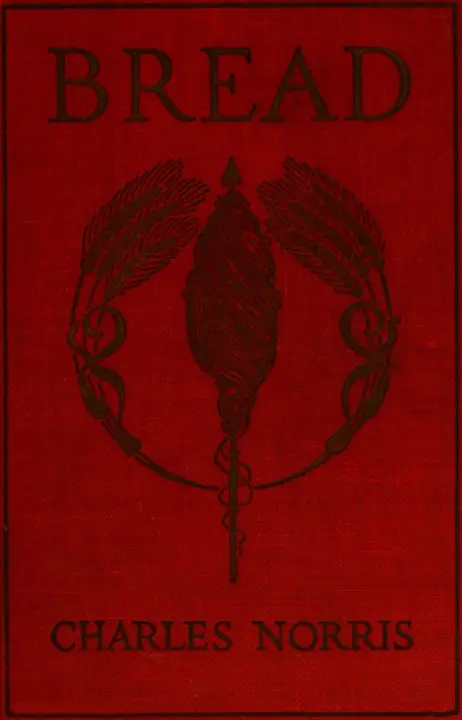
"Bread" by Charles G. Norris is a novel written in the early 20th century. The story follows the Sturgis family, particularly the eldest daughter Jeannette, as they navigate the challenges of poverty and aspirations in New York City. The family's struggles revolve around their financial hardships and the impact these challenges have on their daily lives and future prospects. The opening of the book introduces Jeannette Sturgis, who is frustrated by her family's dire financial situation and her mother's dependence on the meager income from music lessons. When Jeannette realizes they can't even afford a loaf of bread, tensions arise, leading her to take charge of their financial future by considering dropping out of school and getting a job. As she embarks on this new path, her strong resolve contrasts sharply with her mother's desires for her daughters to lead more genteel lives. The reader sees the dynamics in their family and the social pressures that shape their identities, setting the stage for Jeannette's journey toward independence amidst the looming challenges she faces as a working girl.
Introduction adapted from the source catalogue; source summaries may be automatically generated.
Free to read · English · 139,372 words · No account needed
MAKE TIME FOR A GOOD BOOK
On by default. Untick to stop anonymous reading totals. Each page counts after 10 seconds in view. How this works.
Anonymous counting is on unless you have switched it off.
“I think you can’t.”
“Won’t you make an appointment for me to see him?”
“Certainly not!”
“There’s other ways I can meet him.”
“You’re at liberty to find them.”
“Aw ... you’re awfully mean. Why don’t you give a fellow a chance for
his living?”
“You don’t deserve it.”
“Because I gave the boy a quarter to show me which was your office?”
“Yes, and because you’re so ... so....”
“Fresh,--go on; you were going to say it!”
“Evidently you are aware of it.”
“A fellow hasn’t a chance to think anything else.”
“Well,--you’ll have to excuse me. I’m really very busy.”
“Can I come again when you’ve a little more time to spare?”
“I am always busy.”
“Can I ’phone?”
“I can’t bother with ’phone messages.”
Mr. Devlin for a moment was routed.
“Oh, gosh!” he said in disgust.
Jeannette was not to be won. She nodded to him, and began to type briskly, the keys of her machine humming. The man stood uncertainly a moment more, shifting from one foot to the other; then he swung himself disconsolately toward the door, and closed it slowly after him. Almost immediately he opened it again and thrust in his head.
“I’m coming back again,--just the same!” he bawled. Jeannette did not look around, and the door clicked shut.
The next time he called she was taking dictation from Mr. Corey and was unaware he had come. When she finished with her employer, and picked up the sheaf of letters he had given her, she passed through the connecting door between the two offices, and found Devlin waiting in her room.
“Really!” She stopped short and frowned in quick annoyance.
“Well, here I am again!” he said blandly.
“And here’s where you go out!” She walked towards the door that led to the outer office and flung it open.
Devlin’s face altered, and a slow color began to mount his dark cheeks.
“Aw--say----” he said in hurt tones. The smile was gone; for the moment his face was as serious as her own.
Jeannette did not move. Devlin picked up his hat and gloves.
“My God!” he exclaimed fervently, “you’re hard as nails!”
As he went out she suddenly felt sorry for him.
But that was not the last of him. His card appeared the next afternoon. Mr. Corey was again away from the office.
“I’m not in to this person,” she said to Jimmy, “and if he bribes you to show him in here, I’ll go straight to Mr. Kipps and have you fired.”
Your reading position is saved on this browser. Take it to another device with a library code. Reading pages adapt to text, rather than matching a printed edition.
BEHIND THE BOOK
This eBook is for the use of anyone anywhere in the United States and most other parts of the world at no cost and with almost no restrictions whatsoever. You may copy it, give it away or re-use it under the terms of the Project Gutenberg License included with this eBook or online at www.gutenberg.org. If you are not located in the United States, you will have to check the laws of the country where you are located before using this eBook. Read the source licence.
The original source file, including credits and licence, is retained by this library. Request an original-format copy at no charge. Please include the book title and Project Gutenberg identifier #65944.
KEEP YOUR CURIOSITY GOING
Coulson Kernahan

Maurice Baring
Frances Wright
Cécile Tormay

Frederic Jesup Stimson

W. H. P. (William Henry Pope) Jarvis