THE CLASSIC COLLECTION✦An outlaw’s diary: the CommuneCLASSIC FREE BOOKS
An outlaw’s diary: the Commune
Cécile Tormay
THE CLASSIC COLLECTION · 1905
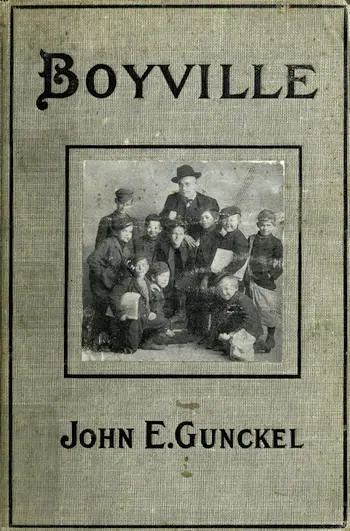
"Boyville: A History of Fifteen Years' Work Among Newsboys" by John E. Gunckel is a historical account written in the early 20th century. This work chronicles the efforts of a community initiative focused on improving the lives of street children, specifically newsboys, through the formation and activities of the Boyville Newsboys' Association. The text highlights the experiences of these young boys, particularly a character named Jimmy, who, through kindness and resilience, helps shift perceptions about their lives and potential for good. The beginning of the book introduces Jimmy, a twelve-year-old newsboy with a notorious reputation for mischief, yet who reveals a kind heart through an act of kindness when he scatters hickory nuts for neighborhood children to find. Over the initial chapters, we see Jimmy’s interactions with a gentleman who takes an interest in his life, leading to the establishment of the Boyville Newsboys' Association—a movement aimed at providing a supportive structure where newsboys can govern themselves and uplift each other. Through various challenges and the pursuit of positive activities, the narrative showcases themes of redemption and the capacity for goodness within seemingly troubled youths.
Introduction adapted from the source catalogue; source summaries may be automatically generated.
Free to read · English · 37,453 words · No account needed
MAKE TIME FOR A GOOD BOOK
On by default. Untick to stop anonymous reading totals. Each page counts after 10 seconds in view. How this works.
Anonymous counting is on unless you have switched it off.
On the following Monday morning, at the appointed, hour, Jimmy, with eight other boys, was at the office of his newly-made friend.
It was an interesting picture, an exciting scene.
Noisy, loud talking, several answering questions at the same time, some turning over books, papers, investigating everything in sight. Sharp, shrewd, busy at every moment, quick to answer any question and the replies always satisfactory, and to the point.
“Don’t you know anything,” said Jimmy to a friend, who was trying to investigate how a typewriter was made, “let that meechine alone.”
It was soon in evidence that Jimmy’s word meant something, for each boy obeyed him without saying a word, except a little grunt of dissatisfaction, to show he hated to obey. Not one of the eight boys had clean hands. Not one a coat with a button. Three safety-pins held holding positions in some of their coats. Not one used a handkerchief, and the slang would puzzle many a lawyer.
As one of the boys lost his cap he said: “Some kid five-fingered it.—took it with his hand.” It was an interesting crowd.
“Well, you are on time, Jimmy, and I see you have brought some of your friends with you,” said the gentleman.
“These is part of de gang,” said Jimmy.
“Do you boys all want to be my friends, just the same as Jimmy is?”
They replied, “Sure thing; cert. Yes’m.”
These friendly words brought the gang closer to the gentleman’s desk. And more papers were disturbed. The ink was investigated and one of the boys wanted to know why it wasn’t red ink. Another poked his finger in the ink stand and made black streaks down the smallest boy’s face. The gentleman was shown quite a number of articles they had in their pockets. Nails, buttons, marbles, pieces of slate-pencils, etc., all of which had to be admired.
“Say, you, mister,” said a nine-year-old dirty-faced, bright-eyed boy, “I had trouble gittin’ here. De con. wus onto me an’ I had to take two lines ’fore I rode into de office wid out blowin’ in a cent.”
“Well, quit your wasting words,” said Jimmy.
The boys gathered around the gentleman, and he said:
“My! what good you boys can do in this world with all of your push, and energy, your hustling, your good health, you boys can turn up something, and I’m going to help you do it. How would you like to help me make all the men and women who buy papers of you learn to love you. Learn to speak kindly to you?”
Your reading position is saved on this browser. Take it to another device with a library code. Reading pages adapt to text, rather than matching a printed edition.
BEHIND THE BOOK
This eBook is for the use of anyone anywhere in the United States and most other parts of the world at no cost and with almost no restrictions whatsoever. You may copy it, give it away or re-use it under the terms of the Project Gutenberg License included with this eBook or online at www.gutenberg.org. If you are not located in the United States, you will have to check the laws of the country where you are located before using this eBook. Read the source licence.
The original source file, including credits and licence, is retained by this library. Request an original-format copy at no charge. Please include the book title and Project Gutenberg identifier #50284.
KEEP YOUR CURIOSITY GOING
Cécile Tormay

Moritz Busch
John L. Ransom
Frances Wright
Cécile Tormay

Mabel Potter Daggett