THE CLASSIC COLLECTION✦Building the pacific railwayCLASSIC FREE BOOKS
Building the pacific railway
Edwin L. (Edwin Legrand) Sabin
THE CLASSIC COLLECTION · 1919
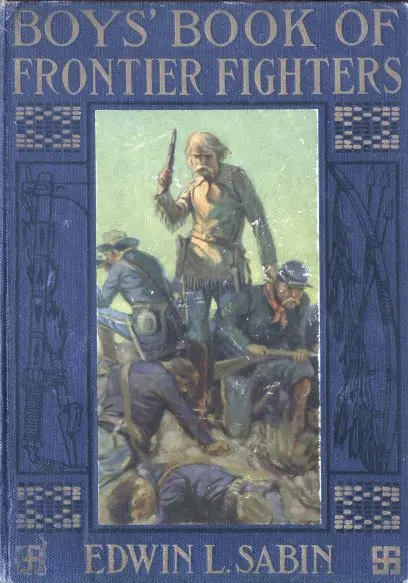
"Boys' Book of Frontier Fighters" by Edwin L. Sabin is a historical account written in the early 20th century. This work focuses on the daring exploits of American pioneers and soldiers as they fought against indigenous tribes during the westward expansion of the United States. With tales of courage, strategic battles, and significant historical figures such as Captain Benjamin Church during King Philip's War, it explores themes of bravery and survival in the face of adversity. At the start of the book, the author introduces Captain Benjamin Church, a renowned Indian fighter known for his fierce engagement in conflicts during the late 17th century. The narrative details his relentless pursuit of the Pokanokets and the capture of Chief Annawan, who was a key figure in King Philip’s War. Captain Church's character is depicted as steadfast and resourceful, highlighting a gripping encounter that showcases his gritty determination as he navigates a dangerous swamp, battles formidable foes, and ultimately captures his adversary, illustrating the complex dynamics of colonial America during this tumultuous period. The opening chapters set the stage for a series of heroic tales that celebrate the spirit of frontier fighters and their roles in shaping American history.
Introduction adapted from the source catalogue; source summaries may be automatically generated.
Free to read · English · 88,860 words · No account needed
MAKE TIME FOR A GOOD BOOK
On by default. Untick to stop anonymous reading totals. Each page counts after 10 seconds in view. How this works.
Anonymous counting is on unless you have switched it off.
What! Yes! War bonnets were moving rapidly through the trees and high rocks, quartering behind on the right. The troopers quickened, to close their intervals--for the column had strung out. Every hand dropped to its carbine butt.
"Keep well to the left, against that timber," shouted Scout Gruard.
"Bang-g-g!" He had been answered by a volley. There were Indians among the rocks and trees, on the right, within two hundred yards. The bullets whined and stung; wounded horses reared and plunged--Reporter Finerty's mount stumbled to its knees.
"To the left, men! Quick!"
Half wheeling, they dashed for the edge of the timber, there; gained it safely; under cover of the branches sprang to earth and faced about, guns ready. Lieutenant Sibley took command.
"Give them a few shots, sergeant, till we can tie our horses."
At the carbine reports the Indians in sight, out in the park, dived for
shelter.
"Now tie your horses short, to the trees, men."
That was done.
"As skirmishers. Take intervals right and left. Keep under cover. Fire carefully, only when you see a mark. Don't waste ammunition."
The skirmish line ran in a semi-circle, from south-east to northwest, through the edge of the timber. There were many fallen trees, as if a storm or a forest fire had swept through; that closed the way to the horses, but furnished good breastworks.
The battle had opened in a hurry. The bullets from the Indians pattered like hail, sending the bark flying, and drumming upon the bare trunks of the breastworks. The heavy carbines stanchly replied. Horses reared again, and screamed and fell, kicking. The Indians were making certain of the cavalry mounts. That was the first job--to put the enemy afoot.
The attackers were Sioux and Cheyennes both. How they had come in so cunningly, was a mystery. Gruard thought it was an accident; they were not the same Indians who had been sighted, below. But that cut no figure.
The head chief wore white buckskin and an imposing war bonnet. He
might be glimpsed, now and then, as he darted about, placing his
warriors.
"White Antelope, that," asserted Gruard. "Eh, Bat?"
"Think so," Big Bat nodded.
"And he's a good one; among the best of the Cheyennes. Pass the word
to get him, when we can."
After that, every carbine sought for White Antelope. His time came when he led a charge. The bullets seemed to mow him down, together with his warriors. Whether he had been killed or not, was a question; but he did not appear again.
Your reading position is saved on this browser. Take it to another device with a library code. Reading pages adapt to text, rather than matching a printed edition.
Edwin L. (Edwin Legrand) Sabin

Edwin L. (Edwin Legrand) Sabin

Edwin L. (Edwin Legrand) Sabin

Edwin L. (Edwin Legrand) Sabin
BEHIND THE BOOK
This eBook is for the use of anyone anywhere in the United States and most other parts of the world at no cost and with almost no restrictions whatsoever. You may copy it, give it away or re-use it under the terms of the Project Gutenberg License included with this eBook or online at www.gutenberg.org. If you are not located in the United States, you will have to check the laws of the country where you are located before using this eBook. Read the source licence.
The original source file, including credits and licence, is retained by this library. Request an original-format copy at no charge. Please include the book title and Project Gutenberg identifier #31130.
KEEP YOUR CURIOSITY GOING
Cécile Tormay

Moritz Busch
John L. Ransom
Frances Wright
Cécile Tormay

Mabel Potter Daggett