THE CLASSIC COLLECTION✦Building the pacific railwayCLASSIC FREE BOOKS
Building the pacific railway
Edwin L. (Edwin Legrand) Sabin
THE CLASSIC COLLECTION · 1919
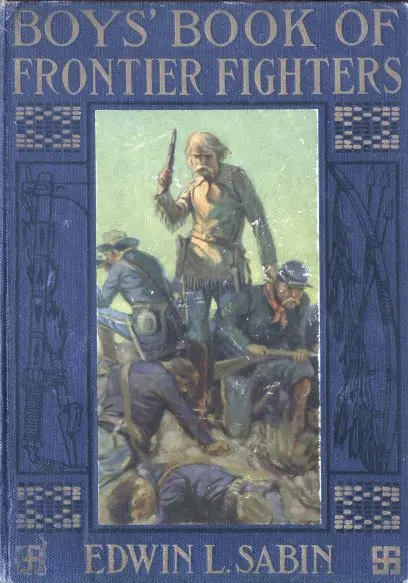
"Boys' Book of Frontier Fighters" by Edwin L. Sabin is a historical account written in the early 20th century. This work focuses on the daring exploits of American pioneers and soldiers as they fought against indigenous tribes during the westward expansion of the United States. With tales of courage, strategic battles, and significant historical figures such as Captain Benjamin Church during King Philip's War, it explores themes of bravery and survival in the face of adversity. At the start of the book, the author introduces Captain Benjamin Church, a renowned Indian fighter known for his fierce engagement in conflicts during the late 17th century. The narrative details his relentless pursuit of the Pokanokets and the capture of Chief Annawan, who was a key figure in King Philip’s War. Captain Church's character is depicted as steadfast and resourceful, highlighting a gripping encounter that showcases his gritty determination as he navigates a dangerous swamp, battles formidable foes, and ultimately captures his adversary, illustrating the complex dynamics of colonial America during this tumultuous period. The opening chapters set the stage for a series of heroic tales that celebrate the spirit of frontier fighters and their roles in shaping American history.
Introduction adapted from the source catalogue; source summaries may be automatically generated.
Free to read · English · 88,860 words · No account needed
MAKE TIME FOR A GOOD BOOK
On by default. Untick to stop anonymous reading totals. Each page counts after 10 seconds in view. How this works.
Anonymous counting is on unless you have switched it off.
The trail was good. They pushed on at a trot, never sparing the horses. They began to feel more hopeful. The Sioux were out of sight; there were no sounds of pursuit; was it possible that they had been let off? As everybody knew, the Plains Indians rarely ventured far into the mountains, except on quick forays against enemies who did not expect them.
After five miles more, Scouts Gruard and Big Bat stopped. The column had climbed almost to the top of the first range.
"Do you want to rest the horses, lieutenant?"
"Yes, if it's safe. What do you think?"
"Bat and I've about decided that those fellows have quit. We've given them the slip. They're not likely to risk attacking us in the high country. So you can take a breathing spell. We've a hard trip ahead."
"Dismount," Lieutenant Sibley ordered.
The word was welcome. The horses were badly winded, and the men were hungry and thirsty, for they had had an early breakfast and the sun beat down hotly.
Noon camp was made here in a little park, where amidst the surrounding trees the grass grew long and the flowers nodded. The sweaty horses were unsaddled and picketed short, to graze; coffee was set upon small fires, to boil; sentries had been posted, and the other men were permitted to stretch out, in the shade.
Everything seemed very peaceful, but--!
At any rate, they all might talk and laugh and sip their coffee and doze, and believe that they had outwitted the Sioux. In about an hour and a half they saddled up and rode on, still heading from the Sioux and into the mountains.
Where they were going, nobody knew save Scouts Gruard and Big Bat. Frank led, with Big Bat close behind him. Then came the lieutenant, and Reporter Finerty, and in long single file the troopers, with Packer John Becker closing the rear.
It was a splendid country, of clustered pines, scattered rocks and huge ledges, sunny, flowery parks, cold streams in the valleys, and tremendous, long slopes rising, before, to the white crest of the snowy main range of the Big Horn Mountains.
In mid-afternoon they were leisurely winding through a park lying between the front range and the main range. There was timber on the left, or south-west; rocks and timber on the right; and timber before, with the snow caps towering above.
Not a sound had been heard, to signal danger--when suddenly John Becker spurred up along the file, from the rear.
"The Indians, lieutenant! Here they are!"
Your reading position is saved on this browser. Take it to another device with a library code. Reading pages adapt to text, rather than matching a printed edition.
Edwin L. (Edwin Legrand) Sabin

Edwin L. (Edwin Legrand) Sabin

Edwin L. (Edwin Legrand) Sabin

Edwin L. (Edwin Legrand) Sabin
BEHIND THE BOOK
This eBook is for the use of anyone anywhere in the United States and most other parts of the world at no cost and with almost no restrictions whatsoever. You may copy it, give it away or re-use it under the terms of the Project Gutenberg License included with this eBook or online at www.gutenberg.org. If you are not located in the United States, you will have to check the laws of the country where you are located before using this eBook. Read the source licence.
The original source file, including credits and licence, is retained by this library. Request an original-format copy at no charge. Please include the book title and Project Gutenberg identifier #31130.
KEEP YOUR CURIOSITY GOING
Cécile Tormay

Moritz Busch
John L. Ransom
Frances Wright
Cécile Tormay

Mabel Potter Daggett