One Woman: Being the Second Part of a Romance of Sussex
Alfred Ollivant
THE CLASSIC COLLECTION · 1918
"Boy Woodburn: A Story of the Sussex Downs" by Alfred Ollivant is a novel written in the early 20th century. The story is centered around Boy Woodburn, the spirited daughter of a horse trainer named Old Mat, as she navigates life in the Sussex Downs, which blends themes of passion, adventure, and the world of horse racing. The novel paints a vivid picture of the rural environment and introduces readers to a cast of colorful characters connected to the horse training profession. At the start of the book, we are introduced to Old Mat, a well-respected horse trainer known for his unconventional methods and charming personality. As he prepares for the Spring Meeting at Polefax, we see glimpses of his daughter Boy, who is portrayed as a strong-willed and determined young girl, engaged in the world of racing and its accompanying challenges. The opening chapters establish a lively setting filled with local sportsmen and cheerful chaos, while subtly hinting at Boy's dreams and ambitions, which are influenced by her upbringing and her father's legacy. We also meet a variety of characters that contribute to both the excitement of the races and personal narratives that intertwine with Boy's journey.
Introduction adapted from the source catalogue; source summaries may be automatically generated.
Free to read · English · 84,937 words · No account needed
MAKE TIME FOR A GOOD BOOK
On by default. Untick to stop anonymous reading totals. Each page counts after 10 seconds in view. How this works.
Anonymous counting is on unless you have switched it off.
"Might burn your fingers," he said. "That's what I'm thinking of. That's to buy you a bottle of Mother Siegel's soothing syrup. There's only one thing," he went on, brandishing the note in the moon. "Looks a wistful little thing, don't you think? That's because he's lonely. He's left four little brothers and sisters same as himself at home. And he's pining for 'em to join him. And join him they will to-morrow night--if you'll let me in to his loose-box."
Jaggers at his best never looked more self-righteous than Monkey Brand
as he made reply:
"I couldn't let you into his loose-box, Mr. Joses," he said quietly. "Wouldn't be right. Only the door'll be on the latch, and if you choose to come in--why, who's to stop you?"
"Right," laughed the other. "I'm an artist, I am, as you may recall. I'd like to paint you in your sleep. Study of Innocence I should call it."
He dropped away into the darkness.
A whistle stopped him.
The little jockey was limping after him.
"Say to-night," he said.
"No," said the fat man. "To-morrow night. Sunday night. That's the night
for good deeds."
At ten that night Jim Silver escorted Boy Woodburn across the yard to
the foot of the ladder.
For a moment the two stood at the foot of the ladder in talk. Then the girl disappeared into the loft.
As Silver turned away he was whistling.
Monkey Brand, who was standing in the stable-door near by, lantern in hand, preparatory to taking up his watch in the young horse's box, coughed.
Silver turned and saw him.
"Good-night," he said.
"Yes, sir," said the little man, gazing up at the moon. "There is some good in him after all. Some good in us all, I s'poses."
Jim Silver approached him. He knew the little man well enough by now to know that he was always most round-about in his methods when he had something of importance to convey.
"In who?" he asked.
Monkey looked surprised and somewhat resentful.
"Why, Mr. Joses, o' cos."
"What's he done now?" asked the young man.
Monkey withdrew into the shadow of the door.
"That," he said, producing the five-pound note.
Jim handled it.
"What did he give you that for?"
"Why, for lookin' down me nose and sayin A-a men. The rest's to follow to-morrow midnight--five of 'em--if I'm a good boy, as I 'opes to be. Goin' to drop into me lap same as manners from the ceilin' when Moses was around--while I sleeps like a suckin' innocent."
The young man thought.
"Have you told Mr. Woodburn?"
"No, sir. I told no one--only you."
"Shall you tell the police?"
Your reading position is saved on this browser. Take it to another device with a library code. Reading pages adapt to text, rather than matching a printed edition.
Alfred Ollivant
Alfred Ollivant
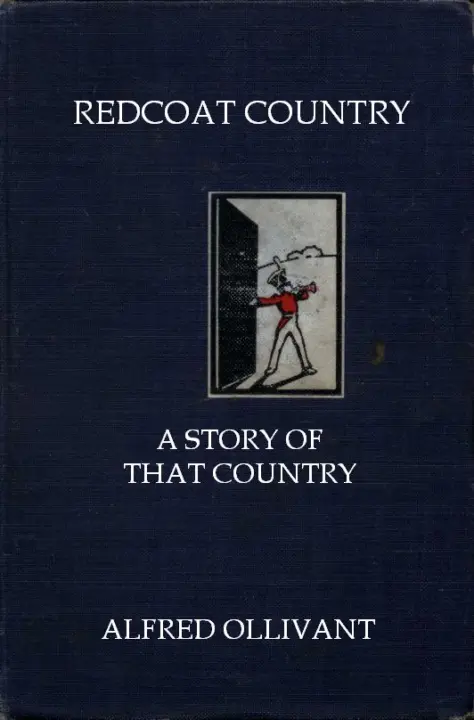
Alfred Ollivant
Alfred Ollivant
BEHIND THE BOOK
This eBook is for the use of anyone anywhere in the United States and most other parts of the world at no cost and with almost no restrictions whatsoever. You may copy it, give it away or re-use it under the terms of the Project Gutenberg License included with this eBook or online at www.gutenberg.org. If you are not located in the United States, you will have to check the laws of the country where you are located before using this eBook. Read the source licence.
The original source file, including credits and licence, is retained by this library. Request an original-format copy at no charge. Please include the book title and Project Gutenberg identifier #17965.
KEEP YOUR CURIOSITY GOING
Coulson Kernahan

Maurice Baring
Frances Wright
Cécile Tormay

Frederic Jesup Stimson

W. H. P. (William Henry Pope) Jarvis