THE CLASSIC COLLECTION✦Children and their booksCLASSIC FREE BOOKS
Children and their books
James Hosmer Penniman
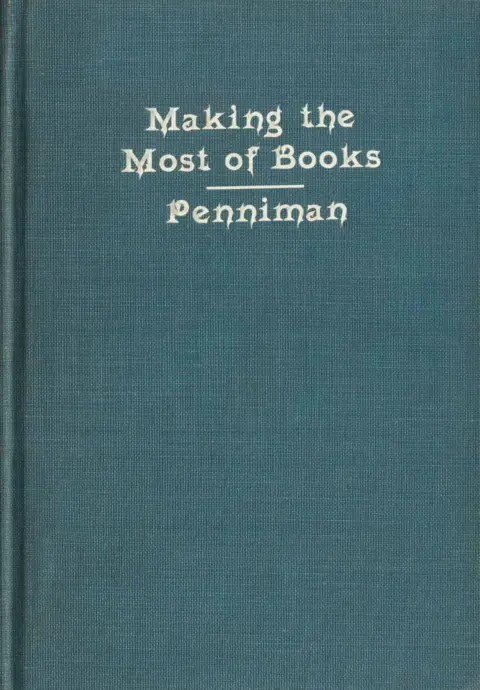
THE CLASSIC COLLECTION · 1911
"Books and How to Make the Most of Them" by James Hosmer Penniman is a guidebook on utilizing literature effectively, written in the early 20th century. This book explores the art of reading, what to read, and how to engage with books to enrich one's life. It emphasizes the transformative power of reading and the need for thoughtful selection in literature. The book is organized into several chapters, each focusing on different aspects of reading and books. Penniman articulates the miracle of books as vessels of knowledge that span time and space, emphasizing that reading cultivates the mind and enriches life. He provides practical advice on how to approach reading with purpose, how to classify books, and the importance of owning and caring for your books for personal growth. Furthermore, he discusses distinct categories of literature—such as poetry, biography, history, and fiction—highlighting their diverse impacts on readers. Overall, the text serves as both a celebration of literature and a practical manual aimed at helping readers become more discerning and effective in their reading habits.
Introduction adapted from the source catalogue; source summaries may be automatically generated.
Free to read · English · 16,479 words · No account needed
MAKE TIME FOR A GOOD BOOK
On by default. Untick to stop anonymous reading totals. Each page counts after 10 seconds in view. How this works.
Anonymous counting is on unless you have switched it off.
Read in order that you may know more, be more, do more: books will help you to accomplish all these things and these things make up the sum of life, here and hereafter.
Transcriber’s Notes
Italicized text is surrounded by underscores: italics.
Small capitals are changed to all capitals.
Obvious typographical errors and punctuation errors have been corrected after careful comparison with other occurrences within the text and consultation of external sources. Except for those changes noted below, all misspellings in the text, and inconsistent or archaic usage, have been retained.
The following corrections have been applied to the text (before/after):
(p. 23)
... pilot with out eyes. ...
... pilot without eyes. ...
(p. 27)
... distracted with thoughs of ...
... distracted with thoughts of ...
(p. 28)
... and first, and last ...
... and first and last ...
(p. 29)
... difficulty in re membering what ...
... difficulty in remembering what ...
(p. 30)
... kind of re-active behavior ...
... kind of reactive behavior ...
(p. 31)
... THE ABUSE OF BOOKS
... THE ABUSE OF BOOKS.
(p. 31)
... first-class houses stay at ...
... first-class houses, stay at ...
(p. 38)
... Schopenhauer calls, “bad books, ...
... Schopenhauer calls “bad books, ...
(p. 38)
... of their readings
... of their readings.
(p. 42)
... ‘It is of paramount ...
... “It is of paramount ...
(p. 44)
... receive the companship and sympathy ...
... receive the companionship and sympathy ...
(p. 46)
... “In studies whatsoever ...
... “In studies, whatsoever ...
(p. 50)
... “Books,’ said Dryden, ...
... “Books,” said Dryden, ...
(p. 50)
... useful qualities Some books ...
... useful qualities. Some books ...
(p. 55)
... mental nourisment of the greater ...
... mental nourishment of the greater ...
(p. 59)
... connect them selves with ...
... connect themselves with ...
(p. 61)
... with a wild surprise--
... with a wild surmise--
(p. 63)
... among mankind To these ...
... among mankind. To these ...
(p. 64)
... opportunity abides n the obvious ...
... opportunity abides in the obvious ...
(p. 66)
... principles operative, and he ...
... principles operative,” and he ...
(p. 67)
... like Browning present ...
... like Browning, present ...
(p. 67)
... high character This is ...
... high character. This is ...
(p. 69)
... past aspiration, Concrete ...
... past aspiration. Concrete ...
(p. 75)
... says Ruskin, to attribute ...
... says Ruskin, “to attribute ...
(p. 83)
... to the moern; French history ...
... to the modern; French history ...
(p. 88)
... it posses should ...
... it possesses should ...
(p. 88)
... Dickens, Thackery and George Eliot. ...
... Dickens, Thackeray and George Eliot. ...
(p. 92)
... borrow. if you ...
... borrow. If you ...
(p. 93)
... scholar. If takes a ...
... scholar. It takes a ...
(p. 93)
The durablity of the ...
The durability of the ...
(p. 99)
... here and hereafter,
... here and hereafter.
Your reading position is saved on this browser. Take it to another device with a library code. Reading pages adapt to text, rather than matching a printed edition.
BEHIND THE BOOK
This eBook is for the use of anyone anywhere in the United States and most other parts of the world at no cost and with almost no restrictions whatsoever. You may copy it, give it away or re-use it under the terms of the Project Gutenberg License included with this eBook or online at www.gutenberg.org. If you are not located in the United States, you will have to check the laws of the country where you are located before using this eBook. Read the source licence.
The original source file, including credits and licence, is retained by this library. Request an original-format copy at no charge. Please include the book title and Project Gutenberg identifier #73783.
KEEP YOUR CURIOSITY GOING

Charles G. (Charles Griffith) Ross
Hannah Webster Foster

Emily Lawless
Edwin Hamlin Carr

Charles De Lano Hine
Andrew Ure