
The Writing of News A Handbook with Chapters on Newspaper Correspondence and Copy Reading
Charles G. (Charles Griffith) Ross
THE CLASSIC COLLECTION · 1923
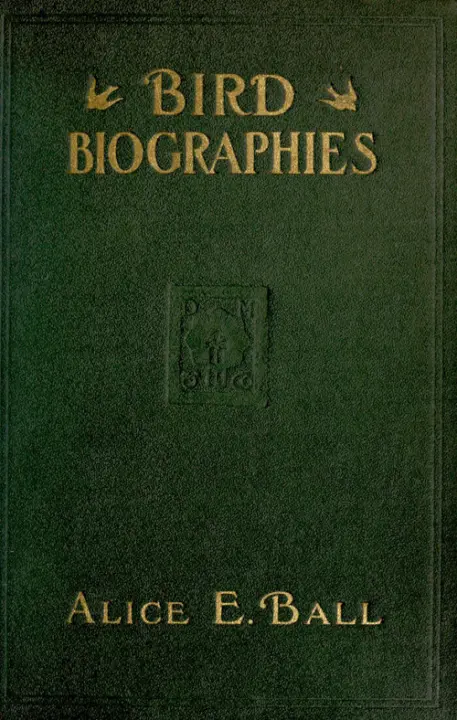
"Bird Biographies" by Alice Eliza Ball is a guidebook for beginners written in the early 20th century. This work serves as an introduction to 150 common land birds of the eastern United States, providing detailed descriptions and illustrations of each species. The book aims to foster a deeper understanding and appreciation of birds among its readers, highlighting their ecological significance and beauty. The opening of the book presents a foreword that emphasizes the cultural and historical importance of birds, citing various authors and poets who have been inspired by them throughout the ages. It discusses the vital roles birds play in the ecosystem, from pest control to seed dispersal, while also exploring the connections between human emotions and avian life. The foreword sets the stage for the subsequent sections of the guidebook, which will offer a systematic overview of winter birds in the Eastern U.S., including their habits, habitats, and contributions to local ecosystems.
Introduction adapted from the source catalogue; source summaries may be automatically generated.
Free to read · English · 65,952 words · No account needed
MAKE TIME FOR A GOOD BOOK
On by default. Untick to stop anonymous reading totals. Each page counts after 10 seconds in view. How this works.
Anonymous counting is on unless you have switched it off.
These birds do enormous good, not only in eating insect-eggs, but in destroying caterpillars, cutworms, beetles, weevils, flies, wasps, plant-lice, and scale-insects in their season.[28] They will eat berries, nuts, and acorns during the winter and are extremely hardy.
THE CHICKADEE OR BLACK-CAPPED TITMOUSE
Titmouse Family--Paridæ
Length: About 5¼ inches.
General Appearance: A very active little gray and white bird, with a black cap and throat and dull yellowish sides.
Male and Female: Head and throat a glistening black; sides of head white; bill small, black, sharp-pointed; back a soft brownish-gray; wings and tail gray, edged with white; breast white, becoming yellowish at the sides below the wings.
Song: Chick-a-dee-dee-dee, uttered with gurgles and chuckles, and with
variations.
Call-notes: Day'-day, and a whistle that resembles the word Pé-whee. The latter note is often called the "Phoebe note," and sometimes the "Pewee note." To me it resembles neither; it is not hoarse and wheezing like the phoebe's, nor plaintive like the pewee's. The last syllable has a descending inflection.
Flight: Very swift and jerky.
Habitat: Woodlands, orchards, and groves.
Range: Eastern North America, from the Hudson Bay region and N. F., south to central Missouri, Illinois, northern Indiana, Ohio, Pennsylvania, northern New Jersey, and in the Alleghany Mts. to North Carolina; somewhat farther south in winter.
The CAROLINA CHICKADEE, a smaller species, breeds from central Missouri, Indiana, central Ohio, Pennsylvania (infrequently), and central New Jersey, south to southeastern Louisiana, the Gulf Coast and northern Florida. In southern Florida, are found the FLORIDA CHICKADEES, that are still smaller and browner.
In the White Mts., the Green Mts., the Adirondacks, and southeastern Canada live ACADIAN CHICKADEES, that differ from the preceding species in having brownish-gray crowns, and reddish-brown sides. A similarly marked species, slightly larger, is found from Ontario to Alaska.
During tiresome days of a winter convalescence, spent largely on a sleeping-porch that overlooked a beautiful hillside, my most constant and cheering companions were lively little chickadees. Their blending with the winter landscape was perfect. Whether they were seen against the black snow-laden trunks or smooth gray boles of beeches, or among yellowish willow-withes, they were bits of color harmony.
These active little gymnasts, performing unexpected feats in their swinging from horizontal bars, furnished pleasant diversion, while their friendly, confiding ways, their undaunted fearlessness, and their optimism cheered lonely hours.
Your reading position is saved on this browser. Take it to another device with a library code. Reading pages adapt to text, rather than matching a printed edition.
BEHIND THE BOOK
This eBook is for the use of anyone anywhere in the United States and most other parts of the world at no cost and with almost no restrictions whatsoever. You may copy it, give it away or re-use it under the terms of the Project Gutenberg License included with this eBook or online at www.gutenberg.org. If you are not located in the United States, you will have to check the laws of the country where you are located before using this eBook. Read the source licence.
The original source file, including credits and licence, is retained by this library. Request an original-format copy at no charge. Please include the book title and Project Gutenberg identifier #59880.
KEEP YOUR CURIOSITY GOING
Charles G. (Charles Griffith) Ross
Hannah Webster Foster

Emily Lawless
Edwin Hamlin Carr

Charles De Lano Hine
Andrew Ure