
The Writing of News A Handbook with Chapters on Newspaper Correspondence and Copy Reading
Charles G. (Charles Griffith) Ross
THE CLASSIC COLLECTION · 1923
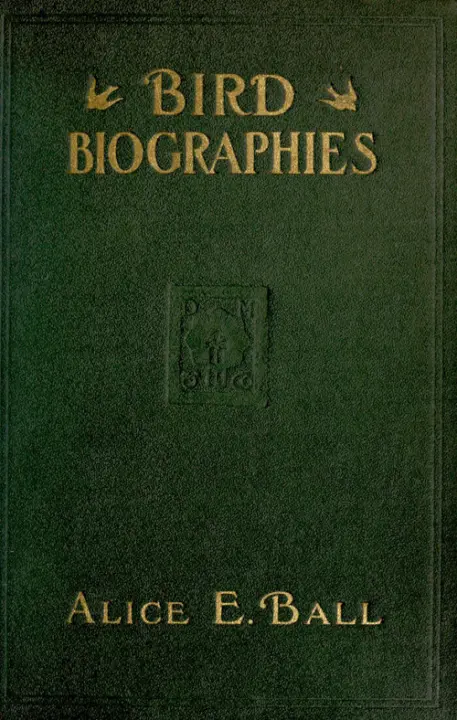
"Bird Biographies" by Alice Eliza Ball is a guidebook for beginners written in the early 20th century. This work serves as an introduction to 150 common land birds of the eastern United States, providing detailed descriptions and illustrations of each species. The book aims to foster a deeper understanding and appreciation of birds among its readers, highlighting their ecological significance and beauty. The opening of the book presents a foreword that emphasizes the cultural and historical importance of birds, citing various authors and poets who have been inspired by them throughout the ages. It discusses the vital roles birds play in the ecosystem, from pest control to seed dispersal, while also exploring the connections between human emotions and avian life. The foreword sets the stage for the subsequent sections of the guidebook, which will offer a systematic overview of winter birds in the Eastern U.S., including their habits, habitats, and contributions to local ecosystems.
Introduction adapted from the source catalogue; source summaries may be automatically generated.
Free to read · English · 65,952 words · No account needed
MAKE TIME FOR A GOOD BOOK
On by default. Untick to stop anonymous reading totals. Each page counts after 10 seconds in view. How this works.
Anonymous counting is on unless you have switched it off.
General Appearance: A slender, active, gray and white bird, with a crest. Its reddish-brown sides are not visible at a distance. The titmouse need never be confused with the waxwing; it is much smaller, and lacks the yellow and red markings on tail and wings.
Male and Female: Head conspicuously crested; crest gray and pointed; forehead black; bill short, sharp, black; back, wings, and tail gray; under parts whitish, with a reddish-brown wash on the sides.
Call-note: De-de-de-de, similar to one of the chickadee's notes, but
louder.
Song: A loud, sweet, clear whistle: Pe'-to, pe'-to, pe'-to, pe'-to, pe'-to, frequently repeated five times. The titmouse is called locally the "Peter-bird."
Habitat: Woodlands; open groves of hard-wood trees preferred.
Range: Rare in New England. From Nebraska, Iowa, Illinois, Indiana, Ohio, Pennsylvania, and New Jersey, south to central Texas, the Gulf Coast, and Florida; occasional in Wisconsin, Michigan, New York, and Connecticut. Common permanent resident near Washington, especially in winter.
No winter bird more truly exemplifies protective coloring than the lively crested Tomtit, unless it be his little cousin, the Black-capped Chickadee. This sober-hued titmouse is such a blending of the grays and blacks of tree-trunk and icy brook, of the dazzling white of snow and the soft gray shadows that lie across it, of reddish-brown shrubs and weeds, that he might escape notice except for his conspicuous crest. He can be distinguished from the cedar waxwing at a glance by his reddish sides, and because of the absence of a yellow band across the tail and of conspicuous black, white, and red patches or markings.
Few more active birds exist than titmice. They are at once the envy and the despair of aspiring small boys who know them, because of their extreme agility--their ability to perform acrobatic feats. They swing head downward from twigs in the search for their favorite food of insect-eggs; they seem strung on wires.
In the woodlands frequented by tufted titmice, they are as much in evidence as blue jays, because of their loud, clear peto-peto-peto-peto-peto, a welcome and pleasant sound during belated spring days or a bleak March "sugaring-off" season.
They are less friendly than chickadees, but are not shy, so they can be observed easily. They are very sociable with their kind, and are found, "playing around" with chickadees, nuthatches, and downy woodpeckers in the winter-time, and snuggling close together in old nest-holes during winter weather. In the spring, titmice use hollowed trees for their nesting sites and have been known to welcome a nesting-box.
Your reading position is saved on this browser. Take it to another device with a library code. Reading pages adapt to text, rather than matching a printed edition.
BEHIND THE BOOK
This eBook is for the use of anyone anywhere in the United States and most other parts of the world at no cost and with almost no restrictions whatsoever. You may copy it, give it away or re-use it under the terms of the Project Gutenberg License included with this eBook or online at www.gutenberg.org. If you are not located in the United States, you will have to check the laws of the country where you are located before using this eBook. Read the source licence.
The original source file, including credits and licence, is retained by this library. Request an original-format copy at no charge. Please include the book title and Project Gutenberg identifier #59880.
KEEP YOUR CURIOSITY GOING
Charles G. (Charles Griffith) Ross
Hannah Webster Foster

Emily Lawless
Edwin Hamlin Carr

Charles De Lano Hine
Andrew Ure