
Life of Harriet Beecher Stowe Compiled From Her Letters and Journals by Her Son Charles Edward Stowe
Harriet Beecher Stowe
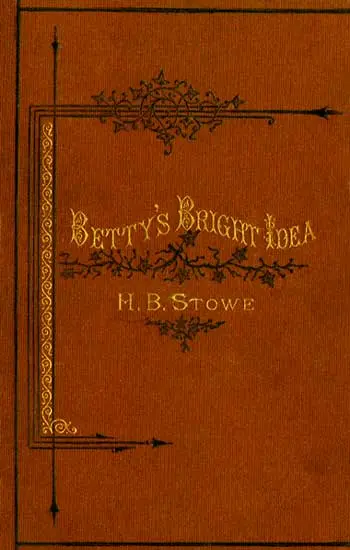
THE CLASSIC COLLECTION · 1876
"Betty's Bright Idea; Deacon Pitkin's Farm; and the First Christmas of New England" by Harriet Beecher Stowe is a collection of short stories written in the late 19th century. The narratives explore themes of social responsibility, charity, and the spirit of giving during the Christmas season, focusing on characters from various walks of life who are deeply affected by their circumstances. The stories highlight the contrast between wealth and poverty, emphasizing the importance of kindness and philanthropy. The opening portion introduces "Betty's Bright Idea," centering around a young girl named Florence, who finds herself disenchanted with the commercialism of Christmas. Struck by a desire to give meaningfully, she contemplates how to help those less fortunate, reflecting on the biblical idea of generosity towards the needy. Simultaneously, we are introduced to the struggles of John Morley and his family, who are confronted with hardships stemming from his past mistakes. The scene showcases the interplay between Florence's wealth and the plight of John’s family, setting the stage for a narrative rich in moral reflections and the greater purpose of the holiday spirit.
Introduction adapted from the source catalogue; source summaries may be automatically generated.
Free to read · English · 27,728 words · No account needed
MAKE TIME FOR A GOOD BOOK
On by default. Untick to stop anonymous reading totals. Each page counts after 10 seconds in view. How this works.
Anonymous counting is on unless you have switched it off.
"This winter's night
I saw a sight--
A star as bright as day;
And ever among
A maiden sung,
Lullay, by-by, lullay!
"This lovely laydie sat and sung,
And to her child she said,
My son, my brother, and my father dear,
Why lyest thou thus in hayd?
My sweet bird,
Tho' it betide
Thou be not king veray;
But nevertheless
I will not cease
To sing, by-by, lullay!
"The child then spake in his talking,
And to his mother he said,
It happeneth, mother, I am a king,
In crib though I be laid,
For angels bright
Did down alight,
Thou knowest it is no nay;
And of that sight
Thou may'st be light
To sing, by-by, lullay!
"Now, sweet son, since thou art a king,
Why art thou laid in stall?
Why not ordain thy bedding
In some great king his hall?
We thinketh 'tis right
That king or knight
Should be in good array;
And them among,
It were no wrong
To sing, by-by, lullay!
"Mary, mother, I am thy child,
Tho' I be laid in stall;
Lords and dukes shall worship me,
And so shall kinges all.
And ye shall see
That kinges three
Shall come on the twelfth day;
For this behest
Give me thy breast,
And sing, by-by, lullay!"
"See here," quoth Miles Standish, "when my Rose singeth, the children gather round her like bees round a flower. Come, let us all strike up a goodly carol together. Sing one, sing all, girls and boys, and get a bit of Old England's Christmas before to-morrow, when we must to our work on shore."
Thereat Rose struck up a familiar ballad-meter of a catching rhythm, and every voice of young and old was soon joining in it:
"Behold a silly,[1] tender Babe,
In freezing winter night,
In homely manger trembling lies;
Alas! a piteous sight,
The inns are full, no man will yield
This little Pilgrim bed;
But forced He is, with silly beasts
In crib to shroud His head.
Despise Him not for lying there,
First what He is inquire:
An orient pearl is often found
In depth of dirty mire.
"Weigh not His crib, His wooden dish,
Nor beasts that by Him feed;
Weigh not His mother's poor attire,
Nor Joseph's simple weed.
This stable is a Prince's court,
The crib His chair of state,
The beasts are parcel of His pomp,
The wooden dish His plate.
The persons in that poor attire
His royal liveries wear;
The Prince Himself is come from Heaven,
This pomp is prized there.
With joy approach, O Christian wight,
Do homage to thy King;
And highly praise His humble pomp,
Which He from Heaven doth bring."
Your reading position is saved on this browser. Take it to another device with a library code. Reading pages adapt to text, rather than matching a printed edition.
Harriet Beecher Stowe

Harriet Beecher Stowe
Harriet Beecher Stowe

Harriet Beecher Stowe
BEHIND THE BOOK
This eBook is for the use of anyone anywhere in the United States and most other parts of the world at no cost and with almost no restrictions whatsoever. You may copy it, give it away or re-use it under the terms of the Project Gutenberg License included with this eBook or online at www.gutenberg.org. If you are not located in the United States, you will have to check the laws of the country where you are located before using this eBook. Read the source licence.
The original source file, including credits and licence, is retained by this library. Request an original-format copy at no charge. Please include the book title and Project Gutenberg identifier #10723.
KEEP YOUR CURIOSITY GOING
Coulson Kernahan

Maurice Baring
Frances Wright
Cécile Tormay

Frederic Jesup Stimson

W. H. P. (William Henry Pope) Jarvis