
Life of Harriet Beecher Stowe Compiled From Her Letters and Journals by Her Son Charles Edward Stowe
Harriet Beecher Stowe
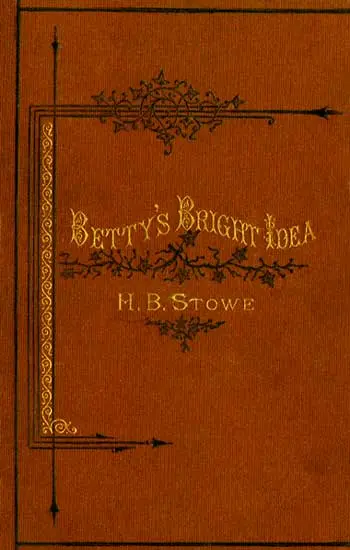
THE CLASSIC COLLECTION · 1876
"Betty's Bright Idea; Deacon Pitkin's Farm; and the First Christmas of New England" by Harriet Beecher Stowe is a collection of short stories written in the late 19th century. The narratives explore themes of social responsibility, charity, and the spirit of giving during the Christmas season, focusing on characters from various walks of life who are deeply affected by their circumstances. The stories highlight the contrast between wealth and poverty, emphasizing the importance of kindness and philanthropy. The opening portion introduces "Betty's Bright Idea," centering around a young girl named Florence, who finds herself disenchanted with the commercialism of Christmas. Struck by a desire to give meaningfully, she contemplates how to help those less fortunate, reflecting on the biblical idea of generosity towards the needy. Simultaneously, we are introduced to the struggles of John Morley and his family, who are confronted with hardships stemming from his past mistakes. The scene showcases the interplay between Florence's wealth and the plight of John’s family, setting the stage for a narrative rich in moral reflections and the greater purpose of the holiday spirit.
Introduction adapted from the source catalogue; source summaries may be automatically generated.
Free to read · English · 27,728 words · No account needed
MAKE TIME FOR A GOOD BOOK
On by default. Untick to stop anonymous reading totals. Each page counts after 10 seconds in view. How this works.
Anonymous counting is on unless you have switched it off.
The little ones went gayly into the yard. They had been scared by their mother's tears; but she had smiled again, and that had made all right with them. The sun was shining brightly, and they were on the sunny side of the old church, and they laughed and chirped and chittered to each other as merrily as the little birds in the ivy boughs.
The old sexton came to the side door and threw out an armful of refuse greens, and then stopped a moment and nodded kindly at them.
"May we play with them, please, sir?" said the little Elsie, looking up
with great reverence.
"Oh, yes, to be sure; these are done with--they are no good now."
"Oh, Tottie!" cried Elsie, rapturously, "just think, he says we may play with all these. Why, here's ever and ever so much green, enough to play house. Let's play build a house for father and mother."
"I'm going to build a big house for 'em when I grow up," said Tottie, "and I mean to have glass bead windows in it."
Tottie had once had presented to him a box of colored glass beads to string, and he could think of nothing finer in the future than unlimited glass beads.
Meanwhile, his sister began planting pine branches upright in the snow,
to make her house.
"You see we can make believe there are windows and doors and a roof," she said, "and it's just as good. Now, let's make believe there is a bed in this corner, and we will lie down to sleep."
And Tottie obediently couched himself in the allotted corner and shut his eyes very hard, though after a moment he remarked that the snow got into his neck.
"You must play it isn't snow--play it's feathers," said Elsie.
"But I don't like it," persisted Tottie, "it don't feel a bit like
feathers."
"Oh, well, then," said Elsie, accommodating herself to circumstances, "let's play get up now and I'll get breakfast."
Just now the door opened again, and the sexton began sweeping the refuse out of the church. There were bits of ivy and holly, and ruffles of ground-pine, and lots of bright red berries that came flying forth into the yard, and the children screamed for joy. "O Tottie!" "O Elsie!" "Only see how many pretty things--lots and lots!"
The sexton stood and looked and laughed as he saw the little ones so eager for the scraps and remnants.
"Don't you want to come in and see the church?" he said. "It's all done now, and a brave sight it is. You may come in."
Your reading position is saved on this browser. Take it to another device with a library code. Reading pages adapt to text, rather than matching a printed edition.
Harriet Beecher Stowe

Harriet Beecher Stowe
Harriet Beecher Stowe

Harriet Beecher Stowe
BEHIND THE BOOK
This eBook is for the use of anyone anywhere in the United States and most other parts of the world at no cost and with almost no restrictions whatsoever. You may copy it, give it away or re-use it under the terms of the Project Gutenberg License included with this eBook or online at www.gutenberg.org. If you are not located in the United States, you will have to check the laws of the country where you are located before using this eBook. Read the source licence.
The original source file, including credits and licence, is retained by this library. Request an original-format copy at no charge. Please include the book title and Project Gutenberg identifier #10723.
KEEP YOUR CURIOSITY GOING
Coulson Kernahan

Maurice Baring
Frances Wright
Cécile Tormay

Frederic Jesup Stimson

W. H. P. (William Henry Pope) Jarvis