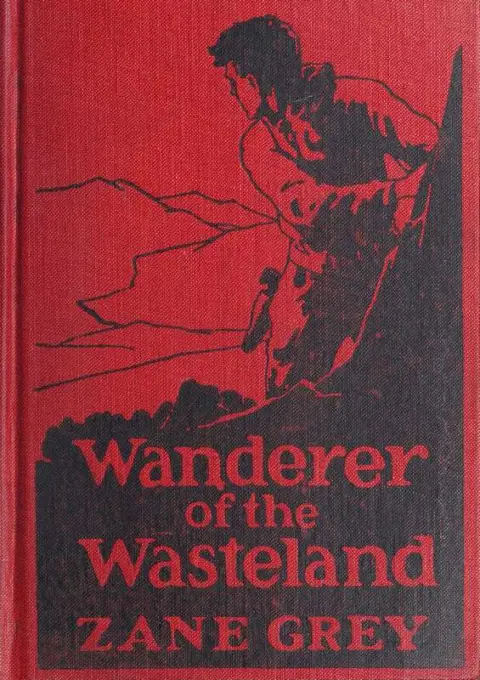
Wanderer of the Wasteland
Zane Grey
THE CLASSIC COLLECTION · 1903
"Betty Zane" by Zane Grey is a historical novel written during the late 19th century. The story is set against the backdrop of the American frontier and follows the Zane family, particularly focusing on the character of Elizabeth Zane, a spirited and courageous young woman. The novel delves into themes of heroism, familial duty, and romance, all while depicting the challenges of settler life during a tumultuous period in American history. The opening of "Betty Zane" sets the scene in Wheeling, West Virginia, where a monument commemorates the siege of Fort Henry, highlighting the historical significance of the Zane family in the region. The prologue introduces Colonel Ebenezer Zane, who envisions founding a settlement in the Ohio Valley and demonstrates the fearless spirit characteristic of the Zane family. As the narrative progresses to the first chapter, readers are introduced to Betty Zane, who displays a blend of beauty and fiery temperament, along with her brothers' protective nature. The stage is set for the conflicts to come, both in the form of Indian skirmishes and personal struggles, particularly with a soldier named Alfred Clarke, who complicates Betty's emotions after a challenging encounter. The rich detail of frontier life and the interplay of personal and historical events lay the groundwork for an engaging tale.
Introduction adapted from the source catalogue; source summaries may be automatically generated.
Free to read · English · 100,930 words · No account needed
MAKE TIME FOR A GOOD BOOK
On by default. Untick to stop anonymous reading totals. Each page counts after 10 seconds in view. How this works.
Anonymous counting is on unless you have switched it off.
"Good morning, Harry. Where are you going so early?" called Betty
from the doorway.
A lad was passing down the path in front of Colonel Zane's house as Betty hailed him. He carried a rifle almost as long as himself.
"Mornin', Betty. I am goin' 'cross the crick fer that turkey I hear
gobblin'," he answered, stopping at the gate and smiling brightly at
Betty.
"Hello, Harry Bennet. Going after that turkey? I have heard him several mornings and he must be a big, healthy gobbler," said Colonel Zane, stepping to the door. "You are going to have company. Here comes Wetzel."
"Good morning, Lew. Are you too off on a turkey hunt?" said Betty.
"Listen," said the hunter, as he stopped and leaned against the gate. They listened. All was quiet save for the tinkle of a cow-bell in the pasture adjoining the Colonel's barn. Presently the silence was broken by a long, shrill, peculiar cry.
"Chug-a-lug, chug-a-lug, chug-a-lug, chug-a-lug-chug."
"Well, it's a turkey, all right, and I'll bet a big gobbler," remarked Colonel Zane, as the cry ceased.
"Has Jonathan heard it?" asked Wetzel.
"Not that I know of. Why do you ask?" said the Colonel, in a low tone. "Look here, Lew, is that not a genuine call?"
"Goodbye, Harry, be sure and bring me a turkey," called Betty, as
she disappeared.
"I calkilate it's a real turkey," answered the hunter, and motioning the lad to stay behind, he shouldered his rifle and passed swiftly down the path.
Of all the Wetzel family--a family noted from one end of the frontier to the other--Lewis was as the most famous.
The early history of West Virginia and Ohio is replete with the daring deeds of this wilderness roamer, this lone hunter and insatiable Nemesis, justly called the greatest Indian slayer known to men.
When Lewis was about twenty years old, and his brothers John and Martin little older, they left their Virginia home for a protracted hunt. On their return they found the smoking ruins of the home, the mangled remains of father and mother, the naked and violated bodies of their sisters, and the scalped and bleeding corpse of a baby brother.
Lewis Wetzel swore sleepless and eternal vengeance on the whole Indian race. Terribly did he carry out that resolution. From that time forward he lived most of the time in the woods, and an Indian who crossed his trail was a doomed man. The various Indian tribes gave him different names. The Shawnees called him "Long Knife;" the Hurons, "Destroyer;" the Delawares, "Death Wind," and any one of these names would chill the heart of the stoutest warrior.
Your reading position is saved on this browser. Take it to another device with a library code. Reading pages adapt to text, rather than matching a printed edition.
Zane Grey
Zane Grey
Zane Grey
Zane Grey
BEHIND THE BOOK
This eBook is for the use of anyone anywhere in the United States and most other parts of the world at no cost and with almost no restrictions whatsoever. You may copy it, give it away or re-use it under the terms of the Project Gutenberg License included with this eBook or online at www.gutenberg.org. If you are not located in the United States, you will have to check the laws of the country where you are located before using this eBook. Read the source licence.
The original source file, including credits and licence, is retained by this library. Request an original-format copy at no charge. Please include the book title and Project Gutenberg identifier #1261.
KEEP YOUR CURIOSITY GOING
Cécile Tormay

Moritz Busch
Coulson Kernahan
John L. Ransom

Maurice Baring
Frances Wright