THE CLASSIC COLLECTION✦Concerning Animals and Other MattersCLASSIC FREE BOOKS
Concerning Animals and Other Matters
Edward Hamilton Aitken
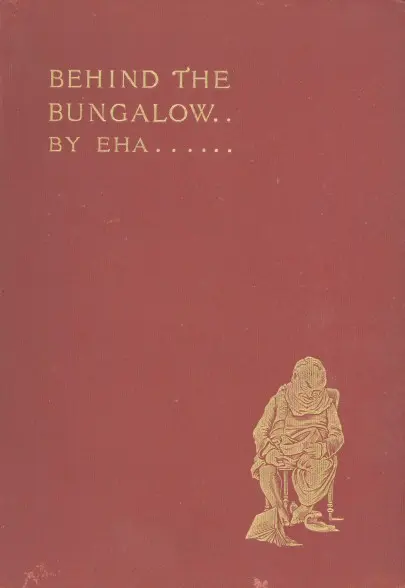
THE CLASSIC COLLECTION · 1889
"Behind the Bungalow" by Edward Hamilton Aitken is a collection of essays written during the late 19th century. The book explores the intricate roles, behaviors, and relationships of various types of domestic servants in colonial India, particularly focusing on the dynamics between British expatriates and their Indian staff. Aitken's observations likely provide a humorous yet insightful reflection on the differences in culture and social status, centering on the day-to-day experiences of these servants. The opening of the book sets the stage with a prelude discussing the author’s experiences with hiring a "Boy," his term for a servant or valet, amidst the humorous and often complicated dynamics between master and servant in Anglo-Indian households. Aitken reflects on the characteristics and peculiarities of potential candidates, humorously depicting the complexities of choosing a suitable servant, often highlighting the cultural misunderstandings and societal norms at play. Additionally, the segment introduces various types of servants and the amusing scenarios that arise from their interactions with both their masters and their peers, seamlessly integrating observations on their personalities and quirks, offering an engaging glimpse into life behind the bungalows of colonial India.
Introduction adapted from the source catalogue; source summaries may be automatically generated.
Free to read · English · 34,531 words · No account needed
MAKE TIME FOR A GOOD BOOK
On by default. Untick to stop anonymous reading totals. Each page counts after 10 seconds in view. How this works.
Anonymous counting is on unless you have switched it off.
And now each man wants his “character” before he makes his last salaam, and what shall I say? “The bearer — has been in my service since — and I have always found him — ” So far good; but what next? Honest?—Yes. Willing?—Certainly. Careful?—Very. Hardworking?—Well, I have often told him that he was a lazy scoundrel, and that he might easily take a lesson in activity from the bheestee’s bullock, and perhaps I spoke the truth. But, after all, he gets up in the morning an hour before me, and eats his dinner after I have retired for the night. He gets no Saturday half-holiday, and my Sabbath is to him as the other days of the week. And so the hard things I have said of him and to him are forgotten, and charity triumphs at the last. And when my furlough is over and I return to these shores, the whole troop will be at the Apollo Bunder, waiting to welcome back their old master and eat his salt again.
[Picture: A cow]
Gopal, the Gowlee, haunts me in my dreams, complaining that he has been left out in the cold. I had classed him with the borah and the baker, as outsiders with whom I had merely business relations; but Gopal seems to urge that he is not on the same footing with these. How can he be compared to a mercenary borah? Has he not ministered to my wants, morning and evening, in wet weather and dry? Have not my children grown up on his milk? He will not deny that they have eaten the baker’s bread too; but who is the baker? Does he come into the saheb’s presence in person as Gopal does? No. He sits in his shop and sends a servant. Not so Gopal. He is one of my children, and I am his father and mother. And I am forced to admit there is some truth in this view of the case. The ill-favoured man who haunts my house of a morning, with a large basket of loaves poised slantwise on his head, and converses in a strange nasal brogue with the cook, is not Mr. de Souza, “baker of superior first and second sort bread, and manufacturer of every kind of biscuit, cake,” &c., but a mere underling. My intercourse with the head of the firm is confined to the first day of each month, when he waits on me in person, dressed in a smart black jacket, and presents his bill. Also on Good Friday he sends me a cake and his compliments, but the former, if it is not intercepted by the butler and applied to his own uses, is generally too unctuous for my taste. Very different are our relations with the Doodwallah. Our chota hazree waits for him in the morning; our afternoon tea cannot proceed till he comes; the baby cries if the Doodwallah is late. And even if you are one of the few who strike for independence and keep their own cow, I still counsel you to maintain amicable relations with the Doodwallah. One day the cow will kick and refuse to be milked, and the butler will come to you with a troubled countenance. It is a grave case and demands professional skill. The Doodwallah must be sent for to milk the cow. In many other ways, too, we are made to feel our dependence on him. I believe we rarely die of cholera, or typhoid fever, without his unobtrusive assistance. And all his services are performed in person, not through any underling. That stately man who walks up the garden path morning and evening, erect as a betel-nut palm, with a tiara of graduated milk-pots on his head, and driving a snorting buffalo before him, is Gopal himself. Scarcely any other figure in the compound impresses me in the same way as his. It is altogether Eastern in its simple dignity, and symbolically it is eloquent. The buffalo represents absolute milk and the lessening pyramid of brass lotas, from the great two-gallon vessel at the base to the ¼-seer measure at the top, stand for successive degrees of dilution with that pure element which runs in the roadside ditches after rain. Thus his insignia interpret themselves to me. Gopal does not acknowledge my heraldry, but explains that the lowest lota contains butter milk—that is to say, milk for making butter. The second contains milk which is excellent for drinking, but will not yield butter; the third a cheaper quality of milk for puddings, and so on. If you are an anxious mother, or a fastidious bachelor, and none of these will please you, then he brings the buffalo to the door and milks it in your presence. I think the truth which underlies the two ways of putting the thing is the same: Gopal and I differ in form of words only. However that may be, practice is more than theory, and I stipulate for milk for all purposes from the lowest lota—that is, milk which is warranted to yield butter. If it will not stand that test, I reject it. Gopal wonders at my extravagance, but consents. The milk is good and the butter from it plentiful. But as time goes on the latter declines both in quantity and quality, so gradually that suspicion is scarcely awakened. When at last you summon the butler to a consultation, he suggests that the weather has been too hot for successful butter making, or too cold. If these reasons do not satisfy you, he has others; if they fail, he gives his verdict against the Doodwallah. Next morning Gopal is called to superintend the making of the butter and convicted, convicted but not abashed. He expresses the greatest regret, but blames the buffalo; its calf is too old. To-morrow you shall have the produce of another buffalo. So next day you have the satisfaction of seeing a fine healthy pat of butter swimming in the butter dish, carved and curled with all the butler’s art, like a full-blown dahlia. But the milk in your tea does not improve, for Gopal, after ascertaining how much milk you set aside for butter every day, finds that the new buffalo yields only that quantity, and so what you require for other purposes comes from another source. The butler forgot to tell you this. What bond is there between him and honest Gopal? I cannot tell. Many are the mysteries of housekeeping in India, and puzzling its problems. If you could behead your butler when anything went wrong, I have very little doubt everything would go right, but the complicated methods of modern justice are no match for the subtleties of Indian petty wickedness. And yet under this crust of cunning there is a vein of simple stupidity which constantly crops up where you least expect it. I remember a gentleman, a bachelor, who set before himself a very high standard. He would be strictly just and justly strict. He suspected that his milk was watered, but his faithful boy protested that this could not be, as the milking was begun and finished in his presence. So the master provided himself with a lactometer, and the suspicion became certainty. Summoning his boy into his presence, he explained to him that that little instrument, which he saw floating in the so-called milk before him, could neither lie nor be deceived. “It declares,” he added sternly, “that there is twenty-five per cent. of water in this milk.” “Your lordship speaks the truth,” answered the faithful man, “but how could I tell a lie? The milk was drawn in my presence.” “Do you mean to say you were there the whole time the animal was being milked?” “The whole time, your lordship. Would I give those rogues the chance of watering the saheb’s milk?” The master thought for a moment, and asked again, “Are you sure there was no water in the pail before the milking began?—these people are very cunning.” “They are as cunning as sheitan, your lordship, but I made the man turn the pail upside down and shake it.” Again the master turned the matter over in his just mind, and it occurred to him that the lactometer was of English manufacture and might be puzzled by the milk of the buffalo. “Is this cow’s milk, or buffalo’s?” he asked. The boy was beginning to feel his position uncomfortable and caught at this chance of escape. “Ah! that I cannot tell. It may be buffalo’s milk.” Tableau.
Your reading position is saved on this browser. Take it to another device with a library code. Reading pages adapt to text, rather than matching a printed edition.
BEHIND THE BOOK
This eBook is for the use of anyone anywhere in the United States and most other parts of the world at no cost and with almost no restrictions whatsoever. You may copy it, give it away or re-use it under the terms of the Project Gutenberg License included with this eBook or online at www.gutenberg.org. If you are not located in the United States, you will have to check the laws of the country where you are located before using this eBook. Read the source licence.
The original source file, including credits and licence, is retained by this library. Request an original-format copy at no charge. Please include the book title and Project Gutenberg identifier #7953.
KEEP YOUR CURIOSITY GOING

David Patterson (Spirit) Hatch

David Patterson (Spirit) Hatch

David Patterson (Spirit) Hatch
Cécile Tormay

Moritz Busch
John L. Ransom