THE CLASSIC COLLECTION✦Concerning Animals and Other MattersCLASSIC FREE BOOKS
Concerning Animals and Other Matters
Edward Hamilton Aitken
THE CLASSIC COLLECTION · 1889
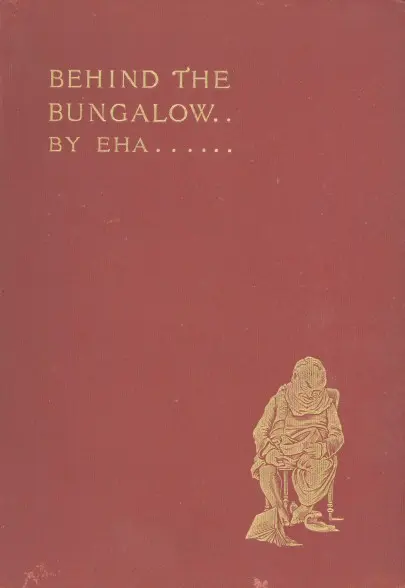
"Behind the Bungalow" by Edward Hamilton Aitken is a collection of essays written during the late 19th century. The book explores the intricate roles, behaviors, and relationships of various types of domestic servants in colonial India, particularly focusing on the dynamics between British expatriates and their Indian staff. Aitken's observations likely provide a humorous yet insightful reflection on the differences in culture and social status, centering on the day-to-day experiences of these servants. The opening of the book sets the stage with a prelude discussing the author’s experiences with hiring a "Boy," his term for a servant or valet, amidst the humorous and often complicated dynamics between master and servant in Anglo-Indian households. Aitken reflects on the characteristics and peculiarities of potential candidates, humorously depicting the complexities of choosing a suitable servant, often highlighting the cultural misunderstandings and societal norms at play. Additionally, the segment introduces various types of servants and the amusing scenarios that arise from their interactions with both their masters and their peers, seamlessly integrating observations on their personalities and quirks, offering an engaging glimpse into life behind the bungalows of colonial India.
Introduction adapted from the source catalogue; source summaries may be automatically generated.
Free to read · English · 34,531 words · No account needed
MAKE TIME FOR A GOOD BOOK
On by default. Untick to stop anonymous reading totals. Each page counts after 10 seconds in view. How this works.
Anonymous counting is on unless you have switched it off.
Shift your standpoint, and in each cringing menial you will see a black token of that Asiatic metamorphosis through which we all have passed. What a picture! Look at yourself as you stand there in purple sublimity, trailing clouds of darkness from the middle ages whence you come, planting your imperial foot on all the manly traditions of your own free country, and pleased with the grovelling adulations of your trembling serfs. And now it is not the angels who weep, but the Baboo of Bengal. His pale and earnest brow is furrowed with despair as he turns from you. For whither shall he turn? When his bosom palpitates with the intense joy of newborn aspirations for liberty, to whom shall he go if the Briton, the champion of the world’s freedom, has drunk of Comus’s cup and become an oriental satrap? Ah! there is still hope. The “large heart of England” beats still for him. In the land of John Hampden and Labouchere there are thousands yet untainted by the plague, who keep no servant, who will listen to the Baboo while he tells them about you, and perhaps return him to parliament.
There is a third view of the case, fraught with much content to those who can take it, and, happily, it is the only view possible to the primitive intelligences over which we exercise domestic lordship. In this view they are, indeed, as we regard them—so many channels by which the rupee may flow from us; but what are we, if not great reservoirs, built to feed those very channels? And so, with that “sweet reasonableness” which is so pleasant a feature of the Hindoo mind, your boy or butler, being the main conduit, sets himself to estimate the capacity of the reservoir, that he may adapt the gauge of each pipe and regulate the flow. And, as the reservoir grows greater, as the assistant becomes a collector and the collector a commissioner, the pipes are extended and enlarged, and all rejoice together. The moral beauty of this view of the situation grows upon you as you accustom your mind to dwell on it. Is it not pleasant to think of yourself as a beneficent irrigation work, watering a wide expanse of green pasture and smiling corn, or as a well in a happy garden, diffusing life and bloom? Look at the syce’s children. Phil Robinson says there are nine of them, all about the same age and dressed in the same nakedness. As they squat together there, indulging “the first and purest of our instincts” in the mud or dust of the narrow back road, reflect that their tender roots are nourished by a thin rivulet of rupees which flows from you. If you dried up, they would droop and perhaps die. The butler has a bright little boy, who goes to school every day in a red velvet cap and print jacket, with a small slate in his hand, and hopes one day to climb higher in the word than his father. His tendrils are wrapped about your salary. Nay, you may widen the range of your thoughts: the old hut in the environs of Surat, with its patch of field and the giant gourds, acknowledges you, and a small stream, diverted from one of the channels which you supply, is filling a deep cistern in one of the back streets of Goa. Pardon me if I think that the untutored Indian’s thought is better even for us than any which we have framed for ourselves. Imagine yourself as a sportsman, spear in hand, pursuing the wild V.C. through fire and water, or patiently stalking the wary K.C.B., or laying snares for the gentle C.I.E.; or else as a humble industrious dormouse lining a warm nest for the winter of your life in Bath or Tunbridge Wells; or as a gay butterfly flitting from flower to flower while the sunshine of your brief day may last; or simply as a prisoner toiling at the treadmill because you must: the well in the garden is a pleasanter conception than all these and wholesomer. Foster it while you may. Now that India has wakened up and begun to spin after the rest of the great world down the ringing grooves of change, these tints of dawn will soon fade away, and in the light of noon the instructed Aryan will learn to see and deplore the monstrous inequalities in the distribution of wealth. He will come to understand the essential equality of all men, and the real nature of the contract which subsists between master and servant. Yes, I am afraid the day is fast drawing near when you will no longer venture to cut the hamal’s pay for letting mosquitoes into your bed curtains and he will no longer join his palms and call you his father and mother for doing so. What a splendid capacity for obedience there is in this ancient people! And our relations with them have certainly taught us again how to govern, which is one of the forgotten arts in the West. Where in the world to-day is there a land so governed as this Indian Empire?
Your reading position is saved on this browser. Take it to another device with a library code. Reading pages adapt to text, rather than matching a printed edition.
BEHIND THE BOOK
This eBook is for the use of anyone anywhere in the United States and most other parts of the world at no cost and with almost no restrictions whatsoever. You may copy it, give it away or re-use it under the terms of the Project Gutenberg License included with this eBook or online at www.gutenberg.org. If you are not located in the United States, you will have to check the laws of the country where you are located before using this eBook. Read the source licence.
The original source file, including credits and licence, is retained by this library. Request an original-format copy at no charge. Please include the book title and Project Gutenberg identifier #7953.
KEEP YOUR CURIOSITY GOING

David Patterson (Spirit) Hatch

David Patterson (Spirit) Hatch

David Patterson (Spirit) Hatch
Cécile Tormay

Moritz Busch
John L. Ransom