THE CLASSIC COLLECTION✦Concerning Animals and Other MattersCLASSIC FREE BOOKS
Concerning Animals and Other Matters
Edward Hamilton Aitken
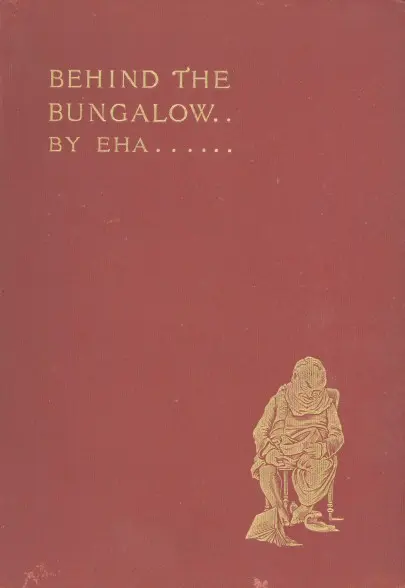
THE CLASSIC COLLECTION · 1889
"Behind the Bungalow" by Edward Hamilton Aitken is a collection of essays written during the late 19th century. The book explores the intricate roles, behaviors, and relationships of various types of domestic servants in colonial India, particularly focusing on the dynamics between British expatriates and their Indian staff. Aitken's observations likely provide a humorous yet insightful reflection on the differences in culture and social status, centering on the day-to-day experiences of these servants. The opening of the book sets the stage with a prelude discussing the author’s experiences with hiring a "Boy," his term for a servant or valet, amidst the humorous and often complicated dynamics between master and servant in Anglo-Indian households. Aitken reflects on the characteristics and peculiarities of potential candidates, humorously depicting the complexities of choosing a suitable servant, often highlighting the cultural misunderstandings and societal norms at play. Additionally, the segment introduces various types of servants and the amusing scenarios that arise from their interactions with both their masters and their peers, seamlessly integrating observations on their personalities and quirks, offering an engaging glimpse into life behind the bungalows of colonial India.
Introduction adapted from the source catalogue; source summaries may be automatically generated.
Free to read · English · 34,531 words · No account needed
MAKE TIME FOR A GOOD BOOK
On by default. Untick to stop anonymous reading totals. Each page counts after 10 seconds in view. How this works.
Anonymous counting is on unless you have switched it off.
[Picture: A “leelte silope”]
This is how we clothe ourselves in our Indian empire. Our smooth and comfortable khakee suits, our ample pyjamas, the cool white jackets in which we dine, in this way are they brought about. But you must not allow yourself to think of the Dirzee simply as an agency for producing clothes. Life is not made up of such simplicities. The raison d’être of that mango tree lies without doubt in the chalice of nectar, called “mango fool,” with which Domingo appeases me when he guesses that his enormities have gone beyond the limits even of my endurance; but I see that thirty-seven candidates for the place of the chupprassee who went on leave yesterday have encamped under its shade, that they may watch for my face in the verandah. The trespassing goat also has browsed on its leaves, and from the shelter of its branches the Magpie Robin pours that stream of song which, just before the dawning of the day, in the cloudy border land between sleeping and waking flows over my soul. But I shall never really know the place that tree has filled in my life, unless someone cuts it down and gives me a full view, from my easy chair, of the dirty brick-burners’ hut, with the poisonous film of blue smoke playing over the kiln, and the family of pariah puppies below, sporting with the sun-dried remains of a fowl, which deceased in my yard and was purloined by their gaunt mother. Now let imagination blot out the Dirzee. Remove him from the verandah. Take up his carpet and sweep away the litter. What a strange void there is in the place! Eliminate him from a lady’s day. Let nine o’clock strike, but bring no stealthy footstep to the door, no muffled voice making respectful application for his Kam. From nine to ten breakfast will fill the breach, and you may allow another hour for the butler’s account and the godown; but there is still a yawning chasm of at least two hours between eleven and tiffin. I cannot bridge it. Imagination strikes work. The joyful sound of the Borah’s voice brings promise of relief; but no! for what interest can there be in the Borah if you have no Dirzee? In the spirit of fair play, however, I must mention that my wife does not endorse all this. On the contrary, she tells me (she has a terse way of speaking) that it is “rank bosh.” She declares that the Dirzee is the bane of her life, that he is worse than a fly, that she cannot sit down to the piano for five minutes but he comes buzzing round for black thread, or white thread, or mother-o-pearl buttons, or hooks and eyes, that every evening for the last month he has watched her getting ready for to drive, and just as her foot was on the carriage step, has reminded her, with a cough, that his work was finished and he had nothing to do. If she could only do without him, she would send him about his business and be the happiest woman in the world, for she could devote the whole day to music and painting and the improvement of her mind. Of course I assent. That is a very commendable way of thinking about the matter. But, as an amateur philosopher, I warn you never to let yourself get under practical bondage to such notions. I tell you when you betake yourself to music or painting, carpentry or gardening, as a means of getting through the day, you are sapping your mental constitution and shortening your life: unless you are sustained by more than ordinary littleness of mind you will never see threescore and ten. All these things are good in proportion as you have difficulty in finding time for them. When you have to rise early in the morning and work hard to make a little leisure for your favourite hobby, then you are getting its blessing. Now, the Dirzee is not a means of killing time. On the contrary, I see that he compels his mistress to take thought how she may save time alive, if she wishes to get anything done. He hurries the day along and scatters its hours, so that ennui cannot find an empty minute to lurk in. I do not deny that he is the occasion of a few provocations, and the simile of the fly is just; but are not provocations an element in the interest of every pursuit, the pepper which flavours all pleasant occupation? I collect butterflies, and my friends think I am a man to be envied because I have such a taste. Do they suppose a butterfly catcher has no provocations? Was it seventeen or seventy times (I forget) in one page that I laid down my pen, put off my spectacles and caught up my net to rush after that brute of a Papilio polymnestor, who just came to the duranta flowers to flout me and skip over the wall into the next garden? And does anyone but a butterfly hunter know how it feels to open your cabinet drawers just a few hours after the ants have got the news that the camphor is done? Does anyone but an entomologist know the grub of Dermestes intolerabilis? Why should a collection of butterflies be called an object of perennial interest and delight, and the Dirzee an unmitigated provocation? They are both of one family. Nothing is unmitigated in this world.
Your reading position is saved on this browser. Take it to another device with a library code. Reading pages adapt to text, rather than matching a printed edition.
BEHIND THE BOOK
This eBook is for the use of anyone anywhere in the United States and most other parts of the world at no cost and with almost no restrictions whatsoever. You may copy it, give it away or re-use it under the terms of the Project Gutenberg License included with this eBook or online at www.gutenberg.org. If you are not located in the United States, you will have to check the laws of the country where you are located before using this eBook. Read the source licence.
The original source file, including credits and licence, is retained by this library. Request an original-format copy at no charge. Please include the book title and Project Gutenberg identifier #7953.
KEEP YOUR CURIOSITY GOING

David Patterson (Spirit) Hatch

David Patterson (Spirit) Hatch

David Patterson (Spirit) Hatch
Cécile Tormay

Moritz Busch
John L. Ransom