THE CLASSIC COLLECTION✦Concerning Animals and Other MattersCLASSIC FREE BOOKS
Concerning Animals and Other Matters
Edward Hamilton Aitken
THE CLASSIC COLLECTION · 1889
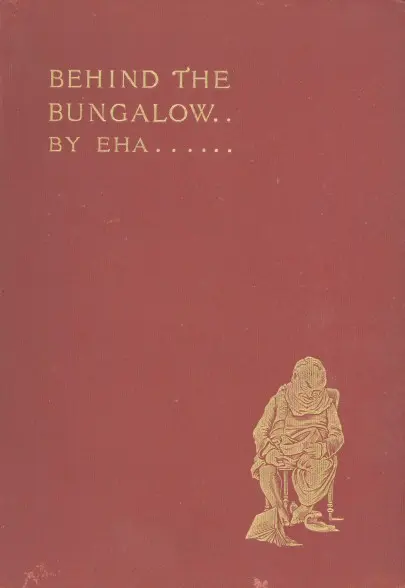
"Behind the Bungalow" by Edward Hamilton Aitken is a collection of essays written during the late 19th century. The book explores the intricate roles, behaviors, and relationships of various types of domestic servants in colonial India, particularly focusing on the dynamics between British expatriates and their Indian staff. Aitken's observations likely provide a humorous yet insightful reflection on the differences in culture and social status, centering on the day-to-day experiences of these servants. The opening of the book sets the stage with a prelude discussing the author’s experiences with hiring a "Boy," his term for a servant or valet, amidst the humorous and often complicated dynamics between master and servant in Anglo-Indian households. Aitken reflects on the characteristics and peculiarities of potential candidates, humorously depicting the complexities of choosing a suitable servant, often highlighting the cultural misunderstandings and societal norms at play. Additionally, the segment introduces various types of servants and the amusing scenarios that arise from their interactions with both their masters and their peers, seamlessly integrating observations on their personalities and quirks, offering an engaging glimpse into life behind the bungalows of colonial India.
Introduction adapted from the source catalogue; source summaries may be automatically generated.
Free to read · English · 34,531 words · No account needed
MAKE TIME FOR A GOOD BOOK
On by default. Untick to stop anonymous reading totals. Each page counts after 10 seconds in view. How this works.
Anonymous counting is on unless you have switched it off.
[Picture: Learned repose] Before we part let me give you a hint. Always keep a separate chair for your Pundit, one isolated on glass legs, if possible. Even this does not afford complete security, for he now and then detects one of the many insects which you have watched coursing up and down his white scarf, and picking it off with his finger and thumb, puts it on the floor. His creed forbids him to take the life of anything which may possibly be the corporeal habitation of the spirit of one of his deceased ancestors, but these little insects irritate him, so he deports them as we do our loafers.
[Picture: Hurree] A WARM altercation is going on in the verandah. A little human animal, with a very large red turban on his little head, stuck full of pins and threaded needles, stands on all fours over a garment of an unmentionable kind, which I recognise as belonging to me, and a piece of cloth lies before him, out of which he has cut a figure resembling the said garment. The scissors with which the operation was performed are still lying open upon the ground before him. His head is thrown so far back that the great turban rests between his shoulder blades, his brow is corrugated with perplexity, his mouth a little open, as if his lower jaw could not quite follow the rest of his upturned face. Hurree cannot know much about toothache. What would I not give for that set of incisors, regular as the teeth of a saw, and all as red as a fresh brick! I suppose the current quid of pan suparee is temporarily stowed away under that swelling in the left cheek, where the fierce black patch of whisker grows. The survival of a partial cheek pouch in some branches of the human race is a point that escaped Darwin. But I am digressing into reflections. To return: a lady is standing over the quadruped and evidently expressing serious displeasure in some form of that domestic language which we call Hindoostanee, with variations. The charge she lays against him seems to be that he has, in disregard of explicit instructions and defiance of common sense, made a blunder to which her whole past experience in India furnishes no parallel, and which has resulted in the total destruction of a whole piece of costly material, and the wreck of a garment for want of which the saheb (that is myself) will be put to a degree of inconvenience which cannot be estimated in rupees, and will most certainly be provoked to an outbreak of indignation too terrible to be described. So little do we know ourselves! I had no idea I harboured such a temper. However, Hurree does not tremble, but pleads that it was necessary to make the garment “leetle silope,” and though he admits that the slope is too great, he thinks the mistake can be remedied, and is pulling the cloth to see if it will not stretch to the required shape. Failing this, he has other remedies of a technical kind to suggest. I do not understand these matters, and cannot interpret his argument, but he puts his fingers on the floor and flings himself lightly to the other side of the cloth, to point out where he proposes to have a “fals hame,” or some other device. She rejects the proposal with scorn, and again impresses him with the consequences of his wicked blunder. At last I am glad to see that a compromise is effected, and the little man settles himself in the middle of a small carpet and locks his legs together so that his shins form an X and he sits on his feet. In this position he will ply his needle for the rest of the day at a rate inversely proportional to the distance of his mistress. When she retires for her afternoon siesta the needle will nap too. Then he will take out a little Vade Mecum, which is never absent from his waistband, and unroll it. It is many-coloured and contains little pockets, one for fragments of the spicy areca, one for the small tin box which contains fresh lime, one for cloves, one for cardamoms, and so on. He will put a little of this and a little of that into his palm, then roll them all up in a betel leaf out of another pocket, and push the parcel into his mouth. Thus refreshed he will go to work again, not, however, upon the garment to which he is now devoted, but upon a roll of coloured stuffs on which he is at the present moment sitting. You see, times are hard and Hurree has a large family, so he is obliged to eke out his salary by contract work for the mussaul. His work suffers from other interruptions. When the carriage of a visitor is heard, he has to awaken the chupprassee on duty at the door, and on his own account he goes out to drink water at least as often as the chupprassee himself. As the day draws near its close, he watches the shadow like a hireling, and when it touches the foot of the long arm chair, he springs to his feet, rolls up his rags and threads into a bundle, and trips gaily out. As he does so you will observe that his legs are bandy, the knees refusing to approach each other. This is the result of the position in which he spends his days.
Your reading position is saved on this browser. Take it to another device with a library code. Reading pages adapt to text, rather than matching a printed edition.
BEHIND THE BOOK
This eBook is for the use of anyone anywhere in the United States and most other parts of the world at no cost and with almost no restrictions whatsoever. You may copy it, give it away or re-use it under the terms of the Project Gutenberg License included with this eBook or online at www.gutenberg.org. If you are not located in the United States, you will have to check the laws of the country where you are located before using this eBook. Read the source licence.
The original source file, including credits and licence, is retained by this library. Request an original-format copy at no charge. Please include the book title and Project Gutenberg identifier #7953.
KEEP YOUR CURIOSITY GOING

David Patterson (Spirit) Hatch

David Patterson (Spirit) Hatch

David Patterson (Spirit) Hatch
Cécile Tormay

Moritz Busch
John L. Ransom