THE CLASSIC COLLECTION✦A journey to Central AfricaCLASSIC FREE BOOKS
A journey to Central Africa
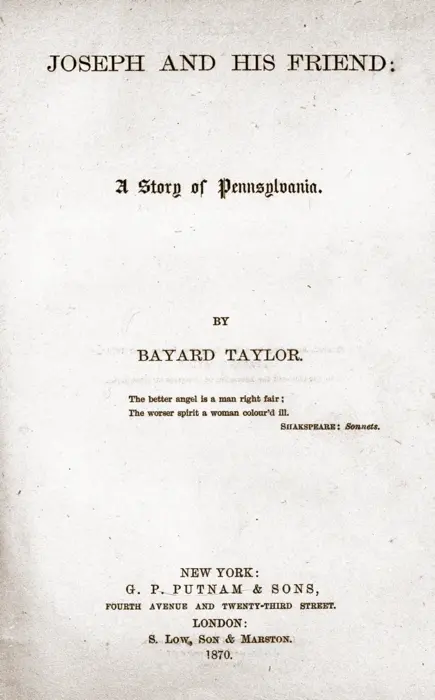
Bayard Taylor
THE CLASSIC COLLECTION · 1872
"Beauty and the Beast" by Bayard Taylor is a novel that intertwines fact and fancy, presenting a narrative set in mid-19th century Russia. The story engages with themes of love, power dynamics, and societal customs, focused on the characters of Prince Alexis, his wife Princess Martha, and their son Prince Boris. It explores the complexities of their lives within the context of Russian nobility and serfdom, revealing the interpersonal struggles and emotions that shape their world. The opening portion introduces us to Kinesma, a town on the Volga, where Prince Alexis finds himself in turmoil over a postponed dinner. His comedic insistence on avoiding a festival for his son leads to a series of events involving a drunken bear and a harried court-poet, setting the stage for the whimsical yet dark environment of the castle. As the narrative unfolds, we witness the egocentric behaviors of Alexis, the meekness of Princess Martha, and the cowardly nature of Boris, all richly painted against the backdrop of Russian culture and humor. The tone oscillates between severe brutality and lighthearted farce, foreshadowing the transformations that will occur as their lives progress.
Introduction adapted from the source catalogue; source summaries may be automatically generated.
Free to read · English · 85,672 words · No account needed
MAKE TIME FOR A GOOD BOOK
On by default. Untick to stop anonymous reading totals. Each page counts after 10 seconds in view. How this works.
Anonymous counting is on unless you have switched it off.
Jacob was scared and troubled. They had heard of him, he thought, and who knew what ridiculous stories? Susan noticed an anxiety on his face which she could not understand, but she unknowingly came to his relief.
“Why, mother,” she asked, “do you know Jacob's family?”
“No, I think not,” said her mother, “only somebody of the name, long
ago.”
His offer, however, was gratefully accepted. The bright, hot summer days came and went, but no flower of July ever opened as rapidly and richly and warmly as his chilled, retarded nature. New thoughts and instincts came with every morning's sun, and new conclusions were reached with every evening's twilight. Yet as the wheat harvest drew towards the end, he felt that he must leave the place. The month of absence had gone by, he scarce knew how. He was free to return home, and, though he might offer to bridge over the gap between wheat and oats, as he had already done between hay and wheat, he imagined the family might hesitate to accept such an offer. Moreover, this life at Susan's side was fast growing to be a pain, unless he could assure himself that it would be so forever.
They were in the wheat-field, busy with the last sheaves; she raking and he binding. The farmer and younger children had gone to the barn with a load. Jacob was working silently and steadily, but when they had reached the end of a row, he stopped, wiped his wet brow, and suddenly said, “Susan, I suppose to-day finishes my work here.”
“Yes,” she answered very slowly.
“And yet I'm very sorry to go.”
“I--WE don't want you to go, if we could help it.”
Jacob appeared to struggle with himself. He attempted to speak. “If I could--” he brought out, and then paused. “Susan, would you be glad if I came back?”
His eyes implored her to read his meaning. No doubt she read it correctly, for her face flushed, her eyelids fell, and she barely murmured, “Yes, Jacob.”
“Then I'll come!” he cried; “I'll come and help you with the oats. Don't talk of pay! Only tell me I'll be welcome! Susan, don't you believe I'll keep my word?”
“I do indeed,” said she, looking him firmly in the face.
That was all that was said at the time; but the two understood each
other tolerably well.
On the afternoon of the second day, Jacob saw again the lonely house of his father. His journey was made, yet, if any of the neighbors had seen him, they would never have believed that he had come back rich.
Your reading position is saved on this browser. Take it to another device with a library code. Reading pages adapt to text, rather than matching a printed edition.
Bayard Taylor
Bayard Taylor
Bayard Taylor
Bayard Taylor
BEHIND THE BOOK
This eBook is for the use of anyone anywhere in the United States and most other parts of the world at no cost and with almost no restrictions whatsoever. You may copy it, give it away or re-use it under the terms of the Project Gutenberg License included with this eBook or online at www.gutenberg.org. If you are not located in the United States, you will have to check the laws of the country where you are located before using this eBook. Read the source licence.
The original source file, including credits and licence, is retained by this library. Request an original-format copy at no charge. Please include the book title and Project Gutenberg identifier #292.
KEEP YOUR CURIOSITY GOING
Coulson Kernahan

Maurice Baring
Frances Wright
Cécile Tormay

Frederic Jesup Stimson

W. H. P. (William Henry Pope) Jarvis