
Letters to a Friend, Written to Mrs. Ezra S. Carr, 1866-1879
John Muir
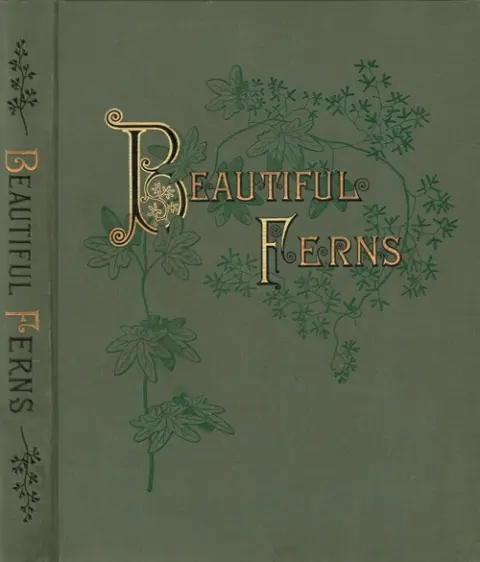
THE CLASSIC COLLECTION · 1881
"Beautiful Ferns" by Daniel Cady Eaton is a scientific publication written in the late 19th century. This work focuses on describing a wide variety of ferns, showcasing original water-color drawings, and providing detailed botanical descriptions alongside the illustrated species. The book serves as both a reference guide for ferns found in North America and a visual celebration of their beauty. The opening of the book introduces the reader to a selection of ferns, beginning with the American Maiden-Hair, which is characterized by its graceful fronds and growing habitat in rich, moist woods. Eaton provides a thorough botanical description, including the fern's root structure, frond characteristics, and geographical distribution. The text emphasizes both the aesthetic appeal and the scientific importance of these plants, which are illustrated in vibrant watercolors, undergoing meticulous descriptions that highlight their unique features and natural environments.
Introduction adapted from the source catalogue; source summaries may be automatically generated.
Free to read · English · 15,100 words · No account needed
MAKE TIME FOR A GOOD BOOK
On by default. Untick to stop anonymous reading totals. Each page counts after 10 seconds in view. How this works.
Anonymous counting is on unless you have switched it off.
Description:—This belongs to the same group of species as P. Wrightiana, brachyptera and Ornithopus. It has the same nodose and scaly root-stock, dark and polished stalk, glaucescent frond and mucronulate pinnules. In Mexico, South America and the Hawaiian Islands it never occurs with more than trifoliolate pinnules, and this is perhaps the best reason for considering P. Wrightiana a distinct species. The pinnæ are tripartite rather than trifoliolate, while in the other fern just referred to, when trifoliolate the odd pinnule is more distinct and usually stalked, a distinction indicated by Hooker, but for which I am more indebted to the accurate discrimination of Mr. Faxon. In more southern localities the fronds are considerably larger than Dr. Hayes’ specimens, and the segments of the pinnæ ampler. In very dry seasons the pinnæ are considerably deflexed. The spores are trivittate as in the related species.
PELLÆA ATROPURPUREA, Link.
Clayton’s Cliff-Brake.
Pellæa atropurpurea:—Root-stock short, knotted, chaffy with very narrow long-pointed soft cinnamon-brown scales; stalks four to eight inches high, terete, wiry, dark-purple or reddish-black, polished or more or less pubescent with paleaceous hairs; fronds six to twelve inches long, ovate or oblong-lanceolate in outline, evergreen, sub-coriaceous, pinnate, usually twice pinnate near the base; rachises smooth or hairy; pinnæ four to twelve pairs, the lower ones long-stalked, and divided into five to nine pinnules; upper pinnæ and the pinnules nearly sessile; oval to linear-oblong, at the base truncate or sub-cordate or sometimes hastate, obtuse or obtusely mucronulate, terminal ones longest; veins obscure, mostly twice forked; involucre rather broad, formed of the continuously recurved margin, paler and membranaceous on the edge, not fully covering the ripened sporangia.
Pellæa atropurpurea, Link, Fil. Hort. Berol., p. 59.—Fée, Gen. Fil., p. 129.—Hooker, Sp. Fil., ii., p. 138.—Eaton, in Chapman’s Flora, p. 589; Gray’s Manual, ed. v., p. 660; Ferns of the South-West, p. 319.—Lawson, in Canad. Naturalist, i., p. 272.—Hooker & Baker, Syn. Fil., p. 147.—Fournier, Pl. Mex., Crypt., p. 119.—Williamson, Ferns of Kentucky, p. 52, t. 12.
Pteris atropurpurea, Linnæus, Sp. Pl., p. 1534.—Michaux, Fl. Bor.-Am., ii., p. 261.—Swartz, Syn. Fil., p. 106.—Schkuhr, Krypt. Gew., p. 93, t. 101.—Willdenow, Sp. Pl., v., p. 375.—Pursh, Fl. Am. Sept., ii., p. 668.
Platyloma atropurpureum, J. Smith.—Torrey, Fl. New York, ii., p. 488.
Allosorus atropurpureus, Kunze, in Sill. Journ., July, 1848, p. 86; Linnæa, xxiii., p. 218.—Gray, Manual, ed. ii., p. 591.—Mettenius, Fil. Hort. Lips., p. 44.
Pellæa mucronata, Fée, 9me Mém., p. 8.
Pellæa glabella, Mettenius & Kuhn, in Linnæa, xxxvi., p. 87.
Pteris spiculata, Schkuhr, Krypt. Gew., p. 92, t. 100.
Pteris Adianti facie, caule ramulis petiolisque politiore nitore nigricantibus, etc., Gronovius, Fl. Virginica, ed. i., p. 197.
Your reading position is saved on this browser. Take it to another device with a library code. Reading pages adapt to text, rather than matching a printed edition.
BEHIND THE BOOK
This eBook is for the use of anyone anywhere in the United States and most other parts of the world at no cost and with almost no restrictions whatsoever. You may copy it, give it away or re-use it under the terms of the Project Gutenberg License included with this eBook or online at www.gutenberg.org. If you are not located in the United States, you will have to check the laws of the country where you are located before using this eBook. Read the source licence.
The original source file, including credits and licence, is retained by this library. Request an original-format copy at no charge. Please include the book title and Project Gutenberg identifier #45110.
KEEP YOUR CURIOSITY GOING
John Muir

Asa Gray
Asa Gray

Florence Nightingale
Elizabeth Robins Pennell
Denison Olmsted