
Letters to a Friend, Written to Mrs. Ezra S. Carr, 1866-1879
John Muir
THE CLASSIC COLLECTION · 1881
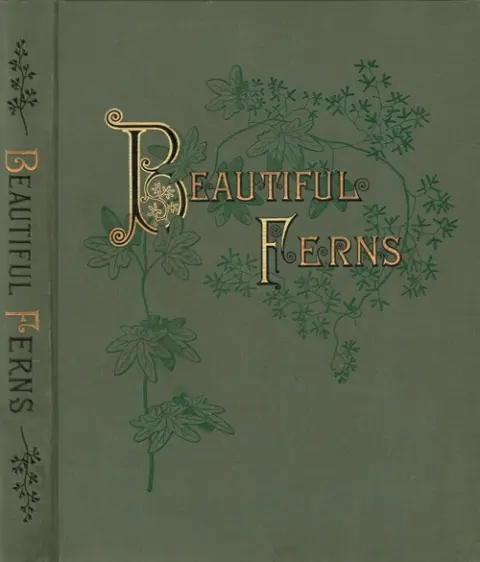
"Beautiful Ferns" by Daniel Cady Eaton is a scientific publication written in the late 19th century. This work focuses on describing a wide variety of ferns, showcasing original water-color drawings, and providing detailed botanical descriptions alongside the illustrated species. The book serves as both a reference guide for ferns found in North America and a visual celebration of their beauty. The opening of the book introduces the reader to a selection of ferns, beginning with the American Maiden-Hair, which is characterized by its graceful fronds and growing habitat in rich, moist woods. Eaton provides a thorough botanical description, including the fern's root structure, frond characteristics, and geographical distribution. The text emphasizes both the aesthetic appeal and the scientific importance of these plants, which are illustrated in vibrant watercolors, undergoing meticulous descriptions that highlight their unique features and natural environments.
Introduction adapted from the source catalogue; source summaries may be automatically generated.
Free to read · English · 15,100 words · No account needed
MAKE TIME FOR A GOOD BOOK
On by default. Untick to stop anonymous reading totals. Each page counts after 10 seconds in view. How this works.
Anonymous counting is on unless you have switched it off.
The shape of the segments differs in the several varieties; in the type they are very close together, oblong, with a rounded apex, and not very deeply toothed: in var. paleaceum they are also closely-placed, and oblong, but mostly truncate at the apex; and in var. incisum they are much larger and less closely-placed, ovate-lanceolate in shape, and incised with toothed lobes along the sides.
The veins are free, and are forked or alternately divided into from two to five veinlets. The sori are rather large, placed nearer the midvein than the margin, and are rarely produced towards the apex of the segments.
The indusium is orbicular-reniform, and almost always smooth. Its edges are turned downward, enclosing the sporangia, when they are young, and sometimes this convexity is permanent. Rarely the sinus is so deep that the indusium at last becomes divided. The spores are ovoid, and have a muricately roughened surface.
The rhizomes have been used for ages as an anthelmintic, but probably have no greater virtue in this direction than those of many other common species.
TRIFOLIATE CLIFF-BRAKE.
CLAYTON’S CLIFF-BRAKE.
SLENDER CLIFF-BRAKE.
PELLÆA TERNIFOLIA, Link.
Trifoliate Cliff-Brake.
Pellæa ternifolia:—Root-stock short, thick, nodose, chaffy with very narrow dark-brown scales; stalks clustered, purplish-black and polished, three to six inches long; fronds as long as or longer than the stalks, oblong-linear; pinnæ from four to fifteen pairs, all but a few of the highest ones deeply tripartite; segments elongated-oval or linear-obovate, sub-coriaceous, somewhat glaucous beneath, green above, slightly mucronate, the middle one in large fronds indistinctly petiolulate; fertile ones with the edges much recurved; involucre broad, the edge only membranaceous.
Pellæa ternifolia, Link, Fil. Hort. Berol., p. 59.—Fée, Gen. Fil., p. 129.—Hooker, Sp. Fil., i., p. 142; Fil. Exot., t. xv.—Fournier, Pl. Mex., Crypt., p. 118.—Eaton, Ferns of the Southwest, p. 321.
Pteris ternifolia, Cavanilles, “Præl. 1801, No. 657.”—Hooker & Greville, Ic. Fil., t. 126.
Platyloma ternifolium, J. Smith.—Brackenridge, Fil. U. S. Ex. Exped.,
p. 94.
Allosorus ternifolius, Kunze, in Linnæa, xxiii., p. 220.
Pteris subverticillata, Swartz, Syn. Fil., p. 103.—Willdenow, Sp. Pl.,
v., p. 375.
Hab.—Texas, Trécul, No. 1334, according to Fournier. New Mexico, Wright, according to Hooker in Filices Exoticæ. The only specimens from Texas which I have of this species were collected by Dr. Sutton Hayes, near the headwaters of the Rio Colorado of Texas. It is a common Mexican species; it is found as far South as Peru, and reap pears in the Hawaiian Islands.
Your reading position is saved on this browser. Take it to another device with a library code. Reading pages adapt to text, rather than matching a printed edition.
BEHIND THE BOOK
This eBook is for the use of anyone anywhere in the United States and most other parts of the world at no cost and with almost no restrictions whatsoever. You may copy it, give it away or re-use it under the terms of the Project Gutenberg License included with this eBook or online at www.gutenberg.org. If you are not located in the United States, you will have to check the laws of the country where you are located before using this eBook. Read the source licence.
The original source file, including credits and licence, is retained by this library. Request an original-format copy at no charge. Please include the book title and Project Gutenberg identifier #45110.
KEEP YOUR CURIOSITY GOING
John Muir

Asa Gray
Asa Gray

Florence Nightingale
Elizabeth Robins Pennell
Denison Olmsted