THE CLASSIC COLLECTION✦Building the pacific railwayCLASSIC FREE BOOKS
Building the pacific railway
Edwin L. (Edwin Legrand) Sabin
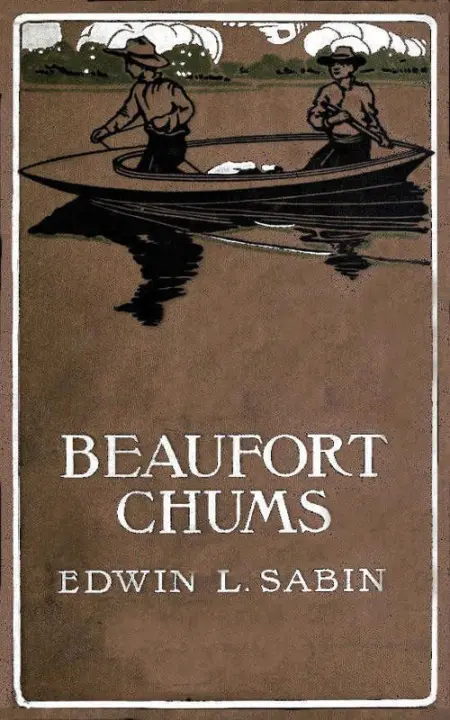
THE CLASSIC COLLECTION · 1905
"Beaufort Chums" by Edwin L. Sabin is a juvenile adventure novel written in the early 20th century. The story follows the escapades of two boys, Ned and Hal, as they navigate life along the Mississippi River, immersed in outdoor adventures and the challenges of youth. The themes of friendship, exploration, and the thrill of nature are central to the narrative. The opening of the novel introduces the two main characters, Ned and Hal, who are excited by the rising waters of the Mississippi River that promise adventure while also threatening the homes of nearby residents. Their explorations lead them to Eagle Island, where they find and rescue a dog left behind in a flooded barn, whom they affectionately name Bob. The passage sets a lively tone, showcasing the boys' curiosity and resourcefulness while hinting at the challenges they might face as they embark on their impending adventures in the wilderness.
Introduction adapted from the source catalogue; source summaries may be automatically generated.
Free to read · English · 62,026 words · No account needed
MAKE TIME FOR A GOOD BOOK
On by default. Untick to stop anonymous reading totals. Each page counts after 10 seconds in view. How this works.
Anonymous counting is on unless you have switched it off.
"Do you think the embankment will hold?" asked Hal, anxiously.
"Certain, 'less we have an east wind," assured the commodore, between his puffs. "East wind would pile up the waves an' no knowin' what would happen."
"I guess we'll go out in our boat," announced Ned.
"Well, it's there with them others under the lee of the warehouse," said the commodore, with a jerk of his pipe toward the cluster of skiffs tied along the embankment, in the angle formed by the end of the steamboat building, and thus shielded from the current. "Reckon I wouldn't take no chances though, if I was you. River's full of drift-wood."
The commodore was a stoical, gruff old veteran of the Mississippi--whereby his title--and this advice was no small concession.
"We'll be careful," cried Hal.
"Oh, it's safe enough," grunted the commodore, lapsing into the apparent surliness which covered a really kind heart.
The boys proceeded to their boat, and unlocked its painter from the larger chain to which all the boats were fastened.
The craft of which they were joint owners was of that type known on the Mississippi as scull-boat or sink-boat. It was low and flat, with a smooth, dish-shaped keel, sharp prow, and overhanging stern. Its bows were decked, and a combing ran along the gunwale.
It was a very convenient, reliable boat. Under the decked bows could be stowed a surprising amount of stuff. Being made from thin strips of cedar, it was exceedingly buoyant and light; and in consequence of its width and "flatness," sitting as it did so low in the water, capsizing was almost impossible. As an extra precaution, however, Mr. Miller and Mr. Lucas had caused air-cylinders of copper to be inserted, inside the bows.
There were no seats or thwarts. The boys sprawled about on the straw in the bottom. The one who rowed sat on a soap-box; the one who sculled--for in the stern was a hole for a sculling-oar--perched on the gunwale.
You see, the boat was so steady that it did not much matter how the
persons in it acted.
Sometimes the boys rowed, sometimes they sculled, and sometimes, if in a hurry or fought by a strong current, they both rowed and sculled. When not in use the boat was quartered with Commodore Jones.
Hal jumped in, shipped the single pair of oars, and then plumped into the stern; Ned shoved off, and squatting on the soap-box applied himself to navigating, for it happened to be his turn.
"Watch out for the lath!" cautioned Hal.
"Say--I bet you it's from the Beaufort Lumber Company's yards!" exclaimed Ned, twisting his head to look over the bows.
Your reading position is saved on this browser. Take it to another device with a library code. Reading pages adapt to text, rather than matching a printed edition.
Edwin L. (Edwin Legrand) Sabin

Edwin L. (Edwin Legrand) Sabin

Edwin L. (Edwin Legrand) Sabin

Edwin L. (Edwin Legrand) Sabin
BEHIND THE BOOK
This eBook is for the use of anyone anywhere in the United States and most other parts of the world at no cost and with almost no restrictions whatsoever. You may copy it, give it away or re-use it under the terms of the Project Gutenberg License included with this eBook or online at www.gutenberg.org. If you are not located in the United States, you will have to check the laws of the country where you are located before using this eBook. Read the source licence.
The original source file, including credits and licence, is retained by this library. Request an original-format copy at no charge. Please include the book title and Project Gutenberg identifier #54887.
KEEP YOUR CURIOSITY GOING
Coulson Kernahan

Maurice Baring
Frances Wright
Cécile Tormay

Frederic Jesup Stimson

W. H. P. (William Henry Pope) Jarvis