THE CLASSIC COLLECTION✦Building the pacific railwayCLASSIC FREE BOOKS
Building the pacific railway
Edwin L. (Edwin Legrand) Sabin
THE CLASSIC COLLECTION · 1905
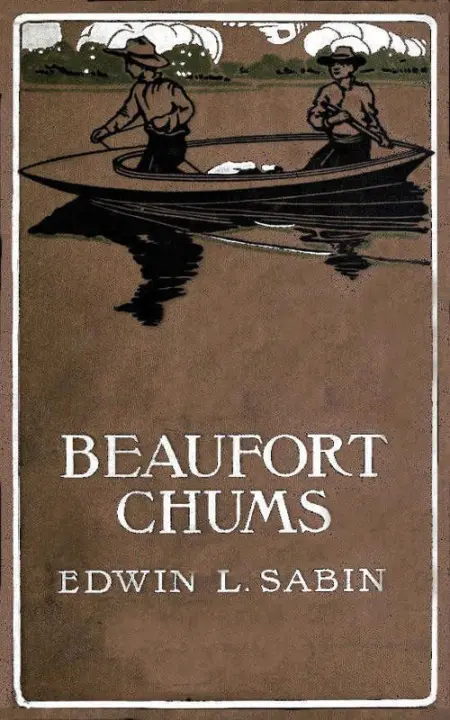
"Beaufort Chums" by Edwin L. Sabin is a juvenile adventure novel written in the early 20th century. The story follows the escapades of two boys, Ned and Hal, as they navigate life along the Mississippi River, immersed in outdoor adventures and the challenges of youth. The themes of friendship, exploration, and the thrill of nature are central to the narrative. The opening of the novel introduces the two main characters, Ned and Hal, who are excited by the rising waters of the Mississippi River that promise adventure while also threatening the homes of nearby residents. Their explorations lead them to Eagle Island, where they find and rescue a dog left behind in a flooded barn, whom they affectionately name Bob. The passage sets a lively tone, showcasing the boys' curiosity and resourcefulness while hinting at the challenges they might face as they embark on their impending adventures in the wilderness.
Introduction adapted from the source catalogue; source summaries may be automatically generated.
Free to read · English · 62,026 words · No account needed
MAKE TIME FOR A GOOD BOOK
On by default. Untick to stop anonymous reading totals. Each page counts after 10 seconds in view. How this works.
Anonymous counting is on unless you have switched it off.
When, after school on the previous afternoon, Ned had gone down to look at the river, there had been hardly any water inside the tracks at the foot of Maple Street. But this morning the boys found quite a pond had gathered during the night. In places the board walks on either hand were afloat, and children were running back and forth over them, shouting with delight as the water spurted up between the cracks.
"She's soaking through," commented Hal.
Ned nodded, and saying, "Come on," deliberately continued on the route, over the wavy, unsteady walk. Hal followed. Both boys disdained to hurry their pace one bit, even to avoid wet feet. They deemed that a show of dignity was necessary, to impress the scampering, screaming youngsters who were spectators.
With a spring they leaped the open space between the end of the walk and the railroad embankment. Their feet sank deep into the mushy cinders as they scrambled to the top.
This was four tracks wide, and usually was a good stone's throw from the river's edge. To-day the water was lapping at the rails. North and south were scattered gangs of men with shovels, watching to patch the slightest break. Seemingly the embankment was all that kept the water from rushing into the principal streets.
Ned and Hal stood and gazed in silent wonder at the scene before them. The river was not that friendly river to which they were accustomed. It was a sullen, menacing monster, without a single familiar aspect. The water was an opaque, ugly yellow, and was thickly charged with sediment. Extending as far as eye could reach it swept past, bearing on its mighty breast trunks of trees, pieces of lumber, fragments of buildings, and not infrequently an entire shed or small house.
There was no levee, no shore, no anything--save water. The big Diamond Jo warehouse, with its basement story completely submerged, was secured by a hawser encircling it.
Commodore Jones' little fish-market and boats-to-hire establishment, a few rods below, also was anchored by a rope. The water was within a couple of inches of its platform; but nevertheless, river threatening each moment to carry him away, here sat the commodore, smoking his pipe.
The boys strolled to a point on the embankment opposite him.
"Good-morning, commodore," they called.
"Mornin', young fellers," responded the commodore. "Better not come crost them planks," he admonished, indicating the narrow bridge which connected his quarters with the land.
"We don't want to," replied Ned. "How's the water? Still rising?"
"No," answered the commodore. "She ain't raised any since midnight. I look for her to begin to go down pretty soon, now. She's fallin' up north."
Your reading position is saved on this browser. Take it to another device with a library code. Reading pages adapt to text, rather than matching a printed edition.
Edwin L. (Edwin Legrand) Sabin

Edwin L. (Edwin Legrand) Sabin

Edwin L. (Edwin Legrand) Sabin

Edwin L. (Edwin Legrand) Sabin
BEHIND THE BOOK
This eBook is for the use of anyone anywhere in the United States and most other parts of the world at no cost and with almost no restrictions whatsoever. You may copy it, give it away or re-use it under the terms of the Project Gutenberg License included with this eBook or online at www.gutenberg.org. If you are not located in the United States, you will have to check the laws of the country where you are located before using this eBook. Read the source licence.
The original source file, including credits and licence, is retained by this library. Request an original-format copy at no charge. Please include the book title and Project Gutenberg identifier #54887.
KEEP YOUR CURIOSITY GOING
Coulson Kernahan

Maurice Baring
Frances Wright
Cécile Tormay

Frederic Jesup Stimson

W. H. P. (William Henry Pope) Jarvis