THE CLASSIC COLLECTION✦The MonsterCLASSIC FREE BOOKS
The Monster
Edgar Saltus
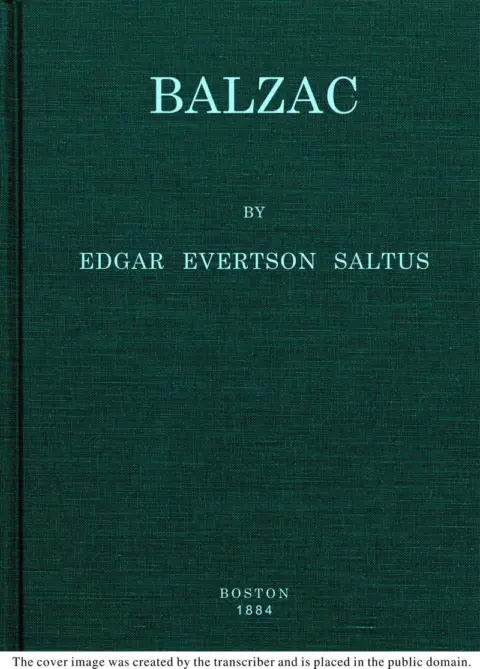
THE CLASSIC COLLECTION · 1884
"Balzac" by Edgar Saltus is a biography written in the late 19th century. The book explores the life and genius of the renowned French novelist Honoré de Balzac, covering his formative years, literary struggles, and eventual rise to fame as a pivotal figure in literature with his expansive work, "La Comédie Humaine." Saltus delves into Balzac’s eccentricities, profound obsessions, and creative process, painting a vivid picture of the man behind the novels that shaped French literature. The opening of "Balzac" introduces us to Honoré de Balzac's early life and formative experiences that shaped his literary journey. Born in Tours in 1799, Balzac is depicted as a precocious child, engrossed in books and music, showing early signs of brilliance despite being viewed as a dullard in school. Saltus details Balzac's struggles with confinement in conventional education, his eventual resolve to pursue a life of literature despite familial expectations, and the hardships he faced, including financial difficulties and the challenges of gaining recognition in literary circles. The narrative sets up a foundation for understanding Balzac's profound influence on the literary world, highlighting early hints of his ambitious nature and relentless dedication to his craft.
Introduction adapted from the source catalogue; source summaries may be automatically generated.
Free to read · English · 43,407 words · No account needed
MAKE TIME FOR A GOOD BOOK
On by default. Untick to stop anonymous reading totals. Each page counts after 10 seconds in view. How this works.
Anonymous counting is on unless you have switched it off.
In France, a witticism is to be heard on the scaffold as well as at the barricades, and some Frenchman or other will, I am sure, joke at the general sessions of the last judgment.
All soldiers look alike.
In love, chance is the providence of women.
Literature and politics are to women to-day that which religion was to them formerly,—the last asylum of their pretensions.
True sentiments are magnetic.
Misfortune creates in certain natures a vast desert, which reëchoes
with the voice of God.
It is from the shock of characters, and not from conflict of ideas,
that antipathies are born.
When intelligent men begin to explain their dispositions or give the key to their hearts they are most assuredly drunk.
There are but few moral wounds which solitude cannot cure.
When a woman is no longer jealous of her husband the end is come; she no longer loves him. Conjugal affection expires in her last quarrel.
A woman who is guided by her head, and not by her heart, is a terrible companion: she has all the defects of a passionate woman, with none of her good qualities; she is without mercy, without love, without virtue, without sex.
The revelation of chastity in man is inexpressibly radiant.
Misery is a tonic to some; to others it is a dissolvent.
A woman who has a lover becomes very indulgent.
Power is clement, it is open to conviction, it is just and undisturbed; but the anger engendered by weakness is pitiless.
Monomanias are not contagious; but where the insanity lurks in constant discussions and in the manner in which things in general are regarded, then it may become so.
One of the misfortunes to which great minds are subjected is that they are forced to understand all things,—vices as well as virtues.
Beauty is like nobility: it cannot be acquired.
Nothing good is to be expected of those who acknowledge their faults, repent, and then sin again. The truly great acknowledge their faults to no one, but they punish themselves accordingly.
Do not fear to make enemies,—unfortunate is he who has none; but try to give no cause for ridicule, and avoid the appearance of evil.
There is as much mud in the upper ranks of society as in the lower, but in the former it is gilded.
The most superb vengeance is the disdain of one at hand.
Laws are not always so cruel as are the usages of the world.
Historians are privileged liars, who lend their pen to popular beliefs in the same manner that our newspapers express but the sentiments of their readers.
Your reading position is saved on this browser. Take it to another device with a library code. Reading pages adapt to text, rather than matching a printed edition.
Edgar Saltus
Edgar Saltus
Edgar Saltus
Edgar Saltus
BEHIND THE BOOK
This eBook is for the use of anyone anywhere in the United States and most other parts of the world at no cost and with almost no restrictions whatsoever. You may copy it, give it away or re-use it under the terms of the Project Gutenberg License included with this eBook or online at www.gutenberg.org. If you are not located in the United States, you will have to check the laws of the country where you are located before using this eBook. Read the source licence.
The original source file, including credits and licence, is retained by this library. Request an original-format copy at no charge. Please include the book title and Project Gutenberg identifier #46859.
KEEP YOUR CURIOSITY GOING
John L. Ransom
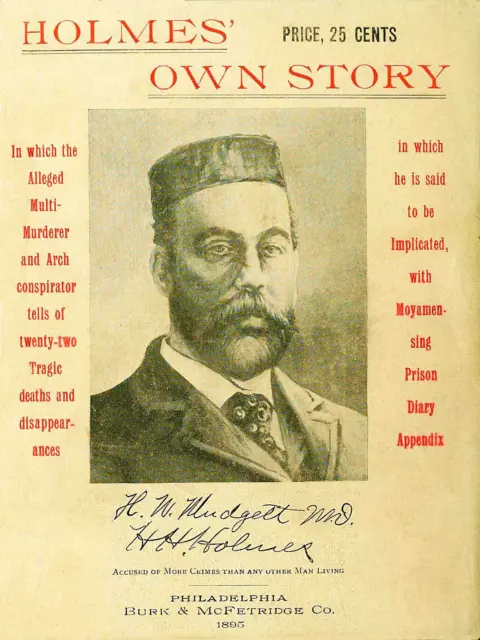
Herman W. Mudgett
Harriet Monroe
Daniel Dulany Addison
Charles Lanman

Harold Rosher