THE CLASSIC COLLECTION✦SocialismCLASSIC FREE BOOKS
Socialism
John Stuart Mill
THE CLASSIC COLLECTION · 1873
"Autobiography" by John Stuart Mill is a personal account written in the mid-19th century that reflects on the life and philosophical development of one of the greatest thinkers of the time. The narrative begins with his unconventional early education under the rigorous guidance of his father, James Mill, and explores the profound intellectual influences that shaped his views on politics, ethics, and society. Mill emphasizes the remarkable depth of learning he experienced during his formative years, which often included studying classical texts in Greek and Latin as well as engaging in discussions on topics ranging from history to mathematics. The opening of the autobiography details Mill's childhood and educational experiences from birth to around age fourteen. He recounts the heavy emphasis his father placed on rigorous intellectual training and the remarkable curriculum that he was subjected to, which included Greek at a very young age and a wide range of historical literature. Mill also reflects on the moral and intellectual influences of his father's philosophy, particularly his rejection of conventional religious belief and advocacy for utilitarian principles. This early exposure, coupled with enriching conversations with influential figures such as Jeremy Bentham and David Ricardo, ultimately fostered Mill's own philosophical outlook and commitment to societal reform. Each chapter of Mill's life hints at the broader social and political context of his work, making it clear that his theoretical inquiries are deeply connected to his lived experiences and the vibrant discussions occurring in his intellectual milieu.
Introduction adapted from the source catalogue; source summaries may be automatically generated.
Free to read · English · 75,090 words · No account needed
MAKE TIME FOR A GOOD BOOK
On by default. Untick to stop anonymous reading totals. Each page counts after 10 seconds in view. How this works.
Anonymous counting is on unless you have switched it off.
But though these exercises in history were never a compulsory lesson, there was another kind of composition which was so, namely, writing verses, and it was one of the most disagreeable of my tasks. Greek and Latin verses I did not write, nor learnt the prosody of those languages. My father, thinking this not worth the time it required, contented himself with making me read aloud to him, and correcting false quantities. I never composed at all in Greek, even in prose, and but little in Latin. Not that my father could be indifferent to the value of this practice, in giving a thorough knowledge of these languages, but because there really was not time for it. The verses I was required to write were English. When I first read Pope's Homer, I ambitiously attempted to compose something of the same kind, and achieved as much as one book of a continuation of the Iliad. There, probably, the spontaneous promptings of my poetical ambition would have stopped; but the exercise, begun from choice, was continued by command. Conformably to my father's usual practice of explaining to me, as far as possible, the reasons for what he required me to do, he gave me, for this, as I well remember, two reasons highly characteristic of him: one was, that some things could be expressed better and more forcibly in verse than in prose: this, he said, was a real advantage. The other was, that people in general attached more value to verse than it deserved, and the power of writing it, was, on this account, worth acquiring. He generally left me to choose my own subjects, which, as far as I remember, were mostly addresses to some mythological personage or allegorical abstraction; but he made me translate into English verse many of Horace's shorter poems: I also remember his giving me Thomson's Winter to read, and afterwards making me attempt (without book) to write something myself on the same subject. The verses I wrote were, of course, the merest rubbish, nor did I ever attain any facility of versification, but the practice may have been useful in making it easier for me, at a later period, to acquire readiness of expression.[1] I had read, up to this time, very little English poetry. Shakspeare my father had put into my hands, chiefly for the sake of the historical plays, from which, however, I went on to the others. My father never was a great admirer of Shakspeare, the English idolatry of whom he used to attack with some severity. He cared little for any English poetry except Milton (for whom he had the highest admiration), Goldsmith, Burns, and Gray's Bard, which he preferred to his Elegy: perhaps I may add Cowper and Beattie. He had some value for Spenser, and I remember his reading to me (unlike his usual practice of making me read to him) the first book of the Fairie Queene; but I took little pleasure in it. The poetry of the present century he saw scarcely any merit in, and I hardly became acquainted with any of it till I was grown up to manhood, except the metrical romances of Walter Scott, which I read at his recommendation and was intensely delighted with; as I always was with animated narrative. Dryden's Poems were among my father's books, and many of these he made me read, but I never cared for any of them except Alexander's Feast, which, as well as many of the songs in Walter Scott, I used to sing internally, to a music of my own: to some of the latter, indeed, I went so far as to compose airs, which I still remember. Cowper's short poems I read with some pleasure, but never got far into the longer ones; and nothing in the two volumes interested me like the prose account of his three hares. In my thirteenth year I met with Campbell's poems, among which Lochiel, Hohenlinden, The Exile of Erin, and some others, gave me sensations I had never before experienced from poetry. Here, too, I made nothing of the longer poems, except the striking opening of Gertrude of Wyoming, which long kept its place in my feelings as the perfection of pathos.
Your reading position is saved on this browser. Take it to another device with a library code. Reading pages adapt to text, rather than matching a printed edition.
John Stuart Mill
John Stuart Mill
John Stuart Mill
John Stuart Mill
BEHIND THE BOOK
This eBook is for the use of anyone anywhere in the United States and most other parts of the world at no cost and with almost no restrictions whatsoever. You may copy it, give it away or re-use it under the terms of the Project Gutenberg License included with this eBook or online at www.gutenberg.org. If you are not located in the United States, you will have to check the laws of the country where you are located before using this eBook. Read the source licence.
The original source file, including credits and licence, is retained by this library. Request an original-format copy at no charge. Please include the book title and Project Gutenberg identifier #10378.
KEEP YOUR CURIOSITY GOING

David Patterson (Spirit) Hatch
Coulson Kernahan
John L. Ransom

Ralph Waldo Emerson
Frances Wright
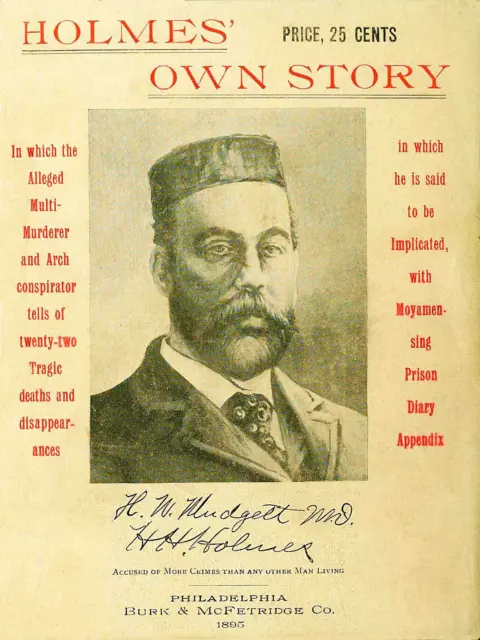
Herman W. Mudgett