THE CLASSIC COLLECTION✦SocialismCLASSIC FREE BOOKS
Socialism
John Stuart Mill
THE CLASSIC COLLECTION · 1873
"Autobiography" by John Stuart Mill is a personal account written in the mid-19th century that reflects on the life and philosophical development of one of the greatest thinkers of the time. The narrative begins with his unconventional early education under the rigorous guidance of his father, James Mill, and explores the profound intellectual influences that shaped his views on politics, ethics, and society. Mill emphasizes the remarkable depth of learning he experienced during his formative years, which often included studying classical texts in Greek and Latin as well as engaging in discussions on topics ranging from history to mathematics. The opening of the autobiography details Mill's childhood and educational experiences from birth to around age fourteen. He recounts the heavy emphasis his father placed on rigorous intellectual training and the remarkable curriculum that he was subjected to, which included Greek at a very young age and a wide range of historical literature. Mill also reflects on the moral and intellectual influences of his father's philosophy, particularly his rejection of conventional religious belief and advocacy for utilitarian principles. This early exposure, coupled with enriching conversations with influential figures such as Jeremy Bentham and David Ricardo, ultimately fostered Mill's own philosophical outlook and commitment to societal reform. Each chapter of Mill's life hints at the broader social and political context of his work, making it clear that his theoretical inquiries are deeply connected to his lived experiences and the vibrant discussions occurring in his intellectual milieu.
Introduction adapted from the source catalogue; source summaries may be automatically generated.
Free to read · English · 75,090 words · No account needed
MAKE TIME FOR A GOOD BOOK
On by default. Untick to stop anonymous reading totals. Each page counts after 10 seconds in view. How this works.
Anonymous counting is on unless you have switched it off.
I had been long an ardent admirer of Comte's writings before I had any communication with himself; nor did I ever, to the last, see him in the body. But for some years we were frequent correspondents, until our correspondence became controversial, and our zeal cooled. I was the first to slacken correspondence; he was the first to drop it. I found, and he probably found likewise, that I could do no good to his mind, and that all the good he could do to mine, he did by his books. This would never have led to discontinuance of intercourse, if the differences between us had been on matters of simple doctrine. But they were chiefly on those points of opinion which blended in both of us with our strongest feelings, and determined the entire direction of our aspirations. I had fully agreed with him when he maintained that the mass of mankind, including even their rulers in all the practical departments of life, must, from the necessity of the case, accept most of their opinions on political and social matters, as they do on physical, from the authority of those who have bestowed more study on those subjects than they generally have it in their power to do. This lesson had been strongly impressed on me by the early work of Comte, to which I have adverted. And there was nothing in his great Treatise which I admired more than his remarkable exposition of the benefits which the nations of modern Europe have historically derived from the separation, during the Middle Ages, of temporal and spiritual power, and the distinct organization of the latter. I agreed with him that the moral and intellectual ascendancy, once exercised by priests, must in time pass into the hands of philosophers, and will naturally do so when they become sufficiently unanimous, and in other respects worthy to possess it. But when he exaggerated this line of thought into a practical system, in which philosophers were to be organized into a kind of corporate hierarchy, invested with almost the same spiritual supremacy (though without any secular power) once possessed by the Catholic Church; when I found him relying on this spiritual authority as the only security for good government, the sole bulwark against practical oppression, and expecting that by it a system of despotism in the state and despotism in the family would be rendered innocuous and beneficial; it is not surprising, that while as logicians we were nearly at one, as sociologists we could travel together no further. M. Comte lived to carry out these doctrines to their extremest consequences, by planning, in his last work, the Système de Politique Positive, the completest system of spiritual and temporal despotism which ever yet emanated from a human brain, unless possibly that of Ignatius Loyola: a system by which the yoke of general opinion, wielded by an organized body of spiritual teachers and rulers, would be made supreme over every action, and as far as is in human possibility, every thought, of every member of the community, as well in the things which regard only himself, as in those which concern the interests of others. It is but just to say that this work is a considerable improvement, in many points of feeling, over Comte's previous writings on the same subjects: but as an accession to social philosophy, the only value it seems to me to possess, consists in putting an end to the notion that no effectual moral authority can be maintained over society without the aid of religious belief; for Comte's work recognises no religion except that of Humanity, yet it leaves an irresistible conviction that any moral beliefs concurred in by the community generally may be brought to bear upon the whole conduct and lives of its individual members, with an energy and potency truly alarming to think of. The book stands a monumental warning to thinkers on society and politics, of what happens when once men lose sight, in their speculations, of the value of Liberty and of Individuality.
Your reading position is saved on this browser. Take it to another device with a library code. Reading pages adapt to text, rather than matching a printed edition.
John Stuart Mill
John Stuart Mill
John Stuart Mill
John Stuart Mill
BEHIND THE BOOK
This eBook is for the use of anyone anywhere in the United States and most other parts of the world at no cost and with almost no restrictions whatsoever. You may copy it, give it away or re-use it under the terms of the Project Gutenberg License included with this eBook or online at www.gutenberg.org. If you are not located in the United States, you will have to check the laws of the country where you are located before using this eBook. Read the source licence.
The original source file, including credits and licence, is retained by this library. Request an original-format copy at no charge. Please include the book title and Project Gutenberg identifier #10378.
KEEP YOUR CURIOSITY GOING

David Patterson (Spirit) Hatch
Coulson Kernahan
John L. Ransom

Ralph Waldo Emerson
Frances Wright
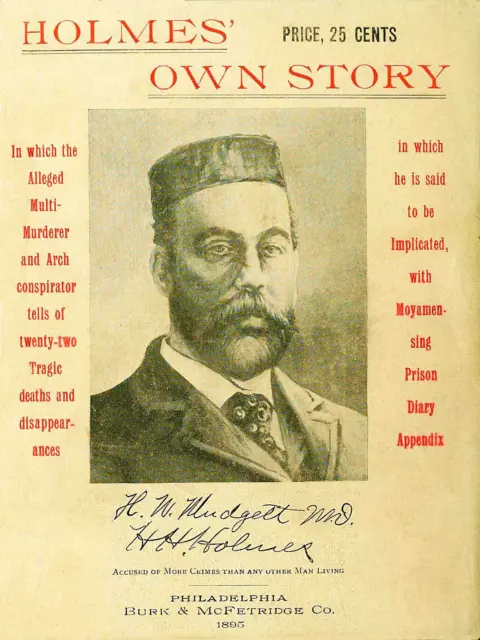
Herman W. Mudgett