THE CLASSIC COLLECTION✦SocialismCLASSIC FREE BOOKS
Socialism
John Stuart Mill
THE CLASSIC COLLECTION · 1873
"Autobiography" by John Stuart Mill is a personal account written in the mid-19th century that reflects on the life and philosophical development of one of the greatest thinkers of the time. The narrative begins with his unconventional early education under the rigorous guidance of his father, James Mill, and explores the profound intellectual influences that shaped his views on politics, ethics, and society. Mill emphasizes the remarkable depth of learning he experienced during his formative years, which often included studying classical texts in Greek and Latin as well as engaging in discussions on topics ranging from history to mathematics. The opening of the autobiography details Mill's childhood and educational experiences from birth to around age fourteen. He recounts the heavy emphasis his father placed on rigorous intellectual training and the remarkable curriculum that he was subjected to, which included Greek at a very young age and a wide range of historical literature. Mill also reflects on the moral and intellectual influences of his father's philosophy, particularly his rejection of conventional religious belief and advocacy for utilitarian principles. This early exposure, coupled with enriching conversations with influential figures such as Jeremy Bentham and David Ricardo, ultimately fostered Mill's own philosophical outlook and commitment to societal reform. Each chapter of Mill's life hints at the broader social and political context of his work, making it clear that his theoretical inquiries are deeply connected to his lived experiences and the vibrant discussions occurring in his intellectual milieu.
Introduction adapted from the source catalogue; source summaries may be automatically generated.
Free to read · English · 75,090 words · No account needed
MAKE TIME FOR A GOOD BOOK
On by default. Untick to stop anonymous reading totals. Each page counts after 10 seconds in view. How this works.
Anonymous counting is on unless you have switched it off.
But an opportunity soon offered, by which, as it seemed, I might have it in my power to give more effectual aid, and at the same time, stimulus, to the "philosophic Radical" party, than I had done hitherto. One of the projects occasionally talked of between my father and me, and some of the parliamentary and other Radicals who frequented his house, was the foundation of a periodical organ of philosophic radicalism, to take the place which the Westminster Review had been intended to fill: and the scheme had gone so far as to bring under discussion the pecuniary contributions which could be looked for, and the choice of an editor. Nothing, however, came of it for some time: but in the summer of 1834 Sir William Molesworth, himself a laborious student, and a precise and metaphysical thinker, capable of aiding the cause by his pen as well as by his purse, spontaneously proposed to establish a Review, provided I would consent to be the real, if I could not be the ostensible, editor. Such a proposal was not to be refused; and the Review was founded, at first under the title of the London Review, and afterwards under that of the London and Westminster, Molesworth having bought the Westminster from its proprietor, General Thompson, and merged the two into one. In the years between 1834 and 1840 the conduct of this Review occupied the greater part of my spare time. In the beginning, it did not, as a whole, by any means represent my opinions. I was under the necessity of conceding much to my inevitable associates. The Review was established to be the representative of the "philosophic Radicals," with most of whom I was now at issue on many essential points, and among whom I could not even claim to be the most important individual. My father's co-operation as a writer we all deemed indispensable, and he wrote largely in it until prevented by his last illness. The subjects of his articles, and the strength and decision with which his opinions were expressed in them, made the Review at first derive its tone and colouring from him much more than from any of the other writers. I could not exercise editorial control over his articles, and I was sometimes obliged to sacrifice to him portions of my own. The old Westminster Review doctrines, but little modified, thus formed the staple of the Review; but I hoped by the side of these, to introduce other ideas and another tone, and to obtain for my own shade of opinion a fair representation, along with those of other members of the party. With this end chiefly in view, I made it one of the peculiarities of the work that every article should bear an initial, or some other signature, and be held to express the opinions solely of the individual writer; the editor being only responsible for its being worth publishing and not in conflict with the objects for which the Review was set on foot. I had an opportunity of putting in practice my scheme of conciliation between the old and the new "philosophic radicalism," by the choice of a subject for my own first contribution. Professor Sedgwick, a man of eminence in a particular walk of natural science, but who should not have trespassed into philosophy, had lately published his Discourse on the Studies of Cambridge, which had as its most prominent feature an intemperate assault on analytic psychology and utilitarian ethics, in the form of an attack on Locke and Paley. This had excited great indignation in my father and others, which I thought it fully deserved. And here, I imagined, was an opportunity of at the same time repelling an unjust attack, and inserting into my defence of Hartleianism and Utilitarianism a number of the opinions which constituted my view of those subjects, as distinguished from that of my old associates. In this I partially succeeded, though my relation to my father would have made it painful to me in any case, and impossible in a Review for which he wrote, to speak out my whole mind on the subject at this time.
Your reading position is saved on this browser. Take it to another device with a library code. Reading pages adapt to text, rather than matching a printed edition.
John Stuart Mill
John Stuart Mill
John Stuart Mill
John Stuart Mill
BEHIND THE BOOK
This eBook is for the use of anyone anywhere in the United States and most other parts of the world at no cost and with almost no restrictions whatsoever. You may copy it, give it away or re-use it under the terms of the Project Gutenberg License included with this eBook or online at www.gutenberg.org. If you are not located in the United States, you will have to check the laws of the country where you are located before using this eBook. Read the source licence.
The original source file, including credits and licence, is retained by this library. Request an original-format copy at no charge. Please include the book title and Project Gutenberg identifier #10378.
KEEP YOUR CURIOSITY GOING

David Patterson (Spirit) Hatch
Coulson Kernahan
John L. Ransom

Ralph Waldo Emerson
Frances Wright
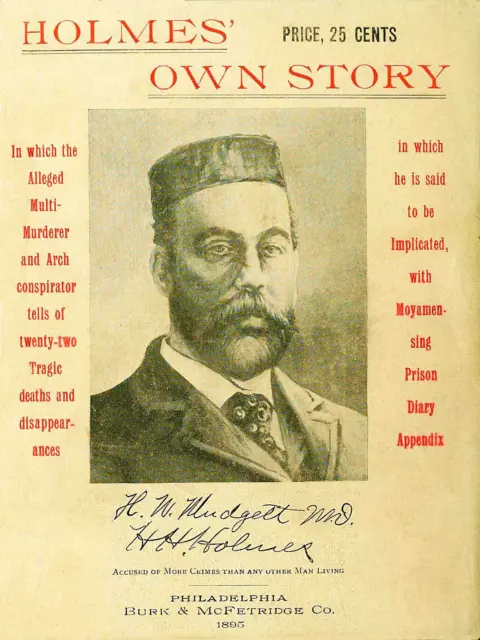
Herman W. Mudgett